
A missing tooth can affect more than the way your smile looks in photos. You may avoid certain foods, speak less confidently, or notice that chewing on one side is becoming a habit. When considering dental implants vs dentures, the right choice is rarely about finding the single “best” treatment. It is about finding the option that suits your health, lifestyle, timeline and budget.
Both options can restore your smile and make everyday life more comfortable. The key is understanding where they differ, and having a dentist explain what those differences mean for you personally.
What is the difference between implants and dentures?
Dental implants and dentures both replace missing teeth, but they do so in very different ways.
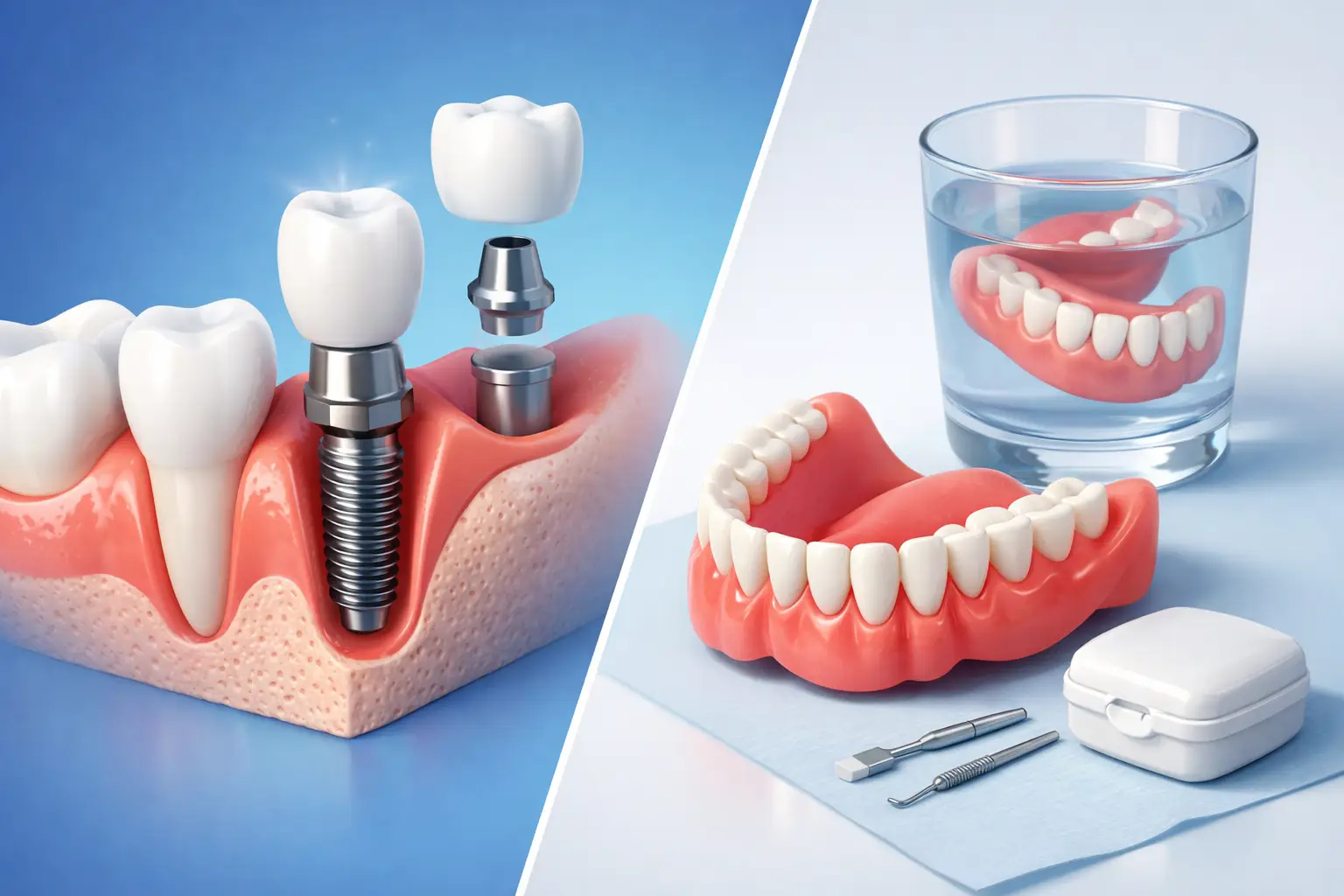
A dental implant is a small titanium fixture placed in the jawbone to act like an artificial tooth root. Once it has healed and integrated with the bone, it supports a crown for one missing tooth, a bridge for several teeth, or sometimes a full fixed arch of teeth. Because it is anchored in the jaw, an implant is designed to stay in place.
Dentures are removable appliances that replace some or all missing teeth. A partial denture fits around your remaining natural teeth, while a full denture sits over the gums when all teeth in an arch are missing. Modern dentures can look natural and be carefully made for comfort, but they are still taken out for cleaning and usually while sleeping.
There is also a middle ground. Implant-retained dentures use a small number of implants to help secure a removable denture. For many people, this can provide more stability than a conventional denture without the cost of replacing every tooth with an individual implant.
Dental implants vs dentures: how they feel day to day
Stability when eating and speaking
The biggest practical difference is stability. An implant-supported crown or bridge feels close to a natural tooth because it does not move when you chew or talk. Most people can eat a wide range of foods once treatment is complete, although sensible oral care and regular dental visits still matter.
Dentures can also restore chewing and speech, particularly when they are well fitted. However, they may move slightly, especially lower full dentures, which have less surface area for suction. Some patients need time to adjust to speaking clearly or eating firmer foods. Denture adhesives can help in some cases, but they are not a substitute for a properly fitting appliance.
If you are worried about a denture slipping at a meal, during a conversation or while laughing with friends, implant treatment may offer greater confidence. If you prefer a non-surgical option that can be made more quickly, a denture may be the more practical starting point.
Appearance and facial support
Both treatments can be designed to look natural. The shade, shape and position of replacement teeth should be chosen to complement your smile rather than create an artificial look.
Dentures can also provide important support for the lips and cheeks where many teeth have been lost. This may help restore facial fullness. Implant crowns and bridges replace teeth very naturally, but they do not always replace lost gum or facial volume in the same way. Your dentist will consider the amount of bone and soft tissue present when discussing the expected cosmetic result.
Bone health over time
When a tooth is lost, the jawbone in that area gradually loses stimulation and can shrink over time. An implant transfers chewing forces to the jawbone, which can help preserve bone around the implant site.
Conventional dentures rest on the gums and do not stimulate the bone in the same way. The shape of the jaw can change gradually, which is one reason dentures may need adjustments, relining or replacement over the years. This does not make dentures a poor choice, but it is an important long-term consideration, particularly for people missing many teeth.
Who may be suited to dental implants?
Implants can be an excellent solution for adults with one or more missing teeth, provided their gums and jawbone are healthy enough to support treatment. They are often particularly appealing when a single tooth is missing, as an implant can replace it without preparing the neighbouring teeth for a conventional bridge.
Good general health, healthy gums and consistent oral hygiene all support successful implant treatment. Smoking, untreated gum disease, poorly controlled diabetes, some medications and significant teeth grinding can affect healing or long-term outcomes. These factors do not always rule implants out, but they need to be assessed carefully.
Some people require bone grafting before an implant can be placed, particularly if a tooth has been missing for a long time. This can extend the treatment timeline. Implant treatment is a process rather than a single appointment, and healing can take several months before the final crown or bridge is fitted.
When dentures may be the better option
Dentures remain a valuable and effective restorative treatment. They may be suitable when several teeth are missing, when surgery is not appropriate, or when you need a replacement option sooner. They can also be used as an immediate temporary solution after teeth are removed while your gums heal and a longer-term plan is considered.
For some patients, especially those managing medical concerns or a tight household budget, dentures offer a sensible way to restore appearance and function without the higher upfront cost of implant surgery. A well-made denture, reviewed regularly and adjusted when needed, can make a meaningful difference to comfort and confidence.
It is also completely reasonable to begin with dentures and consider implant support later. Treatment does not need to be all or nothing. A personalised plan can be staged around your priorities and finances.
Cost is more than the first quote
Dental implants usually involve a higher initial investment than dentures. The total cost may include consultations, imaging, tooth removal if needed, grafting, implant surgery and the final crown, bridge or denture. The exact treatment required makes a major difference.
Dentures generally have a lower upfront cost, although they need ongoing maintenance. Over time, you may need relines as the gums and jaw change, repairs if teeth or acrylic are damaged, and eventual replacement. A denture that becomes loose should not simply be tolerated, as movement can cause sore spots and make eating difficult.
The fairest comparison looks at the likely lifetime care involved, as well as your immediate circumstances. It is worth asking for clear treatment options, expected future maintenance and any available payment arrangements. A plan should feel manageable, not pressured.
Caring for each option
Implants need the same level of attention as natural teeth. Brush twice daily with fluoride toothpaste, clean between teeth and around the implant as advised, and attend regular check-ups and professional cleans. Implants cannot develop decay, but the gum and bone around them can become inflamed or infected if plaque is allowed to build up.
Dentures should be removed and cleaned daily with a denture brush and suitable cleanser. They should not be cleaned with regular toothpaste, which can be too abrasive. It is also important to clean your gums, tongue and any remaining natural teeth. Removing dentures overnight gives the gums a chance to rest, unless your dentist has advised otherwise.
Whether you choose implants or dentures, regular dental reviews remain essential. Your bite, gum health, fit and oral tissues can all change over time.
Making a decision that feels right for you
The best choice often comes down to what matters most in your daily life. If you value the fixed feel of a tooth replacement, want to help maintain jawbone and are comfortable with surgery and a longer treatment timeline, implants may be worth considering. If you need an affordable, non-surgical solution or are replacing many teeth, dentures may offer the right balance of function and value.
A consultation should include more than a quick look at the missing tooth. Your dentist should assess your gums, bone levels, bite, existing teeth, medical history and goals, then explain the benefits and limits of each option in plain language. At Riverina Dental Albury, that conversation can also include staged treatment and budget-conscious pathways where appropriate.
You do not have to settle for discomfort or uncertainty after tooth loss. A thoughtful discussion about your options can help you choose a replacement that supports not only your smile, but the way you eat, speak and feel every day.