
Crowded teeth can make brushing feel like a frustrating daily negotiation. The toothbrush misses tight spaces, floss catches, and one tooth may sit forward or behind the rest in a way that draws your eye in photos. For many adults, Invisalign results for crowded teeth offer a discreet way to create more room and improve alignment without fixed braces.
The outcome can be genuinely transformative, but it is not simply a matter of putting in clear aligners and waiting. The best results come from an accurate assessment, a realistic treatment plan and consistent wear. Your starting bite, gum health, the degree of crowding and how closely you follow instructions all matter.
What causes crowded teeth?
Crowding happens when there is not enough space in the jaw for teeth to sit in their ideal positions. It may have been present since the adult teeth came through, or it can become more noticeable over time as teeth shift. A narrow dental arch, larger teeth, early loss of baby teeth, wisdom teeth concerns and natural age-related movement can all play a part.
For some people, the concern is mainly cosmetic. For others, overlap makes cleaning harder and may contribute to plaque build-up, tooth decay or gum inflammation. Straightening crowded teeth is therefore about more than achieving a neater smile. When teeth are easier to clean, maintaining healthy gums can become more manageable.
How Invisalign can straighten crowded teeth
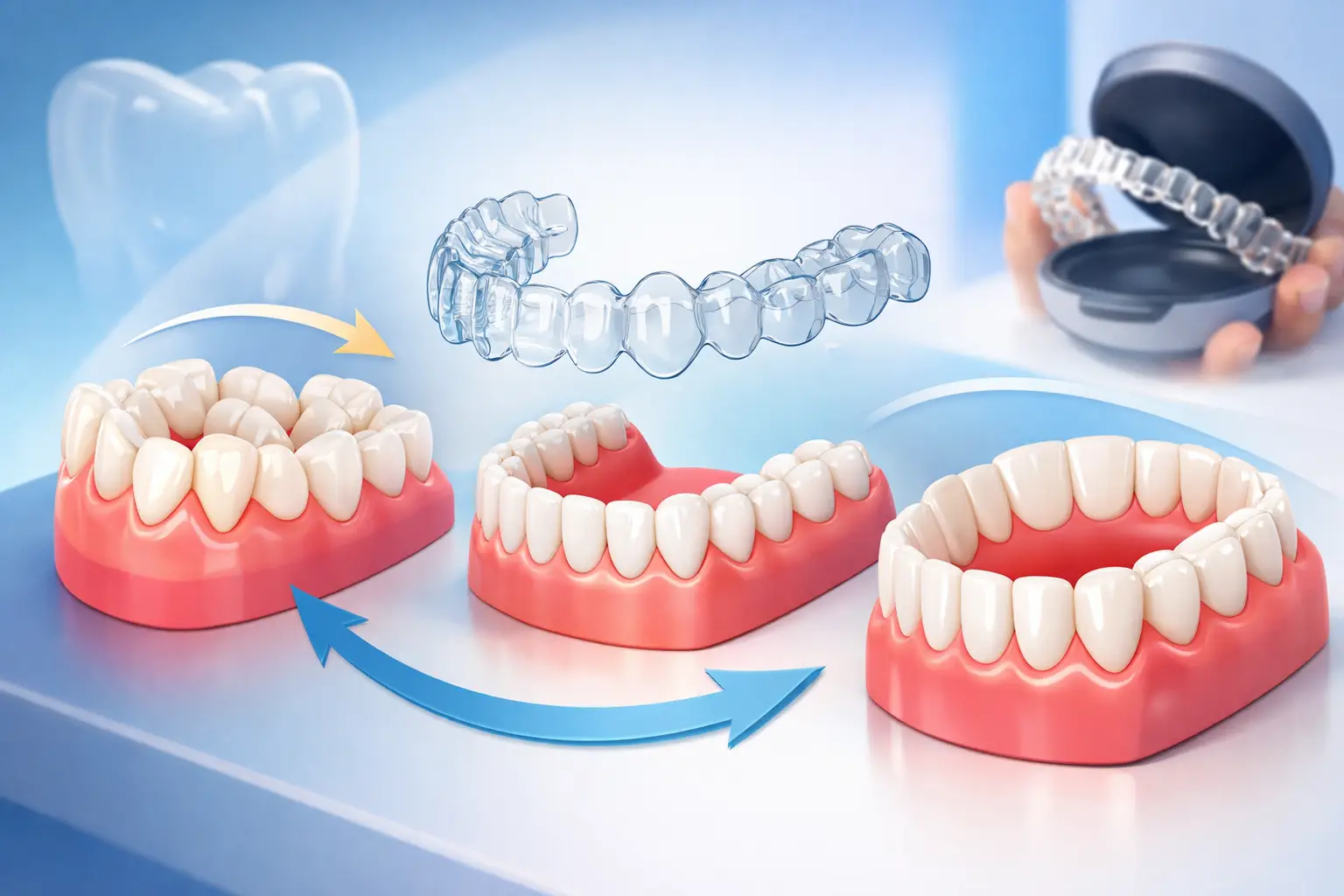
Invisalign uses a series of clear, custom-made aligners that apply gentle, planned pressure to move teeth gradually. Each set is worn for a prescribed period before progressing to the next. The aligners are removable for meals and brushing, which is one reason they suit adults with busy work, family and social lives.
To make space, your dentist may use one or a combination of approaches. Teeth can sometimes be moved slightly backwards or outwards within safe limits. In certain cases, small tooth-coloured attachments are placed on selected teeth to help the aligners grip and guide more precise movements. Some patients may also benefit from interproximal reduction, where a very small amount of enamel is carefully polished between particular teeth to create room.
Interproximal reduction can sound concerning, but it is planned conservatively and only when appropriate. It is not needed for every case, and your dentist should explain why it is recommended, how much space it creates and what alternatives may be available.
What the changes often look like
The first visible improvements are commonly seen where teeth overlap at the front. As aligners create room, a tooth that was tucked behind another may begin to come into line. This can be encouraging, although the smile may look temporarily uneven while other teeth are moving into their planned positions.
Later stages often focus on refining the bite, closing small spaces that have opened during alignment and improving the way the upper and lower teeth meet. A straight-looking front tooth result is not the only goal. A stable, comfortable bite and healthy surrounding gums are equally important.
Invisalign results for crowded teeth: what affects the outcome
Every mouth responds differently. A mild case of crowding may be corrected relatively efficiently, while more complex crowding can require more detailed planning and a longer treatment period. An in-person examination, digital scan and X-rays where needed provide the information required to assess what is achievable.
Wear time is one of the biggest factors under your control. Aligners generally need to be worn around 20 to 22 hours each day, unless your dentist gives different instructions. Taking them out for meals and cleaning is expected, but leaving them out for long stretches can slow progress and affect how well each new aligner fits.
Regular review appointments also matter. These visits allow your dentist to check that teeth are tracking as planned, monitor your gum health and make adjustments where required. If an aligner is not fitting properly, it is best to contact the practice promptly rather than moving ahead without advice.
Your teeth and gums should be healthy enough for orthodontic movement before treatment begins. Active gum disease, untreated decay or a cracked tooth may need attention first. This step protects your long-term oral health and helps create a more predictable foundation for treatment.
How long does treatment take?
There is no one timetable for Invisalign treatment. Minor crowding may take several months, while moderate or complex cases can take a year or longer. The number of aligners is only one part of the picture. Factors such as bite correction, attachment use, refinements and consistent wear all influence the overall timeline.
It is also common to need refinement aligners after the initial series. These are additional aligners designed to make smaller adjustments once the main movements are complete. Refinements are not necessarily a sign that treatment has gone wrong. Teeth are biological structures, and they do not always move exactly as predicted on a computer simulation.
A digital treatment preview can be helpful for understanding the intended direction of movement. It should be viewed as a guide, not a guarantee of an identical final result. Your dentist will continue to assess your actual progress throughout treatment.
What Invisalign cannot always do on its own
Clear aligners are highly effective for many crowded smiles, but they are not the right answer for every person. Severe jaw discrepancies, complex bite problems, impacted teeth or significant skeletal issues may be better managed with braces, a combination of orthodontic approaches or referral to an orthodontist.
Crowding can also reveal other concerns that aligners do not fix, such as worn teeth, old fillings, gum recession or missing teeth. In these situations, orthodontic treatment may be one stage of a broader dental plan. Aligning the teeth first can sometimes make future restorative work, such as veneers, bridges or implants, easier to plan. The right order depends on your individual needs.
This is why a personalised consultation is more useful than relying on before-and-after photos alone. Those images can be inspiring, but they do not show the health of the gums, the bite, the amount of space available or the treatment decisions behind the result.
Retainers protect your new alignment
Once crowded teeth have been straightened, retainers are essential. Teeth have a natural tendency to drift over time, particularly in the lower front teeth. Without retention, some crowding can return even after a successful course of aligner treatment.
Your dentist will recommend a retainer plan suited to your case. This may involve clear removable retainers worn at night, a fixed retainer behind the front teeth, or both. Retainer reviews are worthwhile because appliances can wear, crack or stop fitting as teeth shift.
Looking after your result also means maintaining regular dental check-ups and professional cleans. Straight teeth still need daily brushing, cleaning between the teeth and ongoing gum care.
A comfortable, considered way to start
If crowded teeth affect your confidence or make cleaning difficult, the first step is a proper assessment rather than a one-size-fits-all promise. At Riverina Dental Albury, your dentist can discuss whether clear aligners suit your smile, explain the likely treatment pathway and talk through costs and payment options with clarity.
A straighter smile should feel like a long-term investment in comfort, confidence and oral health. With a plan that respects your goals and your budget, you can make a well-informed decision about the next step.