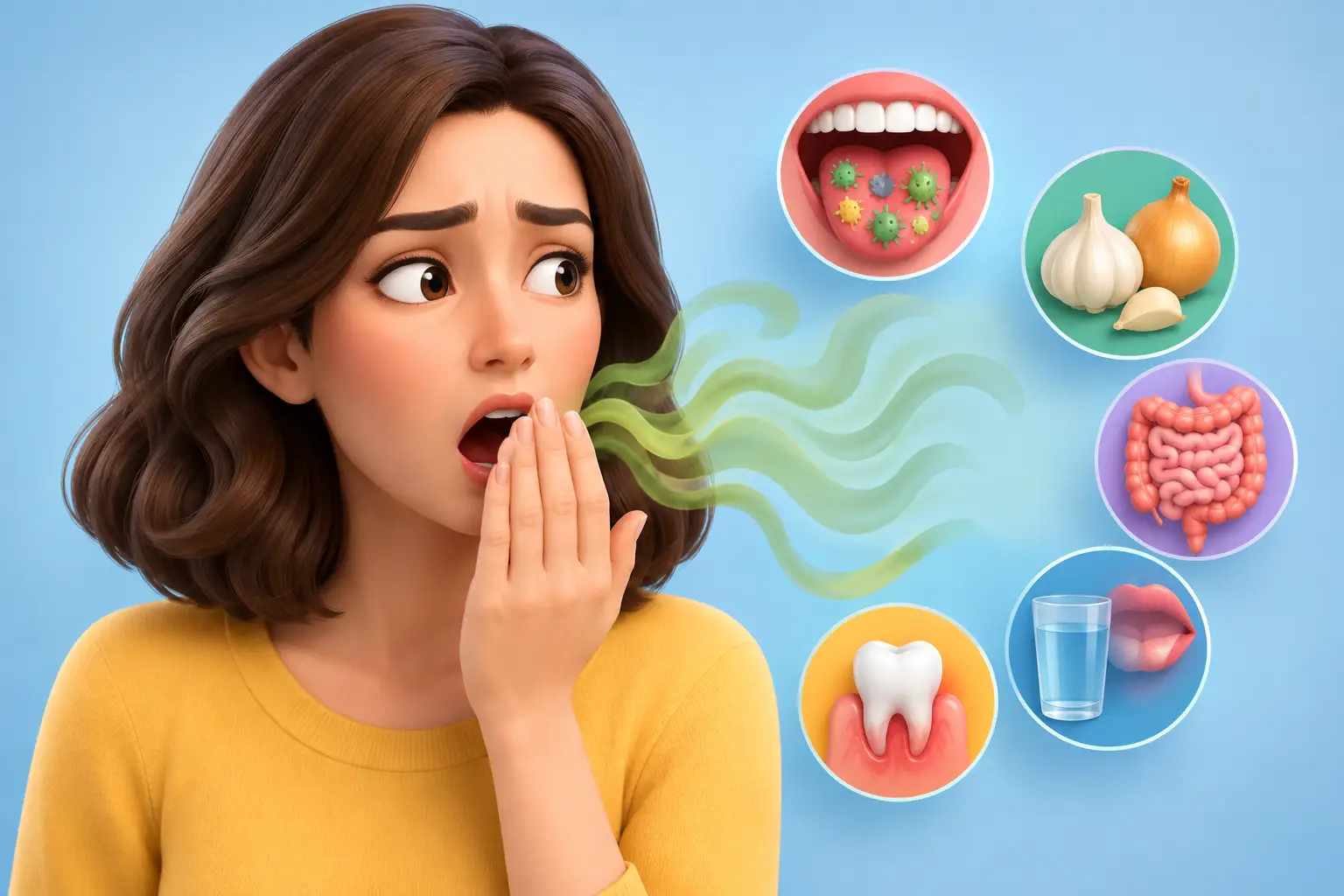

That unpleasant taste or smell that keeps returning, even after brushing, can feel embarrassing and frustrating. Bad breath causes are often simple and treatable, but persistent bad breath can also be an early sign that your teeth, gums or general health need attention.
Occasional bad breath after garlic, coffee or a long day without drinking enough water is common. Ongoing bad breath is different. If it does not improve with good home care, it is worth having a dental check-up rather than trying to cover it up with mints or mouthwash.
The most common bad breath causes start in the mouth
In most cases, bad breath begins in the mouth. Bacteria naturally live on the teeth, gums and tongue. When they break down food particles, dead cells and proteins, they release sulphur compounds with a strong, unpleasant odour.
Brushing helps, but it may not remove the source if bacteria are collecting between the teeth, under the gumline or on the back of the tongue. That is why a fresh-smelling toothpaste can provide only a short-lived improvement.
Plaque, tartar and gum disease
Plaque is a sticky film of bacteria that forms every day. If it is not removed thoroughly with brushing and cleaning between the teeth, it can harden into tartar. Tartar cannot be brushed away at home and creates a rough surface where more bacteria can build up.
Bleeding gums, tenderness, swelling, recession and a bad taste can all occur alongside gum disease. Bad breath is sometimes one of the first changes people notice. Gingivitis, the early stage of gum disease, can often be managed with professional cleaning and consistent home care. More advanced periodontal disease may need more involved treatment to protect the gums, bone and teeth.
It is not a problem to ignore simply because there is no pain. Gum disease can progress quietly, so regular dental visits are valuable even when your mouth feels comfortable.
A coated tongue
The tongue has tiny grooves and papillae that can trap bacteria, food debris and dead cells, especially towards the back. A white, yellowish or furry coating may contribute to odour even in people who brush their teeth carefully.
A gentle tongue scraper or toothbrush can help. Use light pressure, moving from back to front, and avoid scraping so hard that the tongue becomes sore. If the coating persists, is painful or comes with changes to the mouth, arrange a professional assessment.
Food trapped between teeth or around dental work
A piece of food caught between teeth can quickly cause an unpleasant smell. So can areas around crowns, bridges, fillings, dentures or implants that are difficult to clean. This does not mean the dental work has failed, but it may mean your cleaning routine needs adjusting or the area needs to be checked.
Cleaning between the teeth daily matters. Depending on the gaps and the type of dental work you have, floss, interdental brushes or another aid may be the best option. A dental team can show you what will work for your mouth rather than asking you to guess.
Dry mouth can make breath worse
Saliva is one of the mouth’s natural cleaning systems. It washes away food particles, helps control bacteria and keeps tissues comfortable. When saliva flow drops, bacteria have a better environment to grow, and breath can become noticeably stale.
Dry mouth may happen overnight, after alcohol, when you are dehydrated, or if you breathe through your mouth due to congestion. It is also a common side effect of many medicines, including some used for allergies, anxiety, depression, blood pressure and pain relief. Smoking and vaping can dry and irritate the mouth as well.
Sipping water regularly and reducing alcohol-based mouthwashes may help some people. Sugar-free gum can stimulate saliva if it is suitable for you. However, if dry mouth is persistent, wakes you at night, causes difficulty swallowing or leads to frequent decay, speak with your dentist and GP. Do not stop prescribed medication without medical advice.
Diet, habits and everyday triggers
Some bad breath causes are temporary and closely linked to what you eat or drink. Garlic, onion, spicy foods, coffee and alcohol can all affect breath. In some cases, odour-producing compounds are absorbed into the bloodstream and released through the lungs, which is why brushing alone cannot fully remove the smell straight away.
Skipping meals or following very low-carbohydrate diets can also change breath. When the body uses fat for energy, it produces ketones, which may create a sweet, fruity or acetone-like smell. This can be expected with some diets, but a fruity breath odour with feeling unwell, excessive thirst or frequent urination needs urgent medical attention, particularly for people with diabetes.
Tobacco is another common contributor. It leaves a lingering smell, dries the mouth and increases the risk of gum disease and oral cancer. Quitting can be challenging, but it is one of the most meaningful changes a person can make for their oral and overall health.
Could bad breath come from somewhere else?
Although the mouth is usually the source, persistent odour can sometimes be associated with problems outside it. Post-nasal drip, sinus infections, tonsil stones and reflux can affect the smell of breath. Poorly controlled diabetes, kidney disease and liver disease may also cause distinctive breath changes, though these are less common explanations.
A dental examination is still a sensible first step because oral causes are so frequent. If your teeth and gums are healthy but the problem continues, your dentist may recommend seeing your GP or another health professional. This joined-up approach avoids assuming that every breath concern has the same cause.
When to book a dental appointment
Book an appointment if bad breath lasts for more than a couple of weeks despite regular brushing, cleaning between your teeth and drinking enough water. It is particularly worthwhile if you also have bleeding gums, loose teeth, toothache, a bad taste, mouth sores, swelling, pus, or a dry mouth that will not settle.
A dental visit is not about judgement. Many people are unaware of their breath until someone close to them mentions it, and the cause is often manageable. Your dentist can check the gums, teeth, tongue, dental work and saliva flow, then explain what is contributing to the problem and what treatment, if any, is needed.
At Riverina Dental Albury, care begins with listening to your concerns and providing practical options that suit your oral health needs and budget. For some people, a professional clean and a tailored home-care routine are enough. Others may need gum treatment, repair of a tooth or further assessment.
Simple steps that support fresher breath
A reliable routine is more useful than constantly reaching for mints. Brush twice daily for two minutes with fluoride toothpaste, clean between teeth once a day, and gently clean your tongue. Replace your toothbrush or brush head every three months, or sooner if the bristles are worn.
Drink water through the day, especially if you have coffee or alcohol. If you wear dentures, remove and clean them as advised, including overnight where appropriate. Dentures left in overnight can harbour bacteria and irritate the gums.
Mouthwash may be helpful as an addition, but it cannot replace removing plaque. Some mouthwashes merely mask odour, while others may be recommended for a specific short-term gum condition. The best choice depends on why your breath has changed.
Fresh breath is not about chasing a minty feeling. It is often a sign that the mouth is clean, comfortable and healthy. If yours has changed or will not improve, a calm conversation and a thorough check can give you a clear path forward.