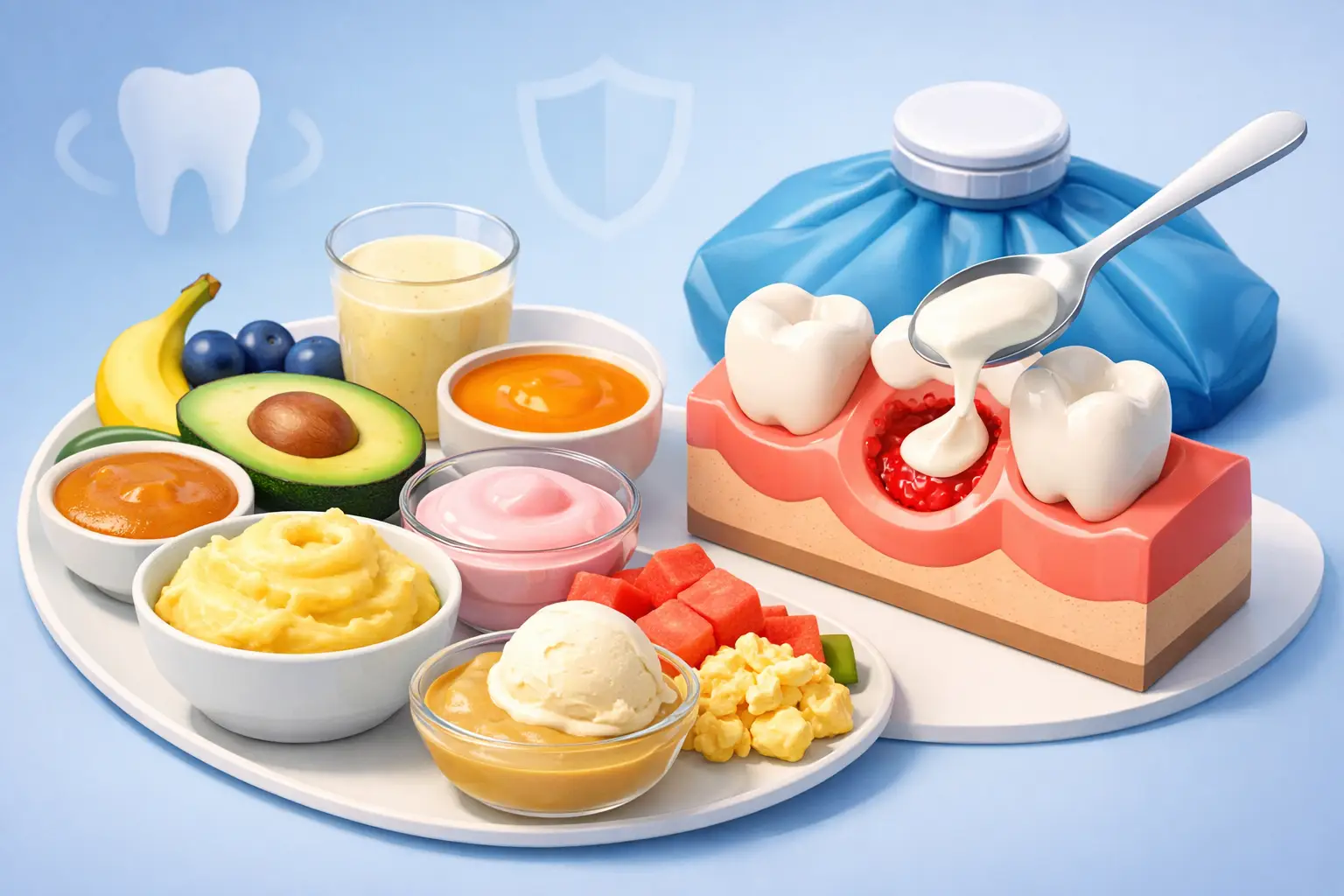

A tooth extraction can leave you surprisingly hungry, but chewing the wrong thing too soon can disturb the blood clot that protects the socket. The best foods after tooth extraction are soft, nourishing and easy to swallow, helping you stay comfortable while your mouth begins to heal.
For the first day or two, think less about a perfect meal plan and more about protecting the extraction site. Cool or lukewarm foods are generally more comfortable than hot foods, and it is best to chew on the opposite side of your mouth where possible. Your dentist’s individual instructions should always come first, particularly after wisdom tooth removal, surgical extraction or treatment involving stitches.
Why food choices matter after an extraction
After a tooth is removed, a blood clot forms in the socket. This is an essential part of normal healing. It protects the bone and nerves beneath while new tissue develops.
Hard, crunchy, chewy or very hot foods can irritate the area. Small food particles can also become trapped in the socket, while forceful sucking from a straw may dislodge the clot. If the clot is lost too early, a painful condition called dry socket can develop.
This does not mean you need to live on plain jelly for a week. Your body needs protein, fluids, vitamins and energy to recover. The aim is to choose foods that provide nourishment without putting pressure on the healing area.
12 best foods after tooth extraction
1. Smooth yoghurt
Plain or Greek yoghurt is cool, soft and a useful source of protein. Choose a smooth variety without crunchy mix-ins, seeds or pieces of muesli. If your mouth is tender, allow very cold yoghurt to sit for a moment before eating it.
2. Mashed potato or sweet potato
Well-mashed potato is filling and gentle to eat. Sweet potato is another good option and adds variety to your meals. Serve it lukewarm rather than steaming hot, and avoid crispy toppings or peppery seasoning while the site is sensitive.
3. Scrambled eggs
Soft scrambled eggs are one of the more satisfying early recovery foods because they are high in protein and require very little chewing. Cook them until soft and moist rather than browned or crisp around the edges.
4. Smooth soups and broths
A blended vegetable soup, pumpkin soup or clear broth can be comforting when you do not feel like solid food. Make sure it has cooled to lukewarm before eating. Avoid soups with rice, noodles, chunky vegetables, seeds or small meat pieces in the first few days.
5. Porridge or smooth oats
Porridge can be a practical breakfast once it has cooled enough to eat comfortably. Make it soft, and skip toppings such as nuts, toasted coconut or berries with small seeds. For some people, very fine oats are easier to manage than coarse varieties.
6. Applesauce or stewed fruit
Unsweetened applesauce and smooth stewed fruit offer a softer way to include fruit in your diet. Pears, peaches and apples can be cooked until tender and blended if needed. Avoid acidic fruit if it stings the extraction area.
7. Avocado
Ripe avocado is naturally soft and contains healthy fats, making it a welcome change from sweet foods. Mash it well and eat it with a spoon. Hold off on toast or crackers until your dentist advises that firmer foods are suitable.
8. Cottage cheese or ricotta
For people who tolerate dairy, cottage cheese and ricotta are mild, soft sources of protein. Choose a smooth texture and eat slowly. If small curds feel uncomfortable near the socket, blend them or choose yoghurt instead.
9. Smoothies eaten with a spoon
A smoothie can be an easy way to have yoghurt, milk or a dairy alternative, banana and soft fruit. The key point is to use a spoon, not a straw. Avoid ingredients with seeds, such as raspberries, passionfruit or chia, as they can lodge around the extraction site.
10. Banana mash
A ripe banana is soft, easy to prepare and gentle on a sore mouth. Mash it alone, stir it through porridge, or blend it into a spoonable smoothie. It is particularly handy when your appetite is low but you need something more substantial.
11. Soft pasta
After the first couple of days, very soft pasta may be suitable if you can chew away from the extraction site. Choose small, well-cooked pasta with a smooth sauce. This is not the time for crusty garlic bread, crispy bacon or firm vegetables.
12. Flaky fish or finely shredded chicken
As comfort improves, tender protein can help you return to more normal meals. Flaked fish and finely shredded chicken are often easier to chew than steak or other dense meats. Start with small bites and stop if eating causes throbbing or increased discomfort.
Foods and drinks to leave off the menu
For at least the first few days, avoid anything that can break up, poke, pull or become trapped near the socket. This includes chips, nuts, popcorn, crusty bread, crackers, seeds, lollies and chewy meat. Spicy foods, citrus, alcohol and fizzy drinks may also sting or irritate the area.
Hot drinks and hot meals deserve extra caution during the first 24 hours. Heat may increase bleeding or discomfort, so let tea, coffee and soup cool first. Avoid smoking and vaping as well. Both can interfere with healing and substantially increase the risk of dry socket.
Do not use a straw unless your dentist has specifically told you it is safe. The sucking action is the concern, not just the drink itself.
A simple timeline for eating comfortably
On the day of your extraction, choose cool or lukewarm liquids and very soft foods once the numbness has worn off. Be careful not to bite your cheek, tongue or lip while local anaesthetic is still working.
During days two and three, many people can manage foods such as yoghurt, eggs, mashed vegetables, porridge and blended soups. Continue chewing on the other side of your mouth and follow any cleaning instructions you were given.
From around day four onwards, you may be able to introduce softer, more substantial foods such as pasta, flaky fish and tender chicken. Recovery is not identical for everyone. A straightforward extraction may settle quickly, while a surgical or wisdom tooth extraction can require a longer soft-food period.
Eating well when your appetite is low
Small meals are often easier than trying to finish a full plate. Aim to drink water regularly and include protein where you can, as it supports tissue repair. If you are taking pain relief or antibiotics, having a soft meal beforehand may help prevent nausea, but follow the directions supplied with your medication.
If you have diabetes, dietary restrictions, swallowing difficulties or a medical condition that affects healing, ask your dentist or GP for advice tailored to you. The right recovery foods should work with your broader health needs, not against them.
When to call your dentist
Some tenderness, mild swelling and temporary changes to eating are expected. Contact your dentist promptly if pain becomes stronger after a few days, bleeding will not settle, swelling is worsening, you develop a fever, or there is a bad taste or smell from the socket. These signs do not always mean there is a serious problem, but they deserve timely advice.
At Riverina Dental Albury, we want recovery to feel manageable, not confusing. A few days of gentle, nourishing food and careful aftercare can make a real difference while your mouth heals. If something does not feel right, it is always better to call and ask than to push through discomfort.