
A denture that moves when you laugh, speak or enjoy a meal can make everyday life feel needlessly uncertain. This implant supported dentures review explains why many people consider implants when conventional dentures no longer feel secure, and what you should weigh up before deciding whether treatment is right for you.
Implant supported dentures are not simply “better dentures”. They are a restorative treatment that uses dental implants placed in the jaw to support a removable or fixed denture. For the right person, that added support can improve comfort, chewing ability and confidence. However, they involve surgery, a healing period, ongoing care and a higher upfront investment than conventional dentures.
What are implant supported dentures?
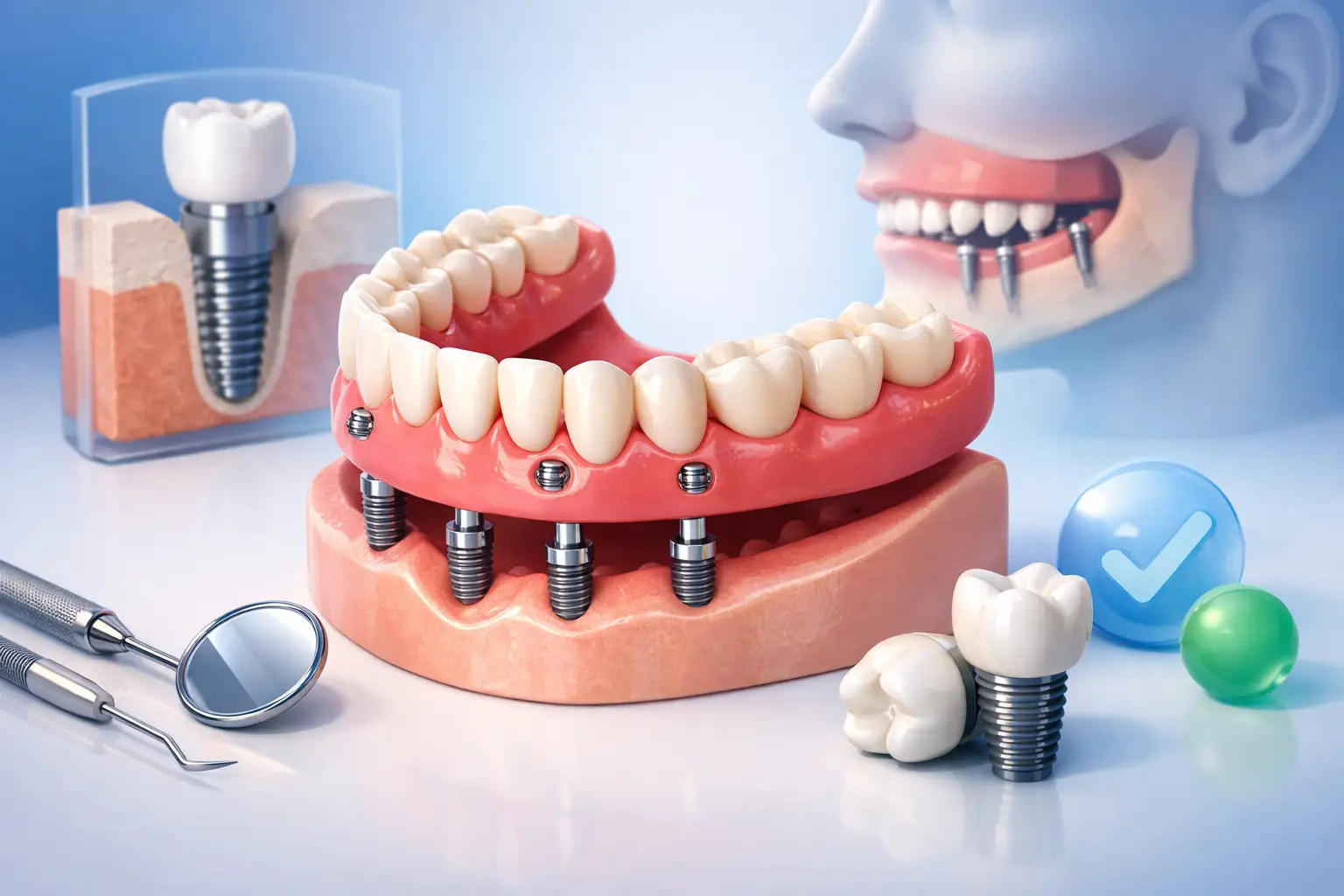
A dental implant is a small titanium post placed into the jawbone to act like a replacement tooth root. Once the implant has integrated with the bone, it can support a denture through specially designed attachments. Depending on your needs, the denture may clip in and be removed for cleaning, or it may be fixed in place and removed only by the dentist.
The most common option is an implant-retained overdenture. It usually attaches to two or more implants, often in the lower jaw where a conventional full denture is more likely to shift. The denture can still be removed at home for cleaning, but it has a much more stable base than a standard removable plate.
A fixed full-arch bridge generally uses more implants and is not removed by the patient. This can feel closer to having natural teeth, although it requires careful cleaning underneath and may not suit every mouth, health history or budget.
Implant supported dentures review: the benefits people notice
The biggest change many patients describe is stability. A well-designed implant-supported denture is less likely to lift, rub or move during conversation and meals. This can make social situations feel more comfortable, particularly for people who have spent years worrying that their lower denture will come loose.
Chewing can also become easier. Conventional dentures rest on the gums, so the biting force needs to be kept relatively gentle to avoid soreness or movement. Implants transfer some of that force into the jawbone, which may allow you to manage a broader range of foods. It does not mean every patient can bite anything without care, but it can make a meaningful difference to day-to-day eating.
There is also a long-term oral health consideration. After teeth are lost, the jawbone naturally changes over time because it is no longer being stimulated by tooth roots. Implants can help preserve bone around the implant sites. They cannot reverse all previous bone loss, and they do not stop every change in the jaw, but they may help maintain the supporting structures better than dentures alone.
For many people, the benefit is less about appearance than freedom from constant adjustment. Dentures can still be made to look natural and attractive with or without implants. The difference is often how secure they feel while you are living your normal life.
The trade-offs to consider before treatment
It is sensible to approach glowing reviews with context. Implant supported dentures are highly individual, and success depends on planning, oral hygiene, bone quality, bite forces and regular professional maintenance.
First, implants are a surgical treatment. Placement is usually performed with local anaesthetic, and options can be discussed if you are particularly anxious. Some tenderness, swelling and bruising may occur afterwards. Healing can take several months while the implants bond with the jawbone, although a temporary denture may be used during this period where appropriate.
Second, not everyone has enough healthy jawbone for straightforward implant placement. Bone grafting or other preparatory treatment may be needed in some cases, which adds time and cost. Conditions such as uncontrolled diabetes, active gum disease, heavy smoking or certain medications can also affect healing. These do not automatically rule out treatment, but they need an honest conversation before any plan is made.
Third, implant-supported dentures still need care. A removable overdenture must be taken out and cleaned thoroughly every day, including the attachments. Fixed teeth need specialised brushes, flossing aids or water cleaning devices to clean beneath the bridge. Gum inflammation and infection can develop around implants if plaque is allowed to build up.
Attachments, clips and denture teeth may wear over time. Like most dental restorations, they are not a once-only expense. Regular reviews allow your dentist to check the implants, gum health, bite and components before small problems become more difficult to manage.
How do they compare with conventional dentures?
Conventional dentures remain a practical choice for many patients. They do not require surgery, can often be made more quickly and usually have a lower initial cost. A carefully made denture can restore appearance and function very well, especially when the gums and jawbone provide good support.
The limitation is that a full denture relies on the shape of the gums, suction and muscle control. The lower jaw is particularly challenging because the tongue and moving floor of the mouth can dislodge the denture. Adhesives can help some people, but they do not create the same retention as implants.
An implant-retained denture offers a middle ground between a conventional denture and a fixed full-arch solution. It may provide substantial improvement in stability while remaining removable for cleaning and often requiring fewer implants than a fixed bridge. For budget-conscious households, this can be an important option to discuss rather than assuming the only choices are basic dentures or a full fixed set of teeth.
What affects the cost?
It is difficult to give one meaningful price without examining your mouth and discussing the type of restoration you need. The cost may include imaging and planning, any extractions, implant surgery, temporary teeth, the final denture or bridge, attachments, laboratory work and future maintenance.
The number of implants matters, but it is not the only factor. Existing dentures may sometimes be adapted temporarily, while other cases need a completely new denture designed around the implant positions. Bone grafting, treatment for gum disease and the complexity of your bite can also affect the plan.
A good consultation should give you clear options. You may decide that conventional dentures are the right starting point, that an overdenture is your preferred balance of comfort and cost, or that staged treatment is more realistic. The best plan is one you can maintain comfortably and financially, not simply the most extensive treatment available.
Questions worth asking at your consultation
Before choosing implant-supported dentures, ask how many implants are recommended and why, whether your denture will be removable or fixed, and what the expected healing timeline looks like. It is also helpful to ask what temporary option you will wear, how the denture will be cleaned and which maintenance costs may arise later.
Ask about the condition of your gums and jawbone, too. If you have worn dentures for a long time, it is reasonable to want a clear explanation of how bone changes may affect the fit and whether any additional procedures are likely. Your dentist should explain risks as plainly as benefits, including what happens if an implant does not integrate as expected.
If you are nervous about dental treatment, say so early. Gentle care is not just about getting through the surgical appointment. It also means having time to ask questions, knowing what to expect afterwards and being able to contact the practice if something does not feel right.
Is this treatment right for you?
The strongest implant supported dentures review is not a promise that the same treatment will suit everyone. It is an honest match between your goals, medical history, oral health and budget. Some patients want a denture that no longer slips while they eat with family. Others are looking for a fixed solution after years of frustration. Still others may be better served by a well-made conventional denture and regular adjustments.
At Riverina Dental Albury, the focus is on helping you understand those choices without pressure. A personalised assessment can identify what is possible now, what may need attention first and how to plan treatment around your comfort and circumstances.
If loose or uncomfortable dentures are affecting your meals, confidence or quality of life, a consultation is a practical place to start. The right next step is simply a clear conversation about what will help you feel comfortable smiling, speaking and eating again.