
A missing tooth can affect much more than your smile. It can make eating awkward, change the way you speak, or leave you worried about how a denture or bridge will feel. When people begin considering a fixed replacement, one question often comes first: are dental implants painful?
The reassuring answer is that implant treatment is usually far more manageable than people expect. The procedure is carried out with effective local anaesthetic, so you should not feel pain while the implant is being placed. Afterwards, most people experience some tenderness, swelling and bruising for a few days, rather than severe pain. Your individual experience will depend on your health, the complexity of treatment and how carefully you follow aftercare advice.
Are dental implants painful during the procedure?
Before treatment begins, the area is thoroughly numbed with local anaesthetic. You may feel pressure, vibration or movement while the implant is being placed, but you should not feel sharp pain. If you do feel uncomfortable at any point, let your dentist know straight away. Treatment can be paused and additional anaesthetic can be given if needed.
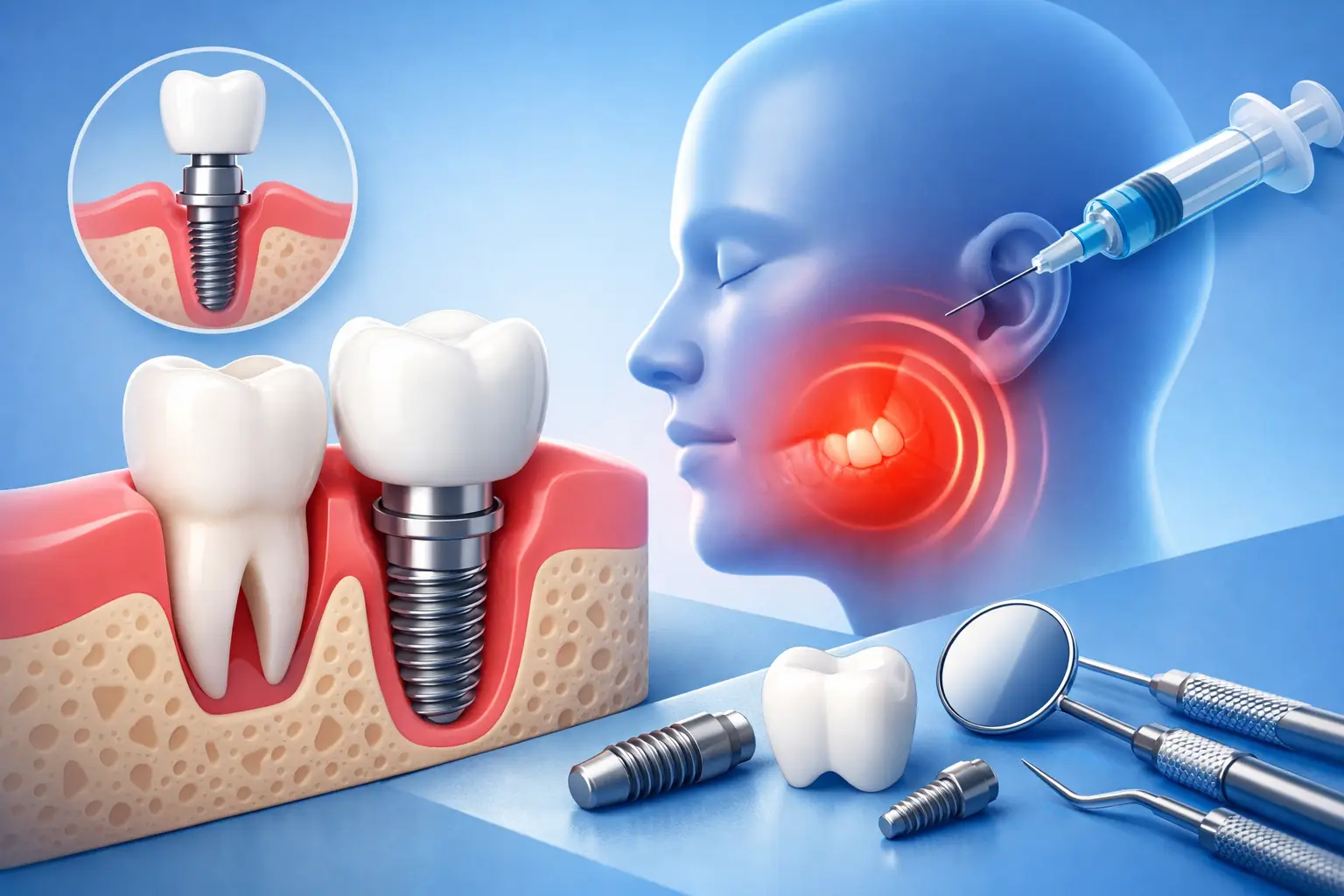
A dental implant is a small titanium post placed into the jawbone to replace a missing tooth root. Once the implant integrates with the bone, it can support a crown, bridge or denture. Although that may sound daunting, the placement appointment is often more straightforward than patients anticipate, particularly when the tooth has already been missing and the site has healed well.
Some cases require extra preparation, such as removing a damaged tooth, treating infection or adding bone graft material. These steps can make recovery a little more involved, but they do not mean you should simply put up with pain. A personalised plan should explain what is involved, why it is recommended and how discomfort will be managed.
What does dental implant recovery feel like?
It is normal to have some soreness once the local anaesthetic wears off. Many patients compare it to the feeling after a tooth extraction or a minor oral surgery procedure. The gum around the implant site may feel tender, and your jaw can feel tired for a short period.
Swelling commonly peaks around the second or third day, then begins to settle. Mild bruising can occur too, especially if treatment involved a graft or more than one implant. These effects are temporary and are part of the body’s natural healing response.
Most people can manage discomfort with the pain relief recommended by their dentist. An ice pack held against the outside of the cheek during the first day may help limit swelling. Resting, choosing soft foods and avoiding strenuous exercise for a short time can also make the early recovery period easier.
Pain that steadily improves is generally expected. Pain that becomes stronger after several days, or occurs with worsening swelling, fever, a bad taste or discharge, needs prompt dental attention. Early review can help identify infection or another complication before it becomes more serious.
A realistic recovery timeline
Everyone heals differently, but the first few days are usually the most noticeable. You may prefer softer meals such as eggs, yoghurt, soup, mashed vegetables or pasta, and it is wise to chew away from the implant site where possible.
Within about a week, many patients feel much more like themselves. If stitches have been used, your dentist will explain whether they dissolve or need to be removed. The jawbone then continues to heal quietly over the following months as it bonds with the implant. This process, called osseointegration, is essential for a stable long-term result, but it is not normally painful.
What can make implant treatment more uncomfortable?
Not every implant journey is identical. Replacing one tooth in a healthy area is different from rebuilding several missing teeth after gum disease, infection or long-term tooth loss. A complex procedure may involve more swelling and a longer recovery, even with excellent care.
Existing infection can also make an area sore before treatment begins. In some situations, it is safer to remove an unhealthy tooth, allow the site to heal and place the implant later. In others, immediate implant placement may be suitable. The right approach depends on the condition of your gums and bone, your bite, medical history and the position of the tooth.
Anxiety can make dental treatment feel harder as well. If you are nervous, tell your dental team before the appointment. Knowing each step in advance, arranging breaks and discussing comfort options can make a genuine difference. Gentle care is not only about the procedure itself. It is also about feeling listened to and having time to ask questions.
Does a bone graft hurt?
A bone graft may be recommended when the jawbone needs more support before or during implant placement. It is performed with anaesthetic, so you should not feel pain during the procedure. Recovery can involve additional swelling and tenderness, but this is typically manageable with the same careful aftercare used for implant surgery.
A graft does add time and cost to treatment, which can feel frustrating when you are ready to replace a tooth. However, it may improve the foundation for your implant and support a more predictable outcome. Your dentist should clearly explain whether a graft is necessary or whether there are other suitable options.
How to make dental implant recovery easier
Good aftercare helps protect the surgical site and keeps discomfort to a minimum. Take prescribed or recommended medication exactly as directed, and do not wait until pain has become difficult before using suitable pain relief.
Keep your mouth clean, but be gentle around the area. Your dentist may advise a particular rinsing routine or provide instructions on when you can resume brushing near the implant site. Avoid smoking and vaping during healing, as they can interfere with blood flow and increase the risk of complications.
For the first few days, avoid very hot foods and drinks, alcohol, hard or crunchy foods, and anything that requires vigorous chewing. It is also sensible not to poke the site with your tongue or fingers. These small precautions allow the gum to settle without unnecessary irritation.
Follow-up appointments matter. They allow your dentist to check that healing is progressing properly and make sure your final restoration will fit comfortably with your bite. Dental implants are designed to be a long-term solution, so careful planning and review are worth the time.
Are dental implants painful compared with other options?
Many people assume implants must be more painful than dentures or a dental bridge because they involve surgery. In reality, comfort is only one part of the comparison. A removable denture does not require implant surgery, but it can rub, move when eating or need adjustments over time. A bridge can be a good fixed option, though it may require preparation of neighbouring teeth.
An implant is different because it replaces the root as well as the visible tooth. For suitable patients, this can offer a stable feel and help preserve bone in the jaw. The trade-off is a surgical stage and a longer treatment timeline. Whether that is worthwhile depends on your oral health, goals, budget and preference.
There is no one-size-fits-all answer. A good consultation should give you a clear view of each option, including the likely recovery, costs and maintenance involved, without pressure to choose a treatment that does not suit you.
When should you call your dentist?
Contact your dentist if you have severe pain that is not controlled by recommended medication, swelling that worsens after the third day, persistent bleeding, fever, pus, or a feeling that the implant site is unstable. These signs do not always mean something serious is wrong, but they should be assessed promptly.
If you are considering implants and are worried about pain, start with a conversation rather than an assumption. At Riverina Dental Albury, treatment planning is tailored to your comfort, health needs and budget, with each stage explained in plain language. The best next step is to ask what your own procedure would involve, what recovery is likely to look like, and what support will be available while you heal.