
You might have spent years putting orthodontic treatment in the too-hard basket. Work meetings, family commitments, the cost, or simply not wanting a mouth full of metal can all make treatment feel easy to delay. The good news is that braces for adults options are broader, more discreet and more flexible than many people expect.
For many adults, orthodontic treatment is not only about appearance. Crooked or crowded teeth can be harder to clean, bite problems can put extra strain on teeth and jaws, and shifting teeth can affect long-term oral health. If you have been wondering whether it is too late to straighten your teeth, it usually is not. Adult treatment is common, and there are several ways to approach it depending on your goals, budget and lifestyle.
Braces for adults options at a glance
The best treatment is not the one that sounds most advanced. It is the one that suits your teeth, your routine and your budget. Some adults want the least visible option possible. Others care more about value, speed or having a treatment plan that does not rely on remembering to wear aligners.
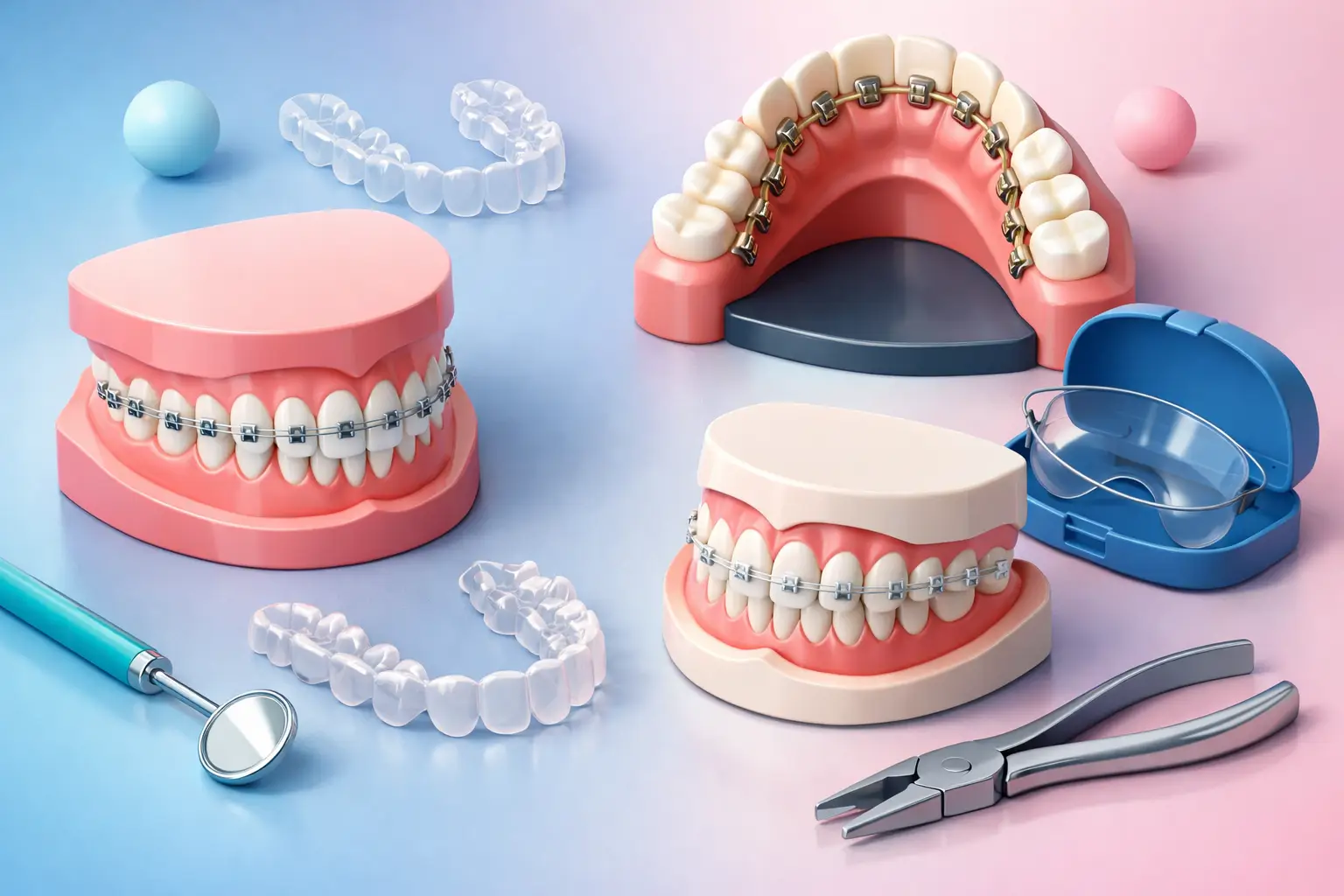
Most adult orthodontic treatment falls into a few main categories – traditional metal braces, ceramic braces, clear aligners such as Invisalign, and retainers or limited minor movement options in selected cases. Each has strengths and trade-offs, and the right choice depends on what your teeth need rather than what is most popular online.
Traditional metal braces
Metal braces are still one of the most reliable and effective ways to move teeth. They use brackets and wires fixed to the teeth, allowing steady pressure over time. For adults with significant crowding, bite issues or more complex tooth movement, they are often a very practical option.
The main advantage is control. Because the braces stay on your teeth, treatment does not depend on taking trays in and out or wearing appliances for a set number of hours each day. They can also be cost-effective compared with some cosmetic alternatives.
The obvious drawback is visibility. Even though modern brackets are smaller and neater than older styles, they are still noticeable. Some adults are completely comfortable with that. Others prefer a lower-profile option, especially in public-facing jobs.
Ceramic braces
Ceramic braces work in a similar way to metal braces, but the brackets are tooth-coloured or clear, which makes them less obvious. For adults who want the effectiveness of fixed braces without the look of full metal brackets, ceramic braces can be a strong middle ground.
They do come with a few compromises. Ceramic brackets can be more delicate than metal ones, and they may require a little more care. Depending on the case, they can also cost more. If appearance matters but you still need the control of fixed braces, they are worth discussing.
Clear aligners
Clear aligners have become a popular choice for adults because they are removable and far less visible than braces. Treatment uses a series of custom-made clear trays that gradually shift the teeth. They appeal to adults who want something discreet and who like the convenience of removing aligners for meals and brushing.
That convenience can also be the challenge. Aligners only work well if they are worn as instructed, usually for most of the day and night. If you are likely to forget, remove them often, or find the routine frustrating, treatment may become slower or less predictable.
For the right patient, clear aligners can be an excellent option. They are particularly appealing for adults balancing professional life, social events and comfort. But they are not automatically the best fit for every case. Some tooth movements and bite corrections are still better managed with fixed braces.
Limited or minor movement treatment
Not every adult needs full orthodontic treatment. Some people have one or two teeth that have shifted after not wearing a retainer, or mild front tooth crowding that mainly affects appearance. In these situations, limited treatment may be possible.
This can sometimes involve short-term aligner treatment or other targeted approaches. The key is proper assessment. What looks like a small cosmetic issue can sometimes reflect a bite problem underneath, so it is worth getting clear advice before choosing a quick fix.
What matters most when choosing between braces for adults options
The choice usually comes down to five things – complexity, visibility, comfort, cost and commitment.
Complexity is often the starting point. If your teeth need substantial movement or your bite needs correcting, fixed braces may offer more precision. If the movement is mild to moderate, clear aligners might be suitable.
Visibility matters to many adults, and that is understandable. Ceramic braces and clear aligners tend to feel more discreet than metal braces. At the same time, some patients start treatment expecting to be self-conscious and then find that very few people notice or comment.
Comfort is a little more nuanced than many people expect. Braces can cause rubbing and tenderness, especially after adjustments. Aligners can feel smoother, but they still create pressure as teeth move. Neither option is completely discomfort-free, but most adults find the adjustment manageable.
Cost varies from case to case, so broad comparisons only go so far. Simpler treatment is usually less expensive than complex treatment, regardless of the appliance used. Flexible finance can make treatment easier to manage, which is often helpful for adults juggling household budgets.
Commitment is where clear aligners and braces differ most. Fixed braces keep working all the time. Aligners rely on consistency. If you want the freedom to remove them, you also need the discipline to put them back in.
How long does adult orthodontic treatment take?
Treatment time depends on the starting point and the goal. Mild alignment cases may take months, while more complex bite correction can take much longer. Adults sometimes assume their treatment will automatically take longer than a teenager’s, but that is not always the deciding factor.
Bone biology, gum health, previous dental work and how much movement is needed all play a part. Adults may also have crowns, bridges, missing teeth or wear from grinding, which can affect planning. That is why a personalised assessment matters more than generic online timelines.
Are braces worth it for adults?
For many adults, yes – but the reasons differ. Some want to feel more confident smiling in photos or at work. Others are more concerned about crowded teeth that trap plaque or a bite that has become uncomfortable. Orthodontic treatment can support appearance, function and long-term maintenance.
It is also fair to say that treatment is not always purely cosmetic or purely health-based. Often it is both. Straighter teeth can be easier to clean, but they can also help you feel more comfortable in your own skin. Those two outcomes do not cancel each other out.
Before you start treatment
Before deciding on any of the braces for adults options, it is worth making sure the rest of your oral health is in good shape. Gum disease, untreated decay or broken teeth may need attention first. Orthodontic treatment works best when the foundation is healthy.
This is also the time to be honest about your habits and priorities. If you drink multiple coffees a day, snack often, grind your teeth, or know you are forgetful, those details matter. A good treatment plan should fit your real life, not an ideal version of it.
At Riverina Dental Albury, we see many adults who have put off orthodontic treatment for years because they thought they had missed their chance or assumed the process would be too uncomfortable or expensive. A clear conversation about options can make things feel far more manageable.
The option that suits you best may not be the one you expected
Some adults come in asking for clear aligners and find that braces would give a better result. Others are convinced they will need traditional braces and are relieved to learn a more discreet option may work. That is why choosing treatment should start with a proper examination, not with a trend.
The most helpful question is not which option is best overall. It is which option is best for your teeth, your timeline and your day-to-day life. When treatment is tailored properly, it tends to feel simpler, more predictable and far more worthwhile.
If you have been thinking about straightening your teeth, there is real value in asking the question now rather than another year from now. A straightforward consultation can give you clarity, even if you are not ready to start straight away.