
A brighter smile is one of the most common cosmetic goals we hear about, but the first question is usually the same – what is the professional teeth whitening cost, and is it worth it?
The honest answer is that pricing can vary more than people expect. The cost depends on the type of whitening, the condition of your teeth, whether you have existing dental work, and the result you are hoping to achieve. For some patients, a simple take-home system is enough. For others, an in-chair treatment or a combined approach gives a better outcome.
What affects professional teeth whitening cost?
When patients compare prices, it helps to know they are not always comparing the same treatment. Professional whitening is not one single product. It is a tailored dental service, and the cost reflects that.
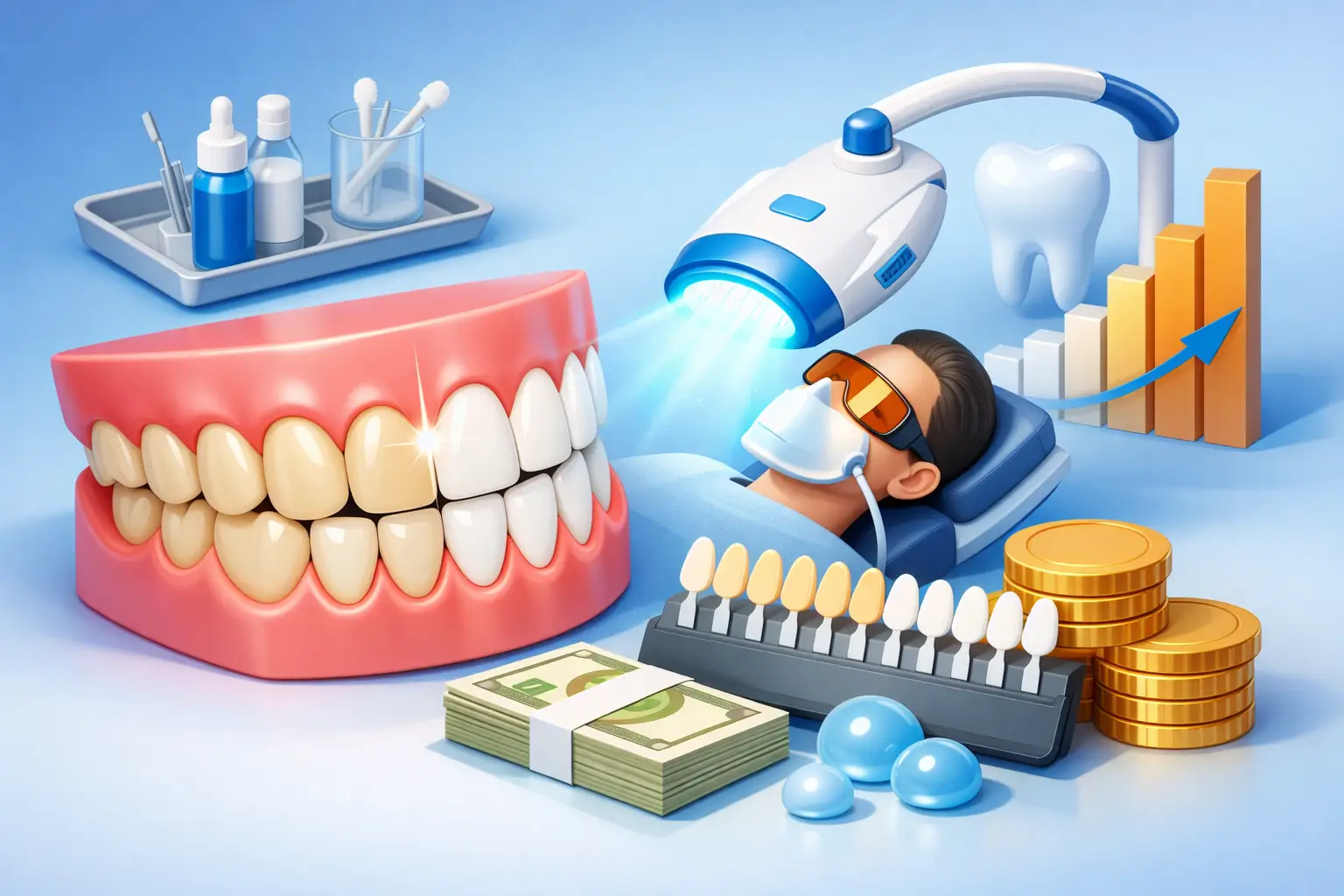
The biggest factor is the whitening method itself. In-chair whitening is usually priced higher because it is performed under clinical supervision using stronger whitening agents and professional isolation techniques to protect your gums and soft tissues. Take-home whitening, supplied by your dentist, is often more budget-friendly and works gradually over days or weeks using custom trays.
Your starting shade also matters. Teeth with mild yellowing from coffee, tea, red wine or normal ageing often respond more predictably than deep internal staining. If your teeth are significantly discoloured, more than one session may be needed, which can increase the total cost.
Another part of the price is preparation. Before whitening, your dentist may recommend a check-up and clean to remove plaque and surface staining. This helps the whitening gel work more evenly and makes sure there are no untreated problems, such as tooth decay, leaking fillings or gum inflammation, that could cause discomfort during treatment.
Typical professional teeth whitening cost in Australia
Across Australia, professional teeth whitening cost can range from a few hundred dollars for dentist-supervised take-home kits to closer to a thousand dollars or more for premium in-chair treatments. That is a broad range, but it reflects real differences in materials, chair time, customisation and aftercare.
Take-home whitening from a dental clinic commonly sits at the lower end of the professional scale. You are paying for custom-made trays, professional-grade whitening gel and instructions tailored to your teeth. This option suits many adults who want flexibility and are happy to whiten gradually at home.
In-chair whitening is generally at the higher end because it is completed in the clinic and can deliver a faster visible change. Some practices also offer a combined treatment, where you have an in-chair session followed by custom take-home trays to extend or maintain the result. This can be a good middle ground for patients who want a stronger initial lift but also value long-term control.
If you are seeing heavily discounted whitening advertised online or through shopping deals, it is worth checking exactly what is included. A low upfront figure may not include a dental examination, custom trays, top-up gel or any assessment of whether whitening is suitable for your teeth.
Why professional whitening costs more than off-the-shelf kits
Chemist whitening strips and supermarket kits can look appealing because the sticker price is lower. For some people, they may provide a mild improvement. But they are not equivalent to professional whitening.
The main difference is supervision and fit. Professional whitening starts with an assessment of your oral health and your goals. That matters because not every stain responds well to bleaching, and not every smile whitens evenly. Fillings, crowns, veneers and bridges do not change colour with whitening gel, so your dentist needs to consider how the final result will look as a whole.
Custom trays also make a noticeable difference. They help the gel sit evenly against the teeth and reduce the chance of it spreading onto the gums. Generic trays can be bulky, less precise and more likely to cause irritation.
There is also the safety factor. Whitening is generally very safe when done properly, but stronger products should be used carefully. Professional care lowers the risk of avoidable sensitivity and helps you get a result that is both effective and appropriate for your teeth.
What might be included in the cost
If you are trying to understand value, ask what the quoted fee actually covers. In many cases, professional whitening is not just the whitening gel itself.
A proper treatment plan may include a dental examination, shade assessment, photos, custom trays for home use, written instructions, review appointments and advice on how to maintain results. In-chair treatment may also include protective barriers for the gums, desensitising products and follow-up care if your teeth become temporarily sensitive.
That is why two prices can look very different. One may cover the full process from assessment to aftercare, while another may be a basic fee with extras added later.
Is professional teeth whitening worth the cost?
For many patients, yes – especially if they want a noticeable result with less guesswork. Professional whitening is often worth it because it is customised, safer than DIY trial and error, and more likely to deliver even results.
That said, it depends on your expectations. Whitening can lift many common stains and make teeth look fresher and brighter, but it will not turn every smile paper-white. Teeth vary naturally in shade, and the best cosmetic result is usually one that looks clean and natural rather than overdone.
It is also worth weighing up how long the result may last. Whitening is not permanent. Coffee, tea, red wine, smoking and normal ageing all affect how long the brightness lasts. Some people need occasional top-ups to maintain the look they want, which adds to the long-term cost.
Who may need extra care before whitening
Not everyone should go straight into teeth whitening. If you have untreated decay, cracked teeth, gum disease or worn enamel, your dentist may recommend addressing those concerns first. That can change the total cost and timing, but it is the safer approach.
Patients with sensitive teeth may still be able to whiten, though sometimes a gentler method or slower treatment plan is better. This is where a personalised approach matters. Rushing into the strongest option is not always the right choice.
If you have crowns, veneers, fillings or bridges on visible front teeth, the planning becomes more important. Whitening only affects natural tooth structure. If your natural teeth lighten but your restorations stay the same shade, colour matching may become an issue.
How to choose the right whitening option for your budget
If cost is part of the decision, the best starting point is not the cheapest ad you can find. It is a clear discussion about what result you want, what condition your teeth are in, and how quickly you want to see a change.
Take-home whitening is often the most practical option for budget-conscious adults who still want a professional standard of care. It spreads the process out, usually costs less than in-chair treatment, and gives you trays that can often be reused later with top-up gel.
In-chair whitening may suit people with an upcoming event, those who want a faster result, or those who prefer treatment done in the clinic rather than managing it themselves at home. A combined approach may offer the best value for some patients because it pairs immediate improvement with a way to maintain it.
At a local clinic like Riverina Dental Albury, the right plan should feel straightforward, not pressured. A good whitening consultation explains the likely result, any limitations and the full cost before you commit.
Questions worth asking before you book
A short conversation can save a lot of confusion later. Ask whether the quoted fee includes an examination, whether a clean is recommended first, how many applications or syringes are included, and what kind of sensitivity you might expect.
You can also ask how long the result is likely to last in your case and what maintenance usually involves. If you have previous dental work, mention that early so your dentist can talk you through how whitening may affect the overall appearance of your smile.
For some people, whitening is a simple cosmetic refresh. For others, it is one step in a broader treatment plan that may include a clean, replacing old restorations or improving alignment. That is why the most helpful answer to price is rarely a one-size-fits-all number.
A brighter smile should feel achievable, safe and suited to your budget. If you are thinking about whitening, the best next step is a proper dental assessment so you can make a confident choice based on your teeth, not just a price tag.