
A guide to oral cancer screening can feel confronting, particularly if you have noticed a sore spot, a lump or a change in your mouth that will not settle. The reassuring news is that a screening examination is usually quick, gentle and straightforward. It gives your dentist an opportunity to check areas you may not be able to see yourself and to arrange timely follow-up if anything needs closer attention.
Oral cancer can affect the lips, tongue, cheeks, gums, floor of the mouth, roof of the mouth and throat. Like many health conditions, it is generally more treatable when found early. That is why routine dental visits are about far more than teeth cleaning and fillings – they are also an opportunity to look after the health of the soft tissues in and around your mouth.
What oral cancer screening involves
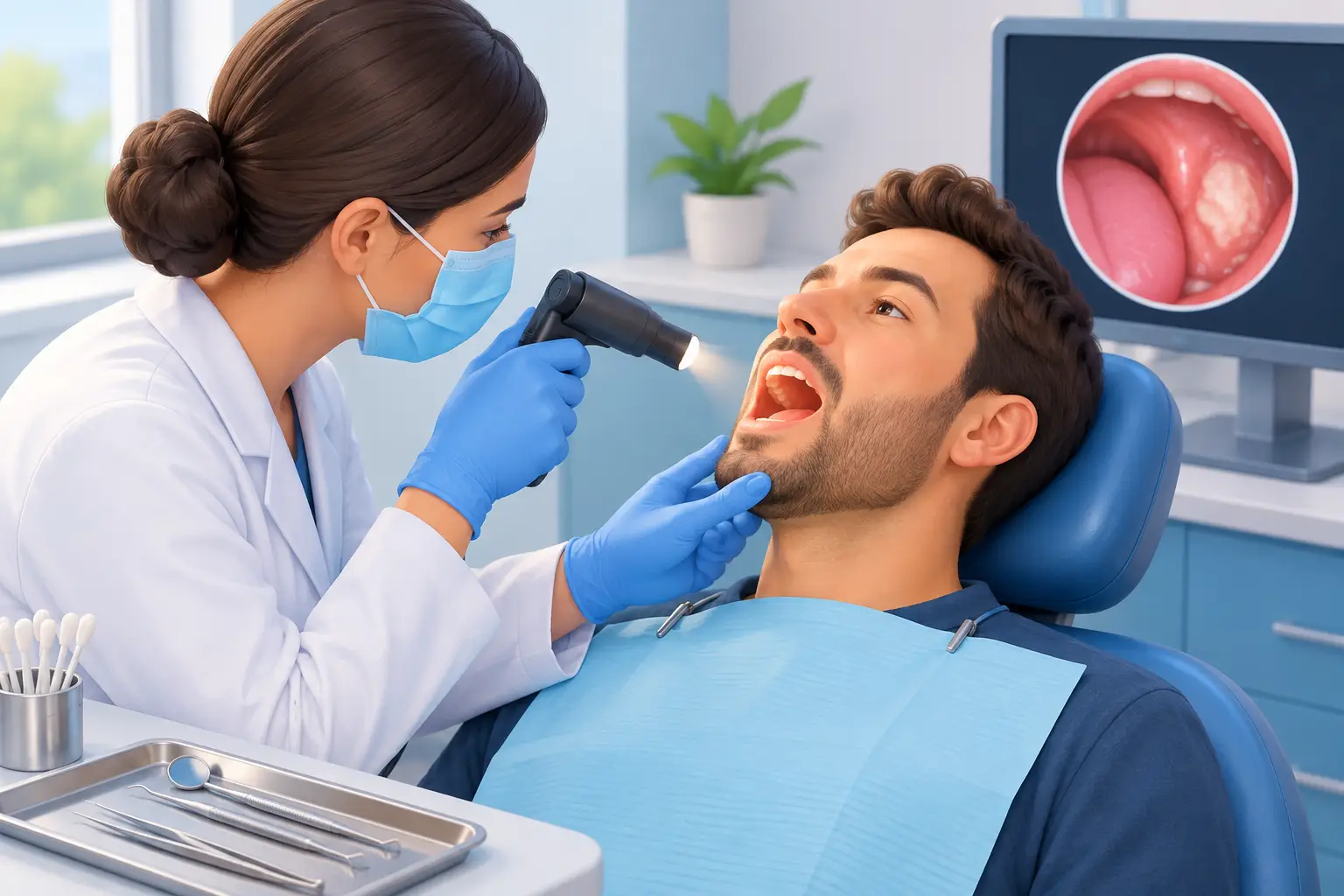
Oral cancer screening is a visual and physical examination performed by a dentist. It is often included as part of a routine dental check-up, although you can also book an appointment specifically because you have a concern.
Your dentist will usually look at your face, neck, lips and mouth, then ask you to move your tongue so they can examine all surfaces. They may gently feel your jaw, neck, tongue and the tissues inside your mouth for unusual swelling, firmness or lumps. This should not be painful, though it can feel a little unfamiliar.
The examination is designed to identify changes that may need monitoring or further investigation. A screening check cannot confirm whether a change is cancerous. If an area looks unusual or has not healed as expected, your dentist may recommend a review appointment, take clinical photographs, or refer you to an appropriate medical or specialist provider. Sometimes the explanation is simple, such as irritation from a sharp tooth, denture rubbing, a cheek bite or an ulcer. The key is not to guess.
Signs worth getting checked
Many mouth changes are harmless and temporary. A sore after biting your cheek, for example, should improve as the area heals. However, a change that lasts longer than two weeks deserves professional assessment, especially if you cannot identify a clear cause.
Please arrange a dental appointment if you notice:
- an ulcer, sore, red patch or white patch that does not heal
- a lump, thickened area or persistent swelling in the mouth, jaw or neck
- unexplained bleeding, numbness, pain or tenderness in the mouth
- difficulty chewing, swallowing, speaking or moving your tongue or jaw
- a persistent sore throat, hoarse voice or feeling that something is caught in your throat
- a change in the fit of dentures, or loose teeth without an obvious dental reason
These signs do not automatically mean oral cancer. Gum disease, infection, trauma and other conditions can cause similar symptoms. Still, early assessment offers clarity and allows the right care to begin sooner.
If you have trouble breathing or swallowing, rapidly increasing swelling, or significant bleeding, seek urgent medical care rather than waiting for a routine appointment.
Who should have regular screening?
Every adult can benefit from an oral soft-tissue examination during regular dental care. Oral cancer does not only affect people who smoke or drink heavily, and some cases occur in people with no known risk factors. Routine checks help establish what is normal for you and make it easier to spot a new change.
Your personal risk may be higher if you use tobacco products, vape, drink alcohol regularly or heavily, have had significant sun exposure to your lips, or have previously had oral cancer. Certain strains of human papillomavirus, known as HPV, are also linked with cancers in the throat area. Age, medical history and immune health can influence risk too.
Risk factors are not a reason for blame. They are simply useful information for tailoring care. If you smoke, reducing or quitting is one of the most meaningful steps you can take for your oral and general health. Your dentist can discuss the impact on your mouth and direct you towards appropriate support.
Your guide to oral cancer screening appointments
You do not need to prepare extensively for a screening examination. If possible, make a note of when you first noticed the change, whether it has altered in size, colour or sensation, and whether it is painful. Let your dentist know about medications, recent illness, tobacco or vaping use, alcohol intake, and any history of cancer treatment.
At the appointment, be direct about what you have noticed. Point to the exact area and explain what feels different. It can also help to mention whether a sore comes and goes, whether it bleeds, or whether eating certain foods aggravates it.
A thorough check generally includes a conversation about your symptoms and health history, followed by an examination of the relevant area and surrounding tissues. Your dentist may also check for common dental causes, such as a broken filling edge, a sharp tooth, infection or an ill-fitting appliance. This matters because removing the source of irritation may allow the tissue to heal, but it should always be reviewed if it does not.
If a referral is recommended, try not to assume the worst. Referrals are a careful and appropriate way to get a definitive opinion when a change needs more investigation. Depending on the situation, this may involve an oral and maxillofacial surgeon, an ear, nose and throat specialist, a GP, or another healthcare professional. A biopsy is the test used to diagnose suspicious tissue changes, not the initial visual examination alone.
How often should you be checked?
For many people, oral cancer screening can be completed at their regular dental examination. The ideal recall interval depends on your oral health, risk factors and any treatment you are having. Some patients benefit from six-monthly reviews, while others may need more frequent monitoring of a particular area.
The practical rule is simple: do not wait for your next routine visit if you have a symptom that has lasted more than two weeks. Book sooner, even if your last check-up was recent. Changes in the mouth can be difficult to judge at home, and reassurance from a proper examination is valuable.
Between appointments, take a moment each month to look at your lips, gums, cheeks, tongue and the roof of your mouth in good light. You are not trying to diagnose yourself. You are simply becoming familiar with your normal, so a persistent change is easier to recognise. If you wear dentures, remove them for this quick check and pay attention to any areas that repeatedly rub or become sore.
Gentle care when you are worried
It is common to feel anxious before raising a concern about oral cancer. Some people put it off because they are worried about the cost, embarrassed about smoking or alcohol use, or afraid of what they might hear. A compassionate dental team should make space for those concerns, explain the examination clearly and discuss sensible next steps without judgement.
At Riverina Dental Albury, we believe good care starts with listening. If you are worried about a mouth change, we can assess it gently, explain what we see in plain language and help you understand any follow-up that may be needed. Early checks are a practical act of care for yourself – not a reason to panic.