
A clear retainer can look perfectly clean while holding a thin film of plaque, saliva and bacteria. That film is often what causes the cloudy appearance, stale smell or unpleasant taste some people notice when they put their retainer back in. Knowing how to clean clear retainers properly helps keep them fresh, comfortable and discreet, while protecting the material that keeps your teeth in position.
Clear retainers are designed to fit closely over your teeth. That close fit is why they are effective, but it also means they need consistent care. A quick rinse after taking one out is helpful, yet it is not enough on its own. A simple daily routine will usually prevent most staining and buildup.
How to clean clear retainers every day
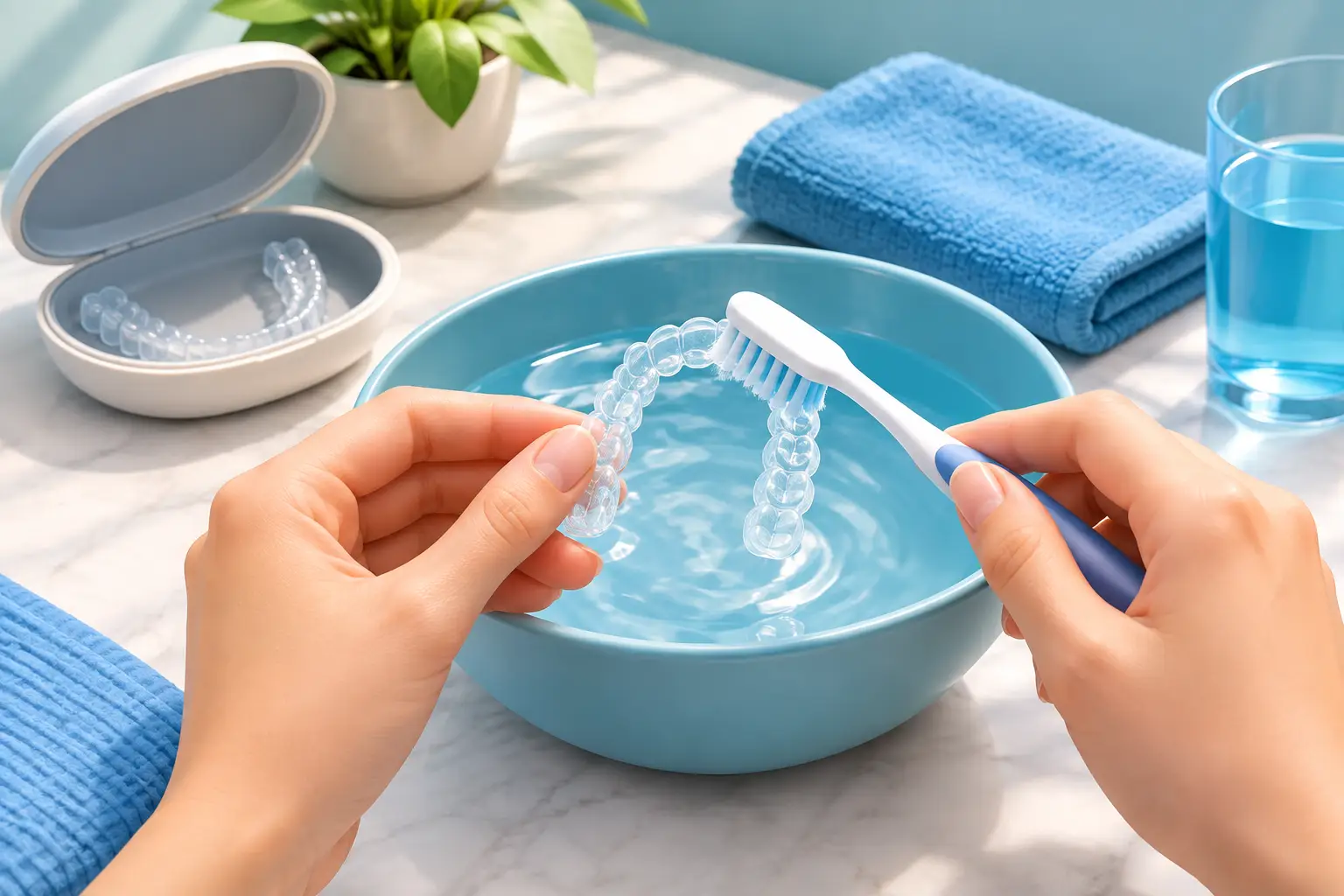
Start by rinsing your retainer with cool or lukewarm water as soon as you remove it. This stops saliva and debris from drying onto the plastic, which makes them harder to remove later. Hot water is not suitable because heat can warp clear retainer material, changing how it fits.
Once a day, gently brush the retainer using a soft toothbrush that is used only for this purpose. Use a small amount of mild, clear liquid soap and brush both the inside and outside surfaces. Pay attention to the grooves that sit against the teeth, where plaque tends to collect. Rinse it thoroughly under cool water before placing it back in your mouth or storing it in its case.
Choose a soft brush and light pressure. Scrubbing aggressively can create fine scratches. Over time, those scratches make a retainer look cloudy and provide more places for bacteria and stains to cling to.
If you are out for the day, at least rinse your retainer before putting it in its case. When you get home, give it its proper clean. This small habit is particularly useful after coffee, soft drink, snacks or meals that can leave residue on your teeth and retainer.
Give your retainer a deeper clean regularly
A daily brush removes most surface film, but a deeper clean once or twice a week can help if your retainer is beginning to look dull or develop an odour. Retainer-cleaning tablets or crystals made specifically for clear orthodontic appliances are generally a safe option when used according to the product directions.
Place the retainer in a clean glass or container with the recommended amount of water and cleaning solution. Do not leave it soaking for longer than directed in the hope of getting a better result. Longer is not always better, particularly with plastic appliances. After soaking, rinse it well and gently brush away any loosened residue.
Some people use a diluted white vinegar soak to help with mineral deposits, especially where hard water leaves a chalky film. If you choose this approach, use equal parts white vinegar and cool water for a short soak, then brush gently and rinse very thoroughly. This is best as an occasional measure rather than a daily routine. If your retainer has a persistent smell or visible buildup that will not lift, it is better to ask your dentist or orthodontic provider for advice than keep experimenting with stronger home remedies.
Products and methods to avoid
Clear retainers are durable, but they are not indestructible. Several common cleaning methods can damage them or make them unpleasant to wear. Avoid the following:
- Hot or boiling water, dishwashers and microwaves. Heat can distort the plastic, even if the change is not immediately obvious.
- Toothpaste, particularly whitening or gritty formulas. These can be abrasive and leave scratches that make the retainer appear cloudy.
- Mouthwash containing alcohol or strongly coloured dyes. Alcohol may affect some plastics, while dyes can stain the retainer.
- Bleach, household cleaners and denture cleaner unless your dentist has specifically advised it. These products may be too harsh for clear orthodontic materials.
- Leaving the retainer loose in a tissue, pocket or on a café table. A retainer is easily thrown away, crushed or exposed to dirt and bacteria.
Toothpaste is the one that catches many people out. It feels like the obvious choice because retainers go in your mouth, but toothpaste is formulated for enamel, not clear plastic. Mild liquid soap and a dedicated soft brush are the safer everyday combination.
Keep the case clean too
There is little benefit in carefully cleaning your retainer and then placing it in a dirty, damp case. Wash the case every day with warm water and mild soap, rinse it well and allow it to air-dry completely before closing it. A closed, wet case can encourage bacterial growth and create the same odour you are trying to prevent.
When you are not wearing your retainer, store it in its case. This matters at home as much as it does when you are out and about. Pets are surprisingly drawn to retainers, and clear plastic can be difficult to spot if it falls onto carpet, bedding or the footpath.
Wear it with clean teeth
Your retainer sits against every surface of your teeth, so its cleanliness is closely tied to your daily oral hygiene. Brush your teeth before reinserting it, especially at night. Putting a retainer over teeth that still have food particles, sugary drink residue or plaque can trap these substances against the enamel for hours.
Water is the best drink when your retainer is in. Coffee, tea, red wine, soft drinks and sports drinks can stain the plastic or leave sugars and acids beneath it. If you do have anything other than water, remove the retainer first where practical, then rinse both your mouth and the appliance before putting it back in.
This does not mean your retainer must be spotless every minute of the day. Life is busy, and occasionally you may need to place it in its case after a quick rinse. The goal is a reliable routine, not perfection. A thorough clean each day and sensible storage will make the biggest difference.
When cloudiness, smell or poor fit needs attention
A slightly cloudy retainer may simply need a careful clean. However, heavy staining, visible cracks, sharp edges or a retainer that no longer seats fully over your teeth should not be ignored. A warped or damaged retainer may not hold your teeth as intended, and forcing it into place can be uncomfortable.
A persistent odour can also be a sign that bacteria or mineral deposits have built up in scratches and hard-to-reach areas. Your dentist can inspect the retainer, recommend an appropriate cleaning approach and let you know if a replacement is the better option. Clear retainers do not last forever, particularly if they are worn nightly over many years.
If you have stopped wearing your retainer for a while and it now feels very tight, do not try to solve the issue by cleaning it and pushing harder. Teeth can shift, sometimes more quickly than expected. Arrange a review so your dentist can assess the fit and discuss the safest next step.
A simple routine worth keeping
The easiest way to protect a clear retainer is to make cleaning part of your evening routine: brush your teeth, gently clean the retainer, rinse the case and store everything properly. It takes only a few minutes and can help your appliance stay clear, comfortable and effective.
If you are unsure whether your retainer is still fitting properly or it has become difficult to clean, the team at Riverina Dental Albury can provide calm, practical advice and help you protect the smile you have worked hard for.