
A brightening treatment should leave you feeling more confident about your smile, not wincing when you sip a cold drink. Tooth sensitivity after whitening is a common side effect, particularly in the first day or two, and it is usually temporary. Knowing why it happens can help you ease the discomfort without giving up on a smile you are happy with.
Why whitening can make teeth sensitive
Most whitening treatments use peroxide-based gels to break down the stains within tooth enamel. This is how yellowing from coffee, tea, red wine, smoking and ageing can be lifted without removing the tooth surface itself.
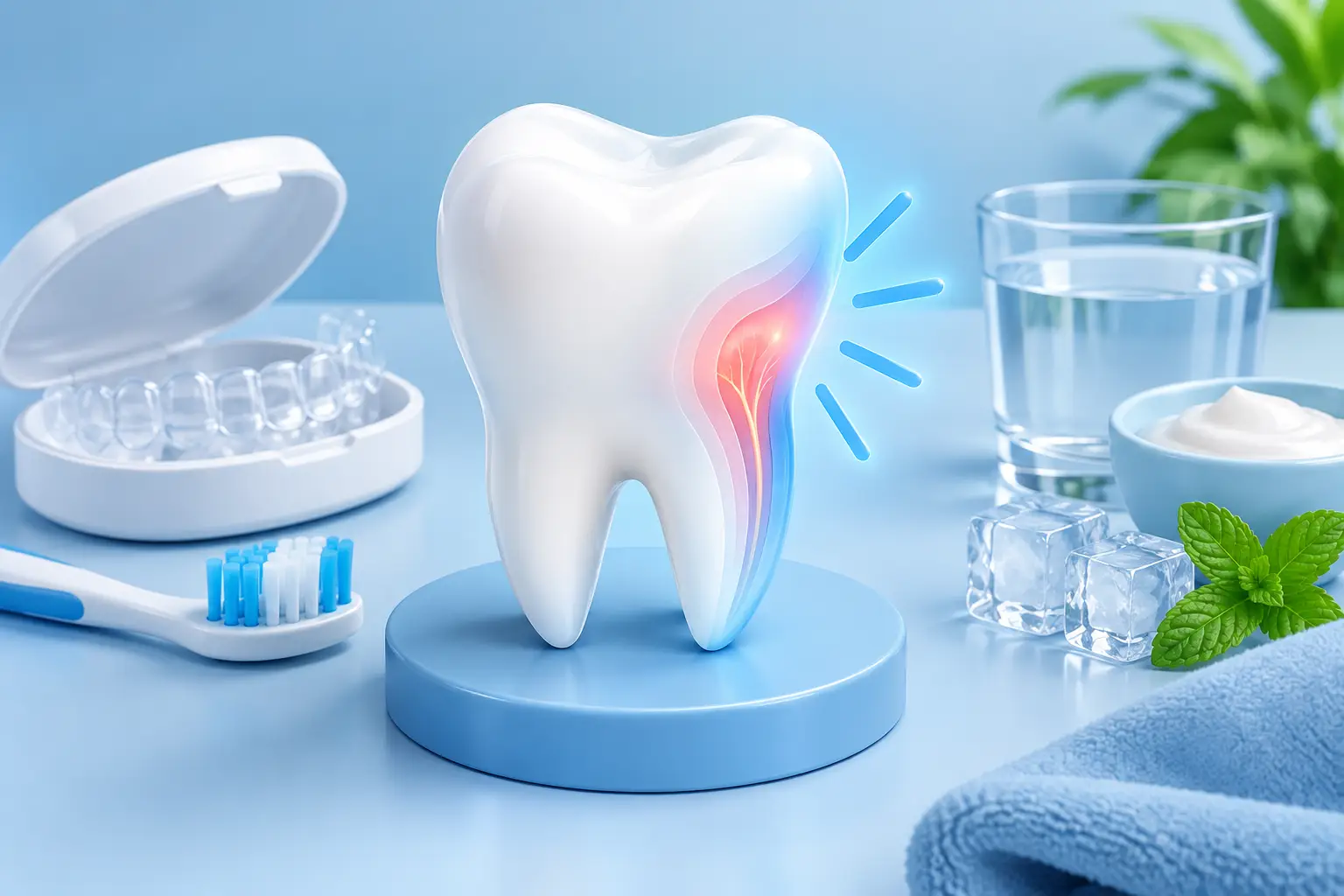
During treatment, the whitening agent can temporarily move through tiny pathways in the enamel and dentine. Dentine is the layer beneath the enamel and contains microscopic channels leading towards the nerve inside the tooth. Cold air, chilled drinks or pressure from biting can then trigger a brief, sharp sensation.
This does not automatically mean the whitening has damaged your teeth. In a healthy mouth, sensitivity is generally a short-lived response that settles as the tooth rehydrates and the nerve calms. However, stronger products, longer wear times and pre-existing dental concerns can make it more noticeable.
Sensitivity can also be more likely if you already have exposed root surfaces from gum recession, worn enamel, cracks, cavities, leaking fillings or untreated gum disease. This is one reason a dental assessment is worthwhile before whitening, especially if your teeth are already reactive to hot or cold foods.
How long does tooth sensitivity after whitening last?
For many people, tooth sensitivity after whitening improves within 24 to 48 hours. Some may notice it for several days, particularly after an in-chair session or when using take-home trays frequently. The feeling may come and go rather than remain constant.
Mild, brief twinges that are clearly linked to cold food or drinks are usually reassuring. Persistent pain is different. A tooth that aches on its own, hurts when you bite, wakes you at night or remains painful beyond a few days deserves a dental review. Whitening may have drawn attention to an issue that was already present, rather than caused it.
The right timeframe also depends on the whitening method. Professionally prescribed home whitening can often be adjusted by reducing how often the trays are worn. In-chair treatment may produce a stronger short-term response but is completed under clinical guidance. Over-the-counter strips, gels and trays vary widely in fit and strength, which can make results and sensitivity less predictable.
Practical ways to settle sensitivity
The simplest first step is to pause whitening until your teeth feel comfortable again. Pushing through sensitivity rarely produces a better result, and a short break is unlikely to undo the shade change you have achieved.
Use a toothpaste designed for sensitive teeth twice daily. These products work by helping block the pathways that carry sensations towards the tooth nerve. For best results, brush gently with a soft toothbrush and avoid rinsing straight away, so the toothpaste has time to remain on your teeth. Your dentist may also recommend applying a small amount directly to sensitive areas before bed.
For a day or two, choose foods and drinks that are closer to room temperature. Iced water, ice cream and hot coffee are common triggers. Highly acidic drinks such as soft drink, sports drinks and citrus juice can also make an already sensitive mouth feel worse, so it is sensible to limit them while things settle.
If you are using dentist-provided trays, ask before changing your plan. Depending on your teeth and the whitening gel prescribed, the solution may be as simple as wearing the trays for less time, using them every second night, or taking a longer break between applications. Do not add more gel in the hope of quicker results. A small amount placed correctly in each tray compartment is enough.
An over-the-counter pain reliever may be appropriate for some adults, provided it is safe for you and taken exactly as directed on the label. Your pharmacist, GP or dentist can help if you are unsure, particularly if you are pregnant, have a medical condition or take regular medication.
Avoid common whitening mistakes
It can be tempting to chase a very white shade, especially before a wedding, holiday or important event. Yet frequent treatments and longer-than-recommended applications are among the most avoidable causes of discomfort. Teeth have a natural range of shades, and healthy-looking results do not need to be an artificial paper white.
Avoid using home remedies such as lemon juice, charcoal powder, baking soda scrubs or abrasive whitening pastes. They may look like quick fixes, but they can wear the enamel surface or irritate gums. Once enamel is lost, it does not grow back.
Be careful when combining products, too. Using whitening strips while also wearing whitening trays, or following an in-chair session immediately with a supermarket product, can expose teeth to more whitening agent than intended. More treatment is not always better treatment.
Whitening does not change the colour of fillings, crowns, veneers or dentures. If a front filling or crown no longer matches after whitening, speak with your dentist about the timing of any replacement work. This helps avoid paying for cosmetic treatment before the final tooth shade has settled.
When sensitivity needs a dental check
Sensitivity should be assessed promptly if it is severe, localised to one tooth, or paired with swelling, a bad taste, bleeding gums or facial pain. These signs can point to a cavity, cracked tooth, infection or gum problem that needs treatment. Whitening should be paused until the cause is clear.
It is also wise to arrange a check-up before whitening if you have not seen a dentist recently, have noticed gum recession, or know you have untreated dental work. A dentist can identify issues that may make whitening uncomfortable and discuss a safer approach for your mouth.
At Riverina Dental Albury, whitening advice is tailored to the condition of your teeth, gums and existing dental work. For some patients, a lower-strength gel used gradually is the most comfortable option. For others, treating decay, gum inflammation or worn fillings first is the better long-term decision. A personalised plan protects both your comfort and your result.
Can sensitivity be prevented next time?
Not every case can be prevented, but planning makes a real difference. Begin with a dental examination and professional clean if needed. Removing surface build-up can help whitening work more evenly, while an examination can uncover the causes of sensitivity before the gel is used.
Follow the instructions for your particular product rather than a friend’s routine or advice from social media. The amount of gel, concentration, tray fit and wearing time all matter. A custom-made tray, for example, helps keep gel against the teeth and away from the gums, whereas a poorly fitting tray can allow it to spread and cause irritation.
If you have been sensitive before, raise it before your next treatment. Your dentist may recommend desensitising toothpaste in the lead-up to whitening, a modified schedule or a different concentration. Taking a slower route can be a worthwhile trade-off for a more comfortable experience and a result you can maintain.
A brighter smile should never come at the expense of a sore one. If sensitivity is not settling or you are uncertain about your whitening routine, a timely dental appointment can provide clear answers and gentle, practical care.