
Your braces may be off, but the job of protecting your new smile has only just begun. The question “retainer after braces how long?” comes up at nearly every removal appointment, and the honest answer is: longer than most people expect. Teeth can continue to shift throughout life, so retainers are not simply a short-term finishing step. They are how you hold onto the time, effort and investment you have made in orthodontic treatment.
At first, wearing a retainer can feel like one more thing to remember. With a clear plan and the right type of retainer, it soon becomes part of your routine – much like brushing your teeth before bed.
Retainer after braces: how long is enough?
For most patients, retainers should be worn for life. That does not necessarily mean full-time wear forever. The schedule usually changes over time as the bone and tissues around your teeth settle.
In the first few months after braces or clear aligners, your dentist or orthodontist will generally recommend wearing a removable retainer full-time, only taking it out for eating, drinking anything other than water, and cleaning your teeth. This early period is particularly important because teeth have a strong tendency to move back towards their original positions.
After this settling phase, many patients can move to night-time wear. For some people, this happens after several months; for others, full-time wear is advised for closer to a year. Your recommended schedule depends on your bite, the amount of movement achieved, your age, the type of orthodontic treatment you had and how stable your teeth appear at review appointments.
Long term, night-time retainer wear is the most reliable way to maintain straight teeth. A few nights without it may not cause an obvious change. Weeks or months without it can be a different story.
Why teeth can move after orthodontic treatment
Teeth are not set in concrete. They are held in bone and supported by fibres and soft tissues that respond to everyday forces. Chewing, clenching, tooth wear and natural changes in the jaw can all contribute to gradual movement over the years.
The teeth that were most crowded or rotated before treatment are often the most likely to shift again. Lower front teeth are especially prone to crowding. Wisdom teeth are often blamed for this, but late crowding can happen whether wisdom teeth are present or not.
This is why a retainer is best viewed as ongoing maintenance, not a sign that your braces treatment is unfinished. Retention protects the result you worked hard to achieve.
Which retainer will you have?
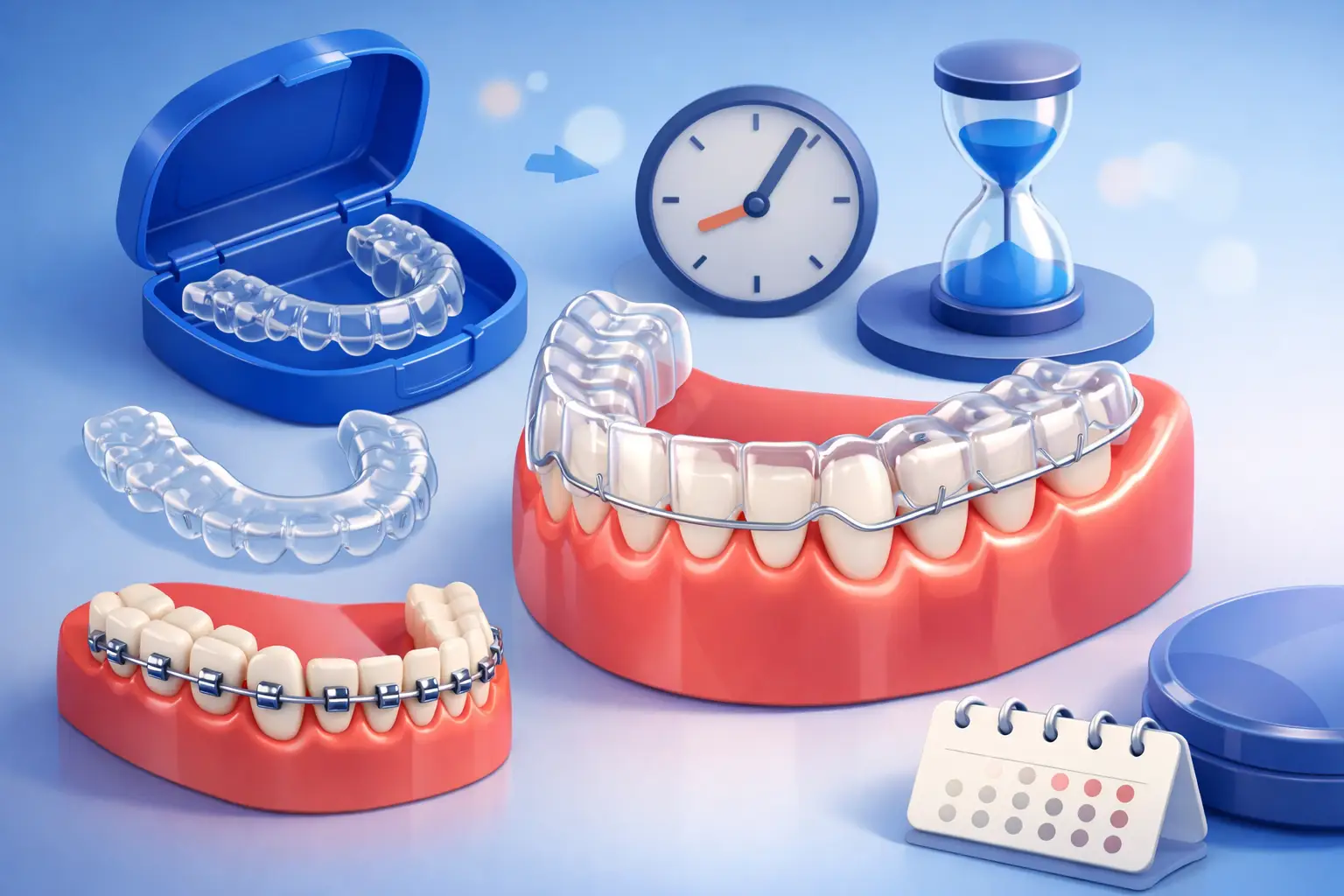
There are two main kinds of retainers, and some patients benefit from using both.
Removable clear retainers
Clear retainers fit closely over your teeth and are discreet, comfortable and easy to use. They are popular after braces and Invisalign because they are barely noticeable. They need regular cleaning and should always be stored in their case when not in your mouth. Retainers wrapped in a napkin are very easily thrown into the rubbish.
Clear retainers can wear, crack or loosen over time, particularly for people who grind their teeth. They are usually replaced periodically. If yours no longer feels snug, arrange a review rather than trying to force it into place.
Fixed retainers
A fixed retainer is a thin wire bonded behind the front teeth, most commonly the lower front teeth. It remains in place all the time and is not visible when you smile. It can be an excellent option for patients whose lower teeth were significantly crowded or who may find it difficult to remember a removable retainer every night.
A fixed retainer still requires care. Food and plaque can collect around the wire, so brushing carefully and using floss threaders or interdental brushes is essential. The bonding can occasionally loosen, and even a small break may allow a tooth to move. If the wire feels different, sharp, loose or lifted from a tooth, book an appointment promptly.
Fixed retainers are helpful, but they do not always replace a removable retainer. Your dentist may recommend a clear night retainer as added protection for all teeth and for the bite.
What happens if you stop wearing your retainer?
Sometimes teeth stay fairly stable. Sometimes they move slowly enough that you do not notice until an old photo makes the change clear. In other cases, a retainer that once fitted comfortably will suddenly feel tight after only a short break.
If your retainer still fits but feels snug, do not ignore it. Wear it as directed and contact your dental team if discomfort persists. If it will not seat fully, do not force it. Forcing a retainer over moved teeth can damage the appliance, irritate your gums or place pressure in the wrong areas.
The next step may be as simple as having a new retainer made. If there has been more substantial shifting, a short course of clear aligner treatment may be needed before retention can begin again. Acting early is usually simpler and more budget-friendly than waiting for further movement.
Making retainer wear easy to maintain
The best retainer is the one you will actually wear. Keep its case beside your toothbrush, on your bedside table or in another consistent spot. Setting a reminder on your mobile can help until night-time wear becomes automatic.
Clean a removable retainer daily with a soft toothbrush, cool water and the cleaning product recommended by your dentist. Avoid hot water, as heat can warp clear plastic. Toothpaste can be too abrasive for some retainers, leaving tiny scratches where plaque can build up. Never leave a retainer where pets can reach it – dogs are particularly fond of chewing them.
Bring your retainer to regular dental check-ups. Your dentist can check its fit, inspect a fixed wire, look for wear caused by grinding and make sure your teeth are staying where they should. This is especially valuable if you have noticed a change in your bite or a retainer that feels tighter than usual.
Retainers and special situations
Life changes can affect retainer needs. Pregnancy, gum disease, tooth loss, new crowns or fillings, and jaw clenching may all alter how teeth meet. If you are planning restorative dental work, tell your dentist that you have had orthodontic treatment and bring your retainer along where possible. A new crown or filling can sometimes change the fit of a clear retainer.
For patients with gum problems, maintaining healthy gums is just as important as wearing the retainer. Teeth with reduced gum and bone support can move more easily. Gentle, consistent home care and regular professional reviews help protect both your orthodontic result and your long-term oral health.
When to contact your dentist
Arrange a review if your removable retainer is lost, cracked, warped, loose or suddenly too tight. The same applies if your fixed retainer feels loose, has a sharp edge, or appears detached from one tooth. Do not wait until your next routine visit if you suspect movement, as early attention can prevent a larger correction later.
At Riverina Dental Albury, we understand that finishing braces is an exciting milestone, not the end of caring for your smile. A personalised retainer plan, regular checks and a quick call when something does not feel right can help your result stay as confident as the day your braces came off.