A broken denture can turn an ordinary morning into a stressful one. Eating becomes difficult, speaking may feel uncomfortable, and you may worry about being seen in public. Same day denture repair can often help restore comfort quickly, but the safest result depends on what has broken, how the denture fits, and whether the underlying problem also needs attention.

At Riverina Dental Albury, we understand that dentures are part of your everyday life, not just a dental appliance. If yours has cracked, snapped, become loose or lost a tooth, prompt advice can help you avoid further damage while we assess the most suitable repair or replacement option.

When a broken denture needs prompt care

Dentures can break for obvious reasons, such as being dropped onto bathroom tiles or accidentally knocked off a bench. Other breaks develop slowly. A fine crack may widen over time, a tooth may loosen, or the acrylic base can weaken after years of regular use.

It is worth arranging an appointment promptly if the denture has split, a tooth has come away, the base no longer sits properly, or sharp edges are rubbing your gums. Continuing to wear a damaged denture can irritate soft tissues, alter your bite and turn a straightforward repair into a more involved job.

A denture that suddenly feels loose may not be broken at all. Changes in the gums and jawbone can affect fit over time, particularly after teeth have been removed or when a denture has been worn for many years. In these cases, a repair alone may not solve the problem. A reline, adjustment or discussion about a new denture may offer a better long-term result.

What to do before your appointment

The most helpful first step is simple: remove the denture if it is sharp, unstable or uncomfortable. Place all pieces in a clean container or zip-lock bag and bring them with you. Even small fragments can assist with an accurate repair.

Rinse your mouth gently with warm salt water if your gums are sore. If you have a small sore spot, avoid wearing the denture until it can be checked, unless your dentist has advised otherwise. For discomfort, use suitable pain relief only as directed on the packet or by your health professional.

Please do not use household glue, super glue, adhesive tape or a do-it-yourself repair kit. These products are not designed for use in the mouth and may contain substances that are unsafe if swallowed. They can also distort the denture, make a professional repair harder, and prevent it from sitting correctly against your gums.

If a denture tooth has come loose, keep it with the denture. Avoid trying to push it back into place. The angle and bite need to be checked before it is reattached.

How same day denture repair works

The purpose of a same day denture repair is to get you functioning comfortably again as soon as clinically appropriate. Your dentist will first examine the denture and your mouth. This matters because a crack is often a sign that the denture is under uneven pressure, has been weakened by wear, or no longer fits the shape of your gums.

For a clean break where all pieces are available and the denture still fits well, repair may be possible on the same day. The damaged sections are aligned carefully and joined with dental-grade material. A broken or detached denture tooth can also sometimes be replaced or secured promptly, depending on the denture design and available materials.

Not every repair can or should be rushed. More complex fractures, extensive damage, missing parts or a denture that needs a major fit adjustment may need laboratory work. Your dentist may recommend a temporary solution first, followed by a more durable repair, reline or replacement. This approach can be frustrating when you need your denture back quickly, but it protects your comfort and helps avoid repeat breakages.

The fit matters as much as the break

A repair may restore the denture’s structure, but it should not be treated as a guarantee that the appliance will fit perfectly forever. Dentures rest on living tissues, and those tissues change. Weight loss, medical conditions, medication-related dry mouth, gum changes and natural jawbone remodelling can all affect stability.

After a repair, you may need a short adjustment period. Mild awareness of the repaired area can be normal, but pain, rubbing, clicking, difficulty chewing or a denture that lifts when you speak should be checked. Do not try to reshape or trim it yourself.

Can you wear your denture after it is repaired?

In many cases, yes, provided it feels comfortable and your dentist has confirmed it is safe to wear. Start with softer foods for the first day or two, such as eggs, yoghurt, fish, cooked vegetables or soup. Cut food into smaller pieces and chew evenly on both sides where possible.

Avoid testing a repaired denture with very hard, sticky or chewy foods straight away. Crusty bread, nuts, toffee and tough meat can place extra stress on acrylic and teeth. If the denture has been repaired after a crack, treating it gently is especially sensible while you get used to it again.

Remove and clean your dentures daily. Use a soft denture brush and a cleanser intended for dentures rather than toothpaste, which can be abrasive. Store them safely in a denture container when they are not being worn. Most accidental breaks happen when dentures are wrapped in tissue, left near the basin or placed loosely in a pocket or bag.

When repair is not the best answer

There is a point where repeated repairs cost more in time and comfort than a new denture. If your denture has fractured several times, has worn-down teeth, looks uneven, feels loose, or requires increasing amounts of adhesive, a new appliance may be the more reliable investment.

Your dentist can explain whether a reline might improve the fit of your existing denture, whether a replacement is needed, and what materials and design may suit your needs. For some people, implant-supported options can offer added stability. They are not the right choice for everyone, but they may be worth discussing if a lower denture frequently moves while eating or speaking.

Budget is understandably part of the decision. A clear treatment plan should set out what can be repaired now, what may need attention later, and the likely costs involved. This gives you room to choose an option that supports both immediate comfort and longer-term oral health.

Common questions about denture repairs

How quickly should I seek help for a cracked denture?

As soon as practical. A small crack can spread quickly, especially if you keep wearing the denture while eating. Early assessment may make a simpler repair possible.

Can a denture be repaired while I wait?

Some repairs can be completed the same day, but timing depends on the nature of the damage, the condition of the denture and clinical assessment. Calling ahead with a clear description of the problem helps the dental team prepare for your visit.

What if my denture is hurting my gums but is not broken?

Painful rubbing, ulcers and looseness deserve attention even without visible damage. Your denture may need a minor adjustment, reline or review of the tissues underneath. Do not rely on adhesive to mask ongoing pain.

Is a repaired denture as strong as a new one?

A professional repair can be durable, but the repaired area may remain more vulnerable than an undamaged denture. Its longevity depends on the original denture’s age, fit, the location of the break and how it is cared for afterwards.

A broken denture does not have to leave you struggling through meals or avoiding conversation. Keep the pieces safe, avoid home repairs and arrange professional advice promptly. A careful assessment can restore what is repairable while giving you a practical plan for a denture that feels comfortable in daily life.


A broken denture can turn an ordinary morning into a stressful one. Eating becomes difficult, speaking may feel uncomfortable, and you may worry about being seen in public. Same day denture repair can often help restore comfort quickly, but the safest result depends on what has broken, how the denture fits, and whether the underlying problem also needs attention.

At Riverina Dental Albury, we understand that dentures are part of your everyday life, not just a dental appliance. If yours has cracked, snapped, become loose or lost a tooth, prompt advice can help you avoid further damage while we assess the most suitable repair or replacement option.

When a broken denture needs prompt care

Dentures can break for obvious reasons, such as being dropped onto bathroom tiles or accidentally knocked off a bench. Other breaks develop slowly. A fine crack may widen over time, a tooth may loosen, or the acrylic base can weaken after years of regular use.

It is worth arranging an appointment promptly if the denture has split, a tooth has come away, the base no longer sits properly, or sharp edges are rubbing your gums. Continuing to wear a damaged denture can irritate soft tissues, alter your bite and turn a straightforward repair into a more involved job.

A denture that suddenly feels loose may not be broken at all. Changes in the gums and jawbone can affect fit over time, particularly after teeth have been removed or when a denture has been worn for many years. In these cases, a repair alone may not solve the problem. A reline, adjustment or discussion about a new denture may offer a better long-term result.

What to do before your appointment

The most helpful first step is simple: remove the denture if it is sharp, unstable or uncomfortable. Place all pieces in a clean container or zip-lock bag and bring them with you. Even small fragments can assist with an accurate repair.

Rinse your mouth gently with warm salt water if your gums are sore. If you have a small sore spot, avoid wearing the denture until it can be checked, unless your dentist has advised otherwise. For discomfort, use suitable pain relief only as directed on the packet or by your health professional.

Please do not use household glue, super glue, adhesive tape or a do-it-yourself repair kit. These products are not designed for use in the mouth and may contain substances that are unsafe if swallowed. They can also distort the denture, make a professional repair harder, and prevent it from sitting correctly against your gums.

If a denture tooth has come loose, keep it with the denture. Avoid trying to push it back into place. The angle and bite need to be checked before it is reattached.

How same day denture repair works

The purpose of a same day denture repair is to get you functioning comfortably again as soon as clinically appropriate. Your dentist will first examine the denture and your mouth. This matters because a crack is often a sign that the denture is under uneven pressure, has been weakened by wear, or no longer fits the shape of your gums.

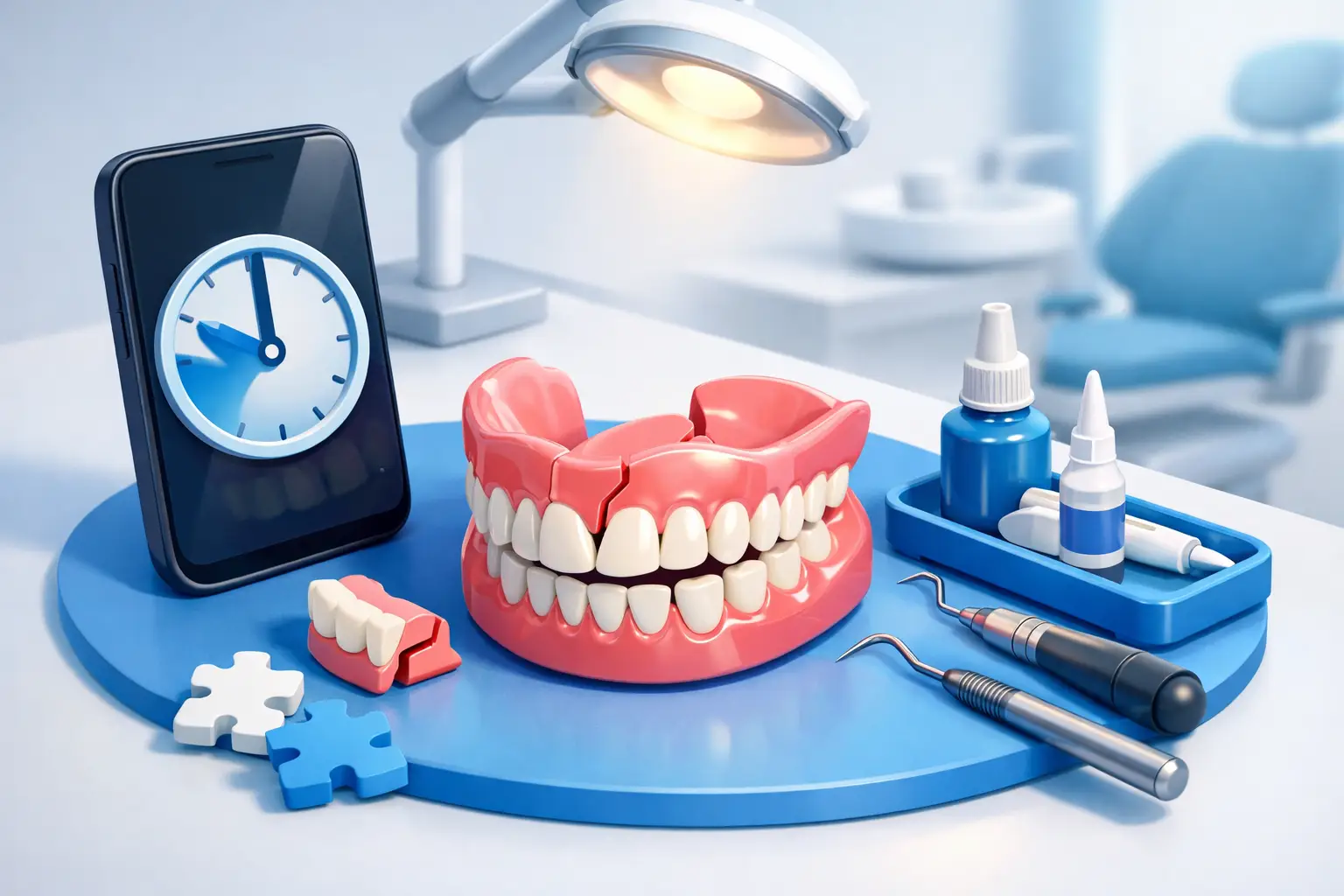
For a clean break where all pieces are available and the denture still fits well, repair may be possible on the same day. The damaged sections are aligned carefully and joined with dental-grade material. A broken or detached denture tooth can also sometimes be replaced or secured promptly, depending on the denture design and available materials.

Not every repair can or should be rushed. More complex fractures, extensive damage, missing parts or a denture that needs a major fit adjustment may need laboratory work. Your dentist may recommend a temporary solution first, followed by a more durable repair, reline or replacement. This approach can be frustrating when you need your denture back quickly, but it protects your comfort and helps avoid repeat breakages.

The fit matters as much as the break

A repair may restore the denture’s structure, but it should not be treated as a guarantee that the appliance will fit perfectly forever. Dentures rest on living tissues, and those tissues change. Weight loss, medical conditions, medication-related dry mouth, gum changes and natural jawbone remodelling can all affect stability.

After a repair, you may need a short adjustment period. Mild awareness of the repaired area can be normal, but pain, rubbing, clicking, difficulty chewing or a denture that lifts when you speak should be checked. Do not try to reshape or trim it yourself.

Can you wear your denture after it is repaired?

In many cases, yes, provided it feels comfortable and your dentist has confirmed it is safe to wear. Start with softer foods for the first day or two, such as eggs, yoghurt, fish, cooked vegetables or soup. Cut food into smaller pieces and chew evenly on both sides where possible.

Avoid testing a repaired denture with very hard, sticky or chewy foods straight away. Crusty bread, nuts, toffee and tough meat can place extra stress on acrylic and teeth. If the denture has been repaired after a crack, treating it gently is especially sensible while you get used to it again.

Remove and clean your dentures daily. Use a soft denture brush and a cleanser intended for dentures rather than toothpaste, which can be abrasive. Store them safely in a denture container when they are not being worn. Most accidental breaks happen when dentures are wrapped in tissue, left near the basin or placed loosely in a pocket or bag.

When repair is not the best answer

There is a point where repeated repairs cost more in time and comfort than a new denture. If your denture has fractured several times, has worn-down teeth, looks uneven, feels loose, or requires increasing amounts of adhesive, a new appliance may be the more reliable investment.

Your dentist can explain whether a reline might improve the fit of your existing denture, whether a replacement is needed, and what materials and design may suit your needs. For some people, implant-supported options can offer added stability. They are not the right choice for everyone, but they may be worth discussing if a lower denture frequently moves while eating or speaking.

Budget is understandably part of the decision. A clear treatment plan should set out what can be repaired now, what may need attention later, and the likely costs involved. This gives you room to choose an option that supports both immediate comfort and longer-term oral health.

Common questions about denture repairs

How quickly should I seek help for a cracked denture?

As soon as practical. A small crack can spread quickly, especially if you keep wearing the denture while eating. Early assessment may make a simpler repair possible.

Can a denture be repaired while I wait?

Some repairs can be completed the same day, but timing depends on the nature of the damage, the condition of the denture and clinical assessment. Calling ahead with a clear description of the problem helps the dental team prepare for your visit.

What if my denture is hurting my gums but is not broken?

Painful rubbing, ulcers and looseness deserve attention even without visible damage. Your denture may need a minor adjustment, reline or review of the tissues underneath. Do not rely on adhesive to mask ongoing pain.

Is a repaired denture as strong as a new one?

A professional repair can be durable, but the repaired area may remain more vulnerable than an undamaged denture. Its longevity depends on the original denture’s age, fit, the location of the break and how it is cared for afterwards.

A broken denture does not have to leave you struggling through meals or avoiding conversation. Keep the pieces safe, avoid home repairs and arrange professional advice promptly. A careful assessment can restore what is repairable while giving you a practical plan for a denture that feels comfortable in daily life.