A gap in your smile can change more than a photograph. It can make chewing feel uneven, affect the way you speak, and leave nearby teeth without the support they need. Smile restoration with dental bridges is a proven way to replace one or more missing teeth with a fixed restoration designed to look natural and feel secure.
For many adults in Albury-Wodonga, a dental bridge offers a practical middle ground: a stable replacement for a missing tooth without the surgical component of an implant. The right choice still depends on your oral health, the condition of neighbouring teeth, your budget and what will best support your smile over time.
What is a dental bridge?
A dental bridge replaces a missing tooth, or several missing teeth in a row, by joining an artificial tooth to supporting teeth or implants. The replacement tooth is called a pontic. It is carefully shaped and colour-matched to sit naturally among your remaining teeth.
In a traditional bridge, the teeth on either side of the gap are prepared to hold custom-made crowns. These crowns support the replacement tooth between them, effectively bridging the space. Once fitted and bonded in place, a bridge stays in your mouth – unlike a removable partial denture.
Dental bridges can be made from strong, natural-looking materials such as ceramic, porcelain fused to metal or zirconia. Your dentist will recommend a material based on where the bridge will sit, how much biting force it needs to handle and the appearance you would like to achieve.
Why replacing a missing tooth matters
A missing tooth is not always painful, particularly once the area has healed. But leaving a gap can create gradual changes that are easy to overlook. Teeth beside the space may drift or tip towards it, while the opposing tooth can move down or up because it no longer meets a biting partner.
These movements can alter your bite and make cleaning more difficult. Food may catch in new places, increasing the risk of plaque build-up, tooth decay and gum concerns. If the missing tooth is visible, you may also find yourself covering your mouth when laughing or avoiding certain foods in public.
A bridge restores the visible space and helps distribute chewing forces more evenly. It cannot prevent every change associated with tooth loss, particularly bone changes beneath the gum, but it can provide meaningful support for function, appearance and confidence.
Smile restoration with dental bridges: who may benefit?
Dental bridges may suit people who have one or more missing teeth with healthy, stable teeth on either side of the gap. They can be particularly worthwhile when those neighbouring teeth already have large fillings, cracks or existing crowns and would benefit from full coverage anyway.
A bridge may also be suitable for someone who would prefer not to have implant surgery, has medical factors that make surgery less appropriate, or wants a shorter treatment pathway. Traditional bridges are usually completed over a small number of appointments, whereas implants need time for healing and integration before the final crown can be fitted.
That said, a bridge is not automatically the best answer for every gap. Preparing otherwise healthy adjacent teeth is a real consideration. An implant can replace a single missing tooth without involving neighbouring teeth, although it involves surgery, generally takes longer and may cost more upfront. A partial denture may be the most economical option in some situations, but it is removable and can feel less fixed than a bridge.
The best treatment is the one that protects your remaining teeth and gums while fitting realistically into your circumstances.
The types of dental bridges
Your options will depend on the location of the missing tooth, the strength of nearby teeth and your bite.
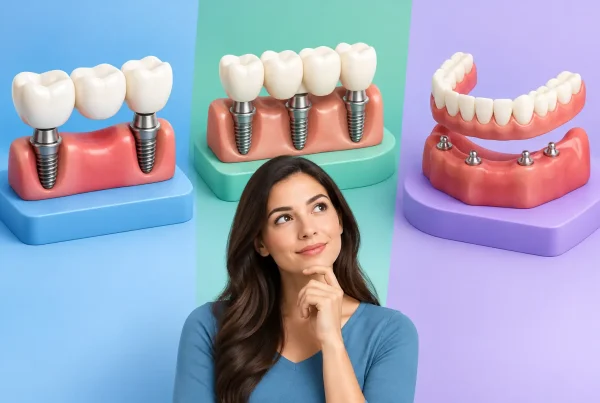
Traditional bridges
This is the most common option. Crowns on teeth either side of the gap support the replacement tooth. Traditional bridges are strong and can be an excellent choice for both front and back teeth when the supporting teeth are healthy enough for crowns.
Cantilever bridges
A cantilever bridge is attached to a supporting tooth on one side only. It is used in select situations, generally where biting forces are lighter. It may be appropriate for some front teeth, but it is not usually ideal for areas that take heavy chewing pressure.
Maryland bridges
Often used to replace a front tooth, a Maryland bridge has a replacement tooth attached to discreet wings bonded behind neighbouring teeth. It usually requires less preparation of the supporting teeth. However, it may not be as suitable for people with a heavy bite or for back teeth, where forces are greater.
Implant-supported bridges
When several teeth are missing together, implants can support a bridge rather than placing an implant for every missing tooth. This approach does not rely on natural teeth for support, but it does involve a surgical treatment process and careful planning.
What to expect during treatment
Your appointment begins with a thorough assessment of your teeth, gums and bite. Your dentist may take X-rays and photographs, and discuss the cause of the missing tooth if this has not already been addressed. Healthy gums and sound supporting teeth are essential for a bridge to last well.
For a conventional bridge, the supporting teeth are gently shaped under local anaesthetic. Digital scans or impressions are then taken so the dental laboratory can create a bridge tailored to your mouth. A temporary bridge may be placed while the final restoration is being made, helping you protect the prepared teeth and maintain your smile.
At the fitting appointment, your dentist checks the bridge’s colour, shape, comfort and bite before bonding it securely. Minor adjustments are normal. Your bite should feel balanced, not high or awkward, and you should be able to speak and eat comfortably once you have adjusted.
If dental treatment makes you anxious, let the team know before your appointment. Gentle care, clear explanations and a paced approach can make a significant difference. At Riverina Dental Albury, treatment planning is personalised, so you can understand each stage before deciding how to proceed.
Living with a dental bridge
A well-made bridge should feel like part of your smile, but it still needs consistent care. The crown surfaces are not vulnerable to decay in the same way as natural enamel, yet the natural teeth and gumline around the bridge remain at risk.
Brush twice daily with fluoride toothpaste and pay close attention to where the bridge meets your gums. Cleaning underneath the replacement tooth is particularly important because plaque and food debris can collect there. Your dentist or hygienist can show you how to use floss threaders, specialised bridge floss or an interdental brush safely and effectively.
Regular check-ups help identify small issues before they become larger ones. Your dentist can assess the bridge, supporting teeth, gums and bite, and professionally clean areas that may be difficult to reach at home. If you grind or clench your teeth, a custom night guard may help protect both your bridge and natural teeth from excess pressure.
Avoid using your bridge to open packaging or bite very hard objects. Foods such as ice, hard lollies and unpopped popcorn kernels can damage natural teeth and restorations alike. If your bridge feels loose, chipped, painful or suddenly high when you bite, arrange a dental review promptly rather than trying to wait it out.
How long do dental bridges last?
Many dental bridges last for years with good design, careful home care and regular professional maintenance. Their lifespan varies because every mouth is different. Gum health, decay risk, bite forces, smoking, teeth grinding and how well the bridge can be cleaned all play a part.
The bridge itself may remain intact while a supporting tooth develops decay or gum disease at its edge. This is why ongoing preventative care matters just as much as the initial treatment. A bridge is an investment in your smile, and protecting the teeth that support it is central to keeping that investment sound.
Cost will also vary according to the number of teeth being replaced, the materials selected, the condition of the supporting teeth and whether other care is needed first. A clear consultation should include a personalised treatment plan, costs and alternatives, allowing you to make a decision that feels informed and manageable.
A missing tooth does not need to dictate how you eat, speak or smile. A careful assessment can show whether a dental bridge is the right path for restoring comfort and confidence, with a plan built around your health, priorities and budget.