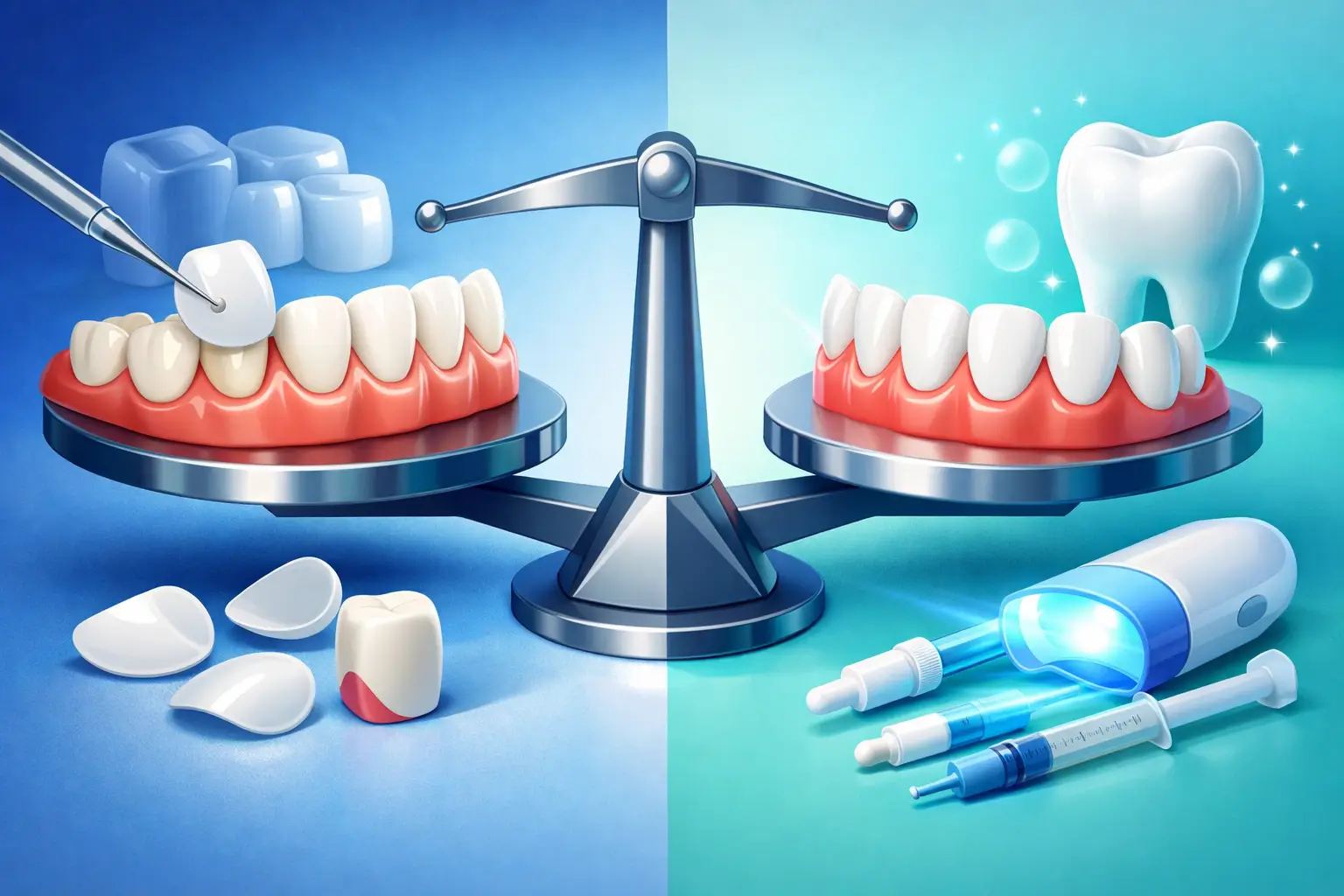

A smile can look darker for more than one reason. Coffee, tea, red wine and natural ageing can leave healthy teeth looking yellow, while chips, uneven edges, gaps and old fillings affect the overall appearance. When considering veneers vs teeth whitening, the best choice depends on what you would like to change, the condition of your teeth and how long you want the result to last.
Whitening and veneers are both cosmetic dental options, but they do very different jobs. One may be a simple way to lift the shade of your natural teeth. The other can reshape and improve the appearance of individual teeth. A dental assessment helps make sure the treatment you choose is kind to your smile, realistic for your budget and appropriate for your long-term oral health.
Veneers vs teeth whitening: the key difference
Teeth whitening changes the colour of natural tooth enamel. Professional whitening uses carefully selected whitening products to reduce stains and lighten the overall shade of your teeth. It is usually chosen when teeth are healthy, well positioned and mainly need a brighter appearance.
Veneers are thin layers of tooth-coloured material bonded to the front surface of a tooth. Composite veneers, for example, use a durable resin material that can be shaped and colour-matched to improve the look of a tooth. They can address colour, but they can also alter shape, length, small gaps and minor chips.
Put simply, whitening works with the teeth you have. Veneers change the visible surface of selected teeth. Neither is automatically better. The right option comes down to the concern you are trying to solve.
When teeth whitening may be the better choice
Professional teeth whitening can be a conservative starting point for adults whose teeth are generally healthy and evenly shaped. It is particularly useful for surface and age-related staining caused by drinks, food, smoking or normal changes to enamel over time.
For many people, whitening is appealing because it preserves the natural tooth structure. There is no need to reshape the tooth simply to achieve a lighter shade. The process can also be a helpful first step before other cosmetic work, as it gives you the opportunity to choose a brighter base shade for any future fillings, crowns or veneers.
Whitening does have limits. It will not change the colour of crowns, bridges, fillings or existing veneers. It may also be less effective for certain deep internal stains, including discolouration linked to trauma, some medications or changes in tooth development. In these situations, the shade may improve, but it may not become as light or even as you hoped.
Temporary sensitivity is possible with whitening. This is usually manageable, especially when treatment is planned around your needs, but it is worth mentioning if you already experience sensitivity to hot or cold foods. Your dentist can help you decide whether professional whitening is suitable and how to approach it comfortably.
When veneers may make more sense
Veneers can be a good option when the issue is more than tooth colour. A tooth that is chipped, worn, slightly uneven, unusually small or affected by a stubborn dark patch may benefit from a carefully designed veneer. Composite veneers can also help close small gaps or create a more balanced smile where minor alignment concerns are present.
Because veneers are made to match your desired shade, they can create a consistent appearance across the teeth being treated. This may be useful if one or two teeth are much darker than the rest and do not respond well to whitening. They can also be considered where whitening would make surrounding natural teeth brighter but leave a noticeably different restoration unchanged.
However, veneers are not a shortcut around dental health concerns. Gum disease, active decay, unstable bite issues and heavy grinding need to be addressed first. A veneer placed on an unhealthy tooth or in a mouth with inflamed gums is unlikely to be a reliable long-term solution.
Composite veneers are repairable in many cases, but they can stain, chip or wear over time. They require regular check-ups and good daily care. If you clench or grind your teeth, a protective night splint may be recommended to help protect the result.
How long do the results last?
Whitening is not permanent because natural teeth continue to be exposed to staining foods, drinks and everyday wear. How long your result lasts varies from person to person. Good brushing, regular professional cleans and sensible habits can help maintain brightness, while touch-up whitening may be appropriate from time to time.
Veneers are designed to be longer-lasting, but they are not lifetime treatments. Their lifespan depends on the material used, your bite, oral hygiene, diet and whether you grind your teeth. Composite veneers may need polishing, repair or replacement over the years. Avoiding habits such as biting pens, chewing ice or opening packaging with your teeth can make a meaningful difference.
The trade-off is worth considering carefully. Whitening can be repeated as needed and generally involves minimal intervention. Veneers can achieve more dramatic shape and colour changes, but they need ongoing maintenance and may eventually require further treatment.
Appearance, comfort and treatment time
Whitening is often the more straightforward option when colour is the only concern. After an examination and discussion of your goals, your dentist can recommend an appropriate professional approach. Results develop over the treatment period and tend to look most natural when the chosen shade suits your complexion, smile and existing teeth rather than aiming for an unnatural level of whiteness.
Composite veneers usually involve a more detailed planning process. Your dentist will assess your teeth, gums, bite and facial features before discussing how many teeth, if any, should be treated. In some cases, minimal preparation is needed. In others, a small amount of tooth surface may need to be adjusted so the veneer sits naturally and does not feel bulky.
Comfort matters in both treatments. If dental visits make you anxious, let the team know early. A gentle, paced approach and clear explanations can make it easier to feel in control at each appointment.
Cost is about more than the first appointment
It is understandable to compare the upfront cost of veneers and whitening, particularly when planning treatment for a household budget. Whitening is usually less expensive initially because it is a more conservative treatment. Veneers involve more clinical time and materials, and costs vary according to the number of teeth treated and the complexity of your smile goals.
The most useful comparison is not simply which option costs less today. Consider what needs to be maintained, whether other dental work is required first, and what result would genuinely make you feel comfortable smiling. Treating a single discoloured tooth with a veneer may be more appropriate than repeatedly whitening teeth that will not respond evenly. Equally, placing veneers on healthy teeth that only need a shade lift may be more treatment than necessary.
A personalised treatment plan should explain the options clearly, including likely maintenance, limitations and costs before you decide. At Riverina Dental Albury, the focus is on helping you understand what is clinically suitable and what works for your priorities, rather than pushing a one-size-fits-all cosmetic solution.
Questions to ask before choosing
Before committing to either option, ask whether your teeth and gums are healthy enough for cosmetic treatment, whether any existing fillings or crowns will need updating, and what level of change is realistic. It is also sensible to ask how the result will be maintained and what happens if you experience sensitivity, staining, chipping or wear later on.
Photos, a smile assessment and an honest conversation can be more valuable than choosing based on before-and-after images alone. Every smile has its own tooth colour, gum line, bite and history. The best cosmetic dentistry should still look like you, just fresher, healthier and more confident.
If you are deciding between a brighter natural smile and a more complete cosmetic change, book a consultation and talk through the small details. A clear plan now can help you choose treatment you will feel happy to live with for years to come.