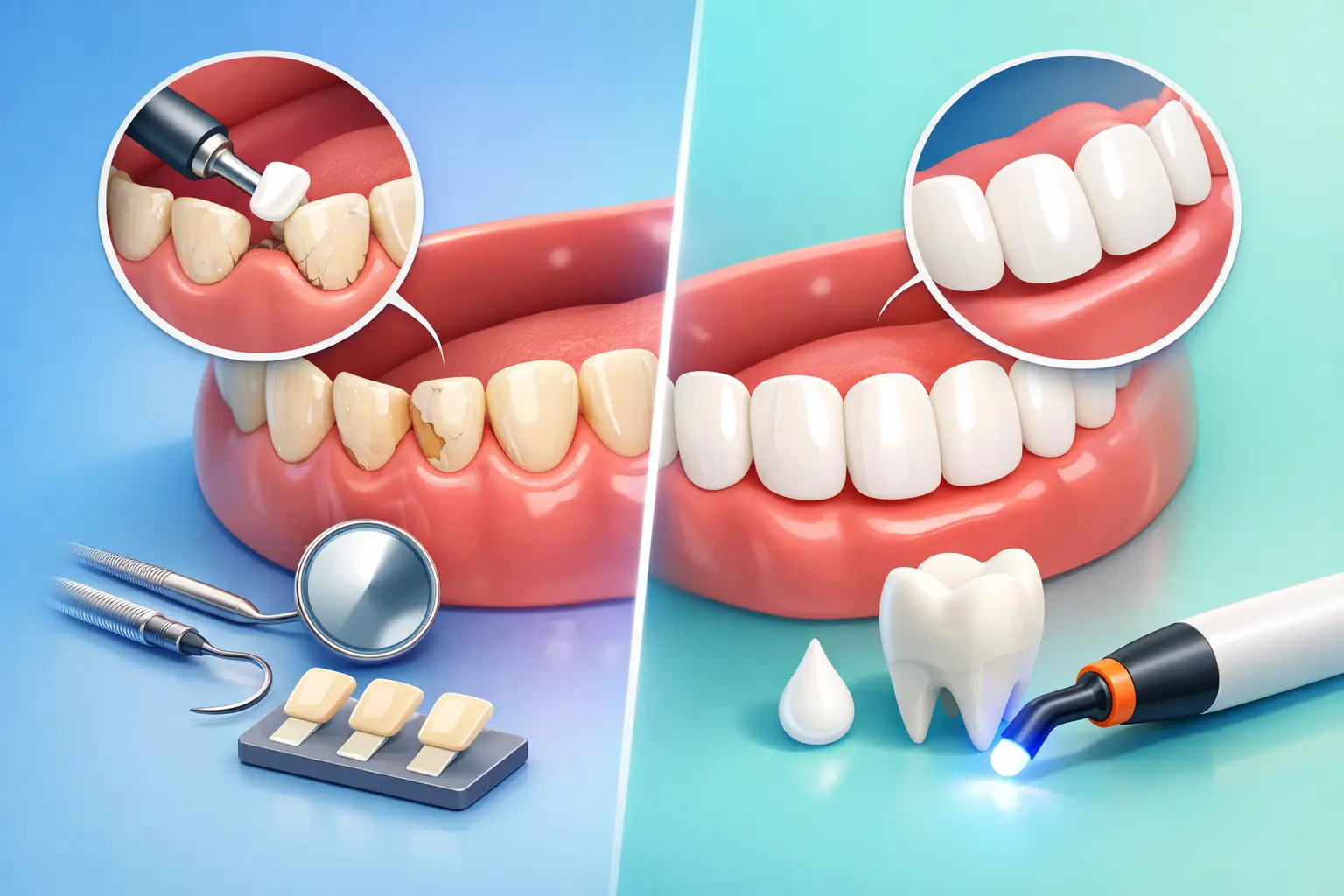

A small chip on a front tooth can draw your eye every time you look in the mirror. So can uneven edges, worn corners or gaps that seem more noticeable in photos than in real life. When people ask about composite veneers before and after, they are usually not chasing a perfect Hollywood smile. They want to know whether the change will look natural, feel worthwhile and fit their budget.
Composite veneers can make a noticeable difference in a relatively conservative way. They are made from tooth-coloured resin that is carefully shaped and bonded to the front surface of the teeth. For the right person, they can improve shape, size, spacing and overall balance without the need for more extensive treatment.
What composite veneers before and after really shows
Before and after photos are useful, but they only tell part of the story. A good result is not just about teeth looking whiter or straighter. It is about proportion, facial harmony and making sure the veneers suit the person wearing them.
The best composite veneer results tend to look subtle at first glance. Friends may notice that your smile looks fresher or more even without being able to pinpoint exactly why. That is often the goal. Natural-looking cosmetic dentistry should complement your features, not overpower them.
Results can vary a lot depending on the starting point. Someone with minor chips and uneven edges may see a dramatic improvement from a small amount of composite. Someone with heavy staining, bite issues or crowded teeth may still improve, but they may need whitening, orthodontic treatment or other dental care first to get the best outcome.
What can change after composite veneers?
Composite veneers are commonly used to improve several cosmetic concerns at once. They can close small gaps, rebuild chipped edges, make short teeth look more balanced and soften minor irregularities in shape. They can also help mask some discolouration, although there are limits if the underlying tooth is very dark.
This is why before and after comparisons can be so striking. Even when only a few teeth are treated, the smile can appear more symmetrical and brighter overall. Small changes to the front teeth often have a bigger visual impact than people expect.
That said, composite veneers do not physically move teeth. If a tooth is significantly rotated or out of position, the result may require adding more material to create the appearance of alignment. In some cases, that works well. In others, orthodontic treatment may be the better long-term option.
Who is a good candidate?
Composite veneers suit many adults who want a cosmetic improvement without committing to porcelain veneers straight away. They are often a practical option for people with healthy teeth and gums who have minor to moderate concerns about the appearance of their smile.
They may be a good fit if you have small chips, worn edges, slight spacing, mildly uneven teeth or old cosmetic work that needs refreshing. They can also appeal to cost-conscious patients because they are usually more affordable than porcelain veneers.
However, suitability depends on more than appearance. If you grind your teeth, have untreated decay, gum disease or a bite that places too much pressure on the front teeth, those issues should be assessed first. Cosmetic treatment works best when the foundations are healthy.
The treatment process from before to after
One reason composite veneers are popular is that the process is usually straightforward. In many cases, treatment can be completed in a single visit, depending on how many teeth are involved and how complex the case is.
The appointment usually starts with a discussion about what you would like to change. This matters because one person’s ideal smile can be very different from another’s. Some people want a brighter, more polished look. Others want the most natural result possible, with shape and character that still feels like them.
Your dentist will examine your teeth, check your bite and talk you through what composite veneers can and cannot achieve. If the treatment is suitable, the teeth are prepared, often with very little removal of natural tooth structure. The composite resin is then added in layers, shaped by hand and polished to blend with the surrounding teeth.
The after stage is immediate, but that does not mean rushed. Good composite bonding relies on careful planning and attention to detail. The shape, thickness, contour and finish all affect how the veneers look and feel once you start speaking and smiling normally.
Composite veneers before and after: realistic expectations
It is natural to focus on transformation, but realistic expectations are what lead to satisfaction. Composite veneers can look excellent, but they are not a cure-all for every cosmetic concern.
They can improve colour, but they do not stay stain-free forever. They can refine shape, but they are not as strong or stain-resistant as porcelain. They can create the appearance of straighter teeth in mild cases, but they do not replace orthodontics when tooth movement is needed.
This is where a personalised treatment plan matters. A gentle, honest dentist should explain the trade-offs clearly, including when composite veneers are a smart choice and when another option may offer better longevity or function.
How long do composite veneers last?
Composite veneers are not permanent, but they can last well with proper care. Longevity depends on your bite, oral hygiene, diet, habits and the quality of the original work. Many patients get several years from composite veneers before they need repair, maintenance or replacement.
Because composite is more porous than porcelain, it can pick up staining over time from coffee, tea, red wine and smoking. It can also chip or wear, especially if you bite your nails, chew ice or clench your teeth.
The upside is that composite is often easier to repair than porcelain. Small chips or worn areas can sometimes be touched up rather than fully replaced. For patients who value flexibility and a lower upfront cost, that can be a worthwhile trade-off.
Caring for your veneers after treatment
Looking after composite veneers is similar to looking after your natural teeth, but with a little extra care. Good brushing and flossing are essential, as is keeping up with regular dental check-ups and cleans.
It also helps to be mindful of habits that put pressure on the front teeth. Opening packets with your teeth, chewing hard objects or ignoring clenching and grinding can shorten the life of the veneers. If grinding is an issue, a custom splint may be recommended to protect both the veneers and your natural teeth.
If whitening is part of your plan, it is often better discussed before veneers are placed. Composite does not whiten in the same way natural enamel does, so planning the shade from the start usually gives a more even result.
Composite vs porcelain veneers
Patients often compare composite and porcelain because both can improve the smile, but they differ in cost, durability and the treatment process. Composite veneers are usually completed more quickly and at a lower cost. They also tend to involve less alteration of the natural tooth.
Porcelain veneers are more stain-resistant and often last longer, but they generally require a higher investment and multiple appointments. Neither option is automatically better. It depends on your goals, budget, timeline and how much change is needed.
For someone wanting to fix a few chips or refine the look of their front teeth conservatively, composite may be ideal. For someone seeking a larger cosmetic makeover with maximum durability, porcelain may be worth considering.
Why the dentist matters as much as the material
When people search for composite veneers before and after, they are often judging the material. In reality, the clinician’s judgement and technique play a major role in the final result.
A good cosmetic result should suit your face, age, bite and natural tooth shape. Teeth that are too bulky, too opaque or too uniform can stand out for the wrong reasons. On the other hand, carefully designed composite veneers can look balanced, healthy and very natural.
That is why it helps to choose a dentist who takes time to explain your options and who values both appearance and long-term oral health. At Riverina Dental Albury, that patient-first approach matters because cosmetic treatment should never feel like pressure. It should feel like a considered decision, made with clear advice and realistic expectations.
If you have been thinking about changing your smile, before and after photos can be a helpful starting point, but they are not the whole answer. The best next step is a conversation about your own teeth, your own goals and what kind of result will still feel right months and years from now.