
When a tooth is missing, the first question is often practical rather than cosmetic – what is the missing tooth replacement cost, and which option actually makes sense for your life, budget and long-term dental health? The answer depends on more than the tooth itself. Where the gap is, how healthy the surrounding teeth and gums are, and whether you want the lowest upfront cost or the strongest long-term result all matter.
A missing tooth can change more than your smile. It can affect chewing, speech, bite balance and the way nearby teeth shift over time. For some people, replacing it is about confidence. For others, it is about stopping further problems before they become more complex and more expensive.
What affects missing tooth replacement cost?
The cost of replacing a missing tooth is shaped by the treatment you choose, but also by the condition of your mouth before treatment even starts. If the surrounding gum is inflamed, a neighbouring tooth needs work, or the jawbone has thinned after the tooth was lost, that can add steps to the plan.
Location matters too. A back tooth that does most of the chewing may need a different approach from a front tooth, where appearance is often the priority. Materials, laboratory work, treatment time and whether surgery is involved also influence the overall fee.
That is why two patients with what looks like the same problem can receive very different quotes. Good treatment planning is not about finding a single standard price. It is about working out what is suitable, stable and realistic for the individual.
Common options and how cost usually compares
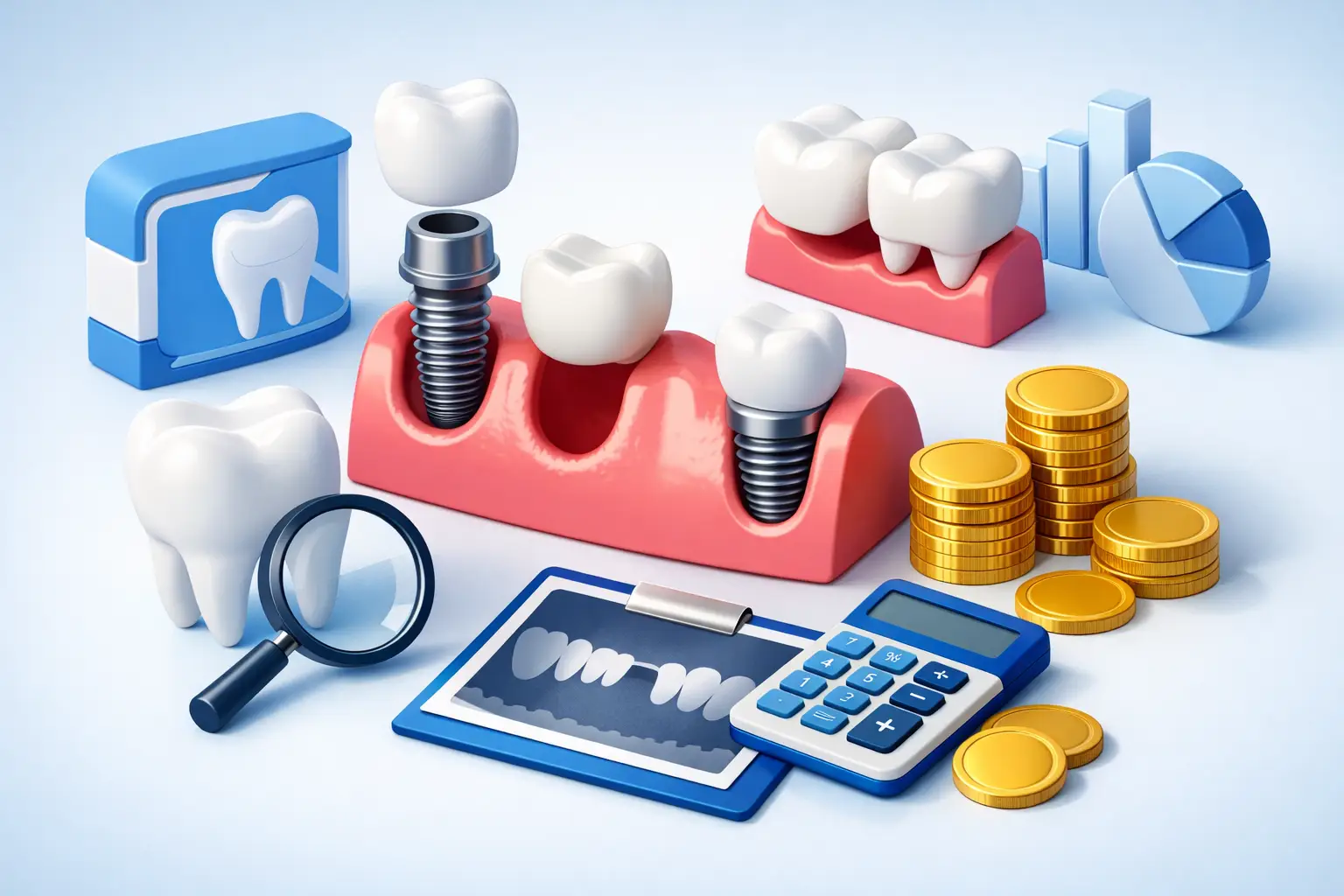
There is no one-size-fits-all answer to missing tooth replacement cost. In most cases, dentures are the lowest upfront cost, bridges sit in the middle, and implants are usually the highest initial investment. That does not automatically make one better than another. It simply means each option solves the problem in a different way.
Dentures
A partial denture replaces one or more missing teeth with a removable appliance. For many people, this is the most budget-conscious starting point. It can be a practical option when several teeth are missing, or when you want to restore appearance and function without surgery.
The trade-off is that dentures are removable and may need more adjustments over time. Some patients adapt very well to them. Others find they prefer something that feels more like a natural tooth. Comfort, retention and chewing confidence can vary depending on the fit and the anatomy of your mouth.
Dental bridges
A bridge fills the gap by attaching a replacement tooth to the teeth on either side. It is fixed in place, so it does not come out like a denture. Many patients like bridges because they feel more secure and can look very natural.
In terms of missing tooth replacement cost, a bridge usually costs more than a denture but less than an implant. The main consideration is that the neighbouring teeth often need to be prepared to support it. If those teeth already have large fillings or need crowns anyway, a bridge can make a lot of sense. If the adjacent teeth are healthy and untouched, some patients prefer not to alter them.
Dental implants
An implant replaces the root of the missing tooth with a titanium post placed in the jaw, topped with a crown. It is often the closest option to a natural tooth in terms of feel, function and long-term support for the bone.
Implants generally have the highest upfront cost because they involve surgery, planning, healing time and multiple components. They can also require extra treatment such as bone grafting in some cases. Even so, many patients see value in implants because they are independent of the neighbouring teeth and can be a durable long-term solution when well maintained.
The cheapest option is not always the lowest cost over time
This is where the conversation becomes more useful than a simple price list. If you choose the least expensive treatment today but it needs more repairs, relines, remakes or replacement later, the longer-term cost may be higher than expected. On the other hand, paying for the most advanced option is not always necessary either.
A sensible decision looks at both the immediate fee and the likely future maintenance. It also considers comfort, confidence and how likely you are to be happy with the result. A treatment that fits your budget but leaves you struggling to chew or avoiding certain foods may not feel like good value.
Missing tooth replacement cost and your oral health
Sometimes the real cost is in delaying treatment too long. When a gap is left untreated, nearby teeth can drift, the opposing tooth can over-erupt, and bite problems can develop. In some cases, bone levels can reduce over time, which may limit future options or make treatment more involved.
That does not mean every missing tooth must be replaced immediately. For some patients, watchful planning is reasonable. But it does mean timing can affect both complexity and cost. Earlier treatment can be simpler than trying to correct several related problems later.
Why quotes can vary between clinics
Patients are sometimes surprised when they receive very different figures for the same type of treatment. Part of that comes down to materials, laboratory standards, the experience of the clinician and how comprehensive the planning is.
A thorough quote may include diagnostics, scans, temporary restorations, review appointments and follow-up care. A lower quote may not always include the full picture. That is why it helps to ask what is covered, what could change the fee, and what maintenance is likely after treatment is complete.
Clear communication matters here. You should know what you are paying for, why a treatment has been recommended, and what alternatives are available if the preferred option is outside your budget.
How to choose the right replacement option
The best choice usually sits at the intersection of budget, oral health and personal priorities. If keeping costs down right now is the main concern, a denture may be the most realistic path. If you want a fixed option without surgery, a bridge may suit you well. If you are looking for a long-term option that does not rely on neighbouring teeth, an implant may be worth exploring.
It is also fine to think in stages. Some patients begin with a more affordable solution and plan for a different option later. Others prefer to invest once in the treatment they feel most confident about. Neither approach is wrong if it is based on good advice and realistic expectations.
At Riverina Dental Albury, that planning conversation is a big part of care. Patients often feel more comfortable once they understand not just the fee, but what they are getting, what the alternatives are, and how the treatment fits into their broader oral health.
Questions worth asking at your consultation
If you are comparing options, ask what each treatment will cost upfront, what maintenance it may need, how long it is expected to last, and whether any preparatory work is likely. It is also worth asking how the choice will affect nearby teeth, gum health and future treatment options.
For cost-conscious households, payment flexibility can make a real difference. A good clinic should be able to explain fees clearly and help you understand whether treatment can be staged to make it more manageable.
Looking beyond the price tag
The missing tooth replacement cost matters, and it should. Dental care needs to be realistic and accessible. But the right question is not only, “What costs less today?” It is also, “What will let me eat comfortably, smile confidently and protect my oral health over the years ahead?”
If you are weighing up dentures, a bridge or an implant, the most helpful next step is a personalised assessment rather than guessing from general price ranges online. Once you know the condition of your teeth, gums and bite, the numbers start to make more sense – and so does the decision.