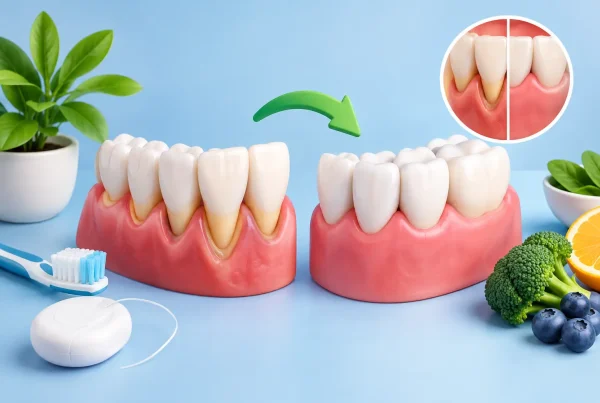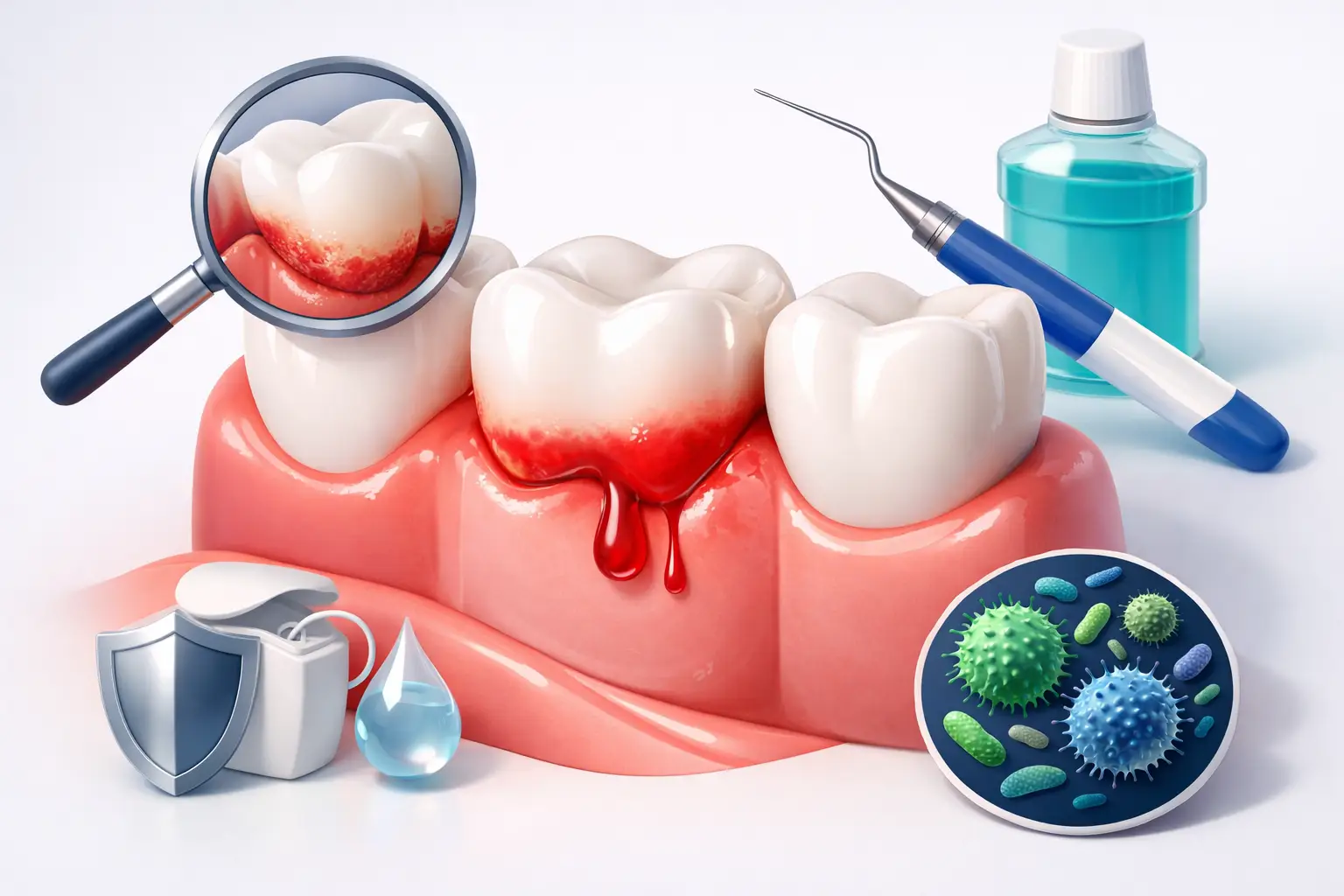

Seeing pink in the sink after brushing can be unsettling, particularly if it has happened more than once. So, why do gums bleed? Most often, bleeding is an early sign of gum inflammation caused by plaque around the gumline. It is common, and it is usually treatable, but it should not be ignored or brushed off as normal.
Healthy gums should generally not bleed during normal brushing or flossing. A little bleeding after starting to floss again can happen as inflamed gums settle, but ongoing bleeding deserves a closer look. The earlier the cause is addressed, the better the chance of protecting your gums, teeth and overall oral health.
Why do gums bleed when brushing or flossing?
The most common reason is gingivitis, the earliest stage of gum disease. Plaque is a sticky film of bacteria that builds up on teeth every day. When it is not removed thoroughly, especially at the gumline and between teeth, it can irritate the gums. They may become red, puffy, tender and more likely to bleed.
This does not necessarily mean you are not trying hard enough with your brushing. Plaque can collect in difficult areas, including around crowded teeth, behind lower front teeth, around old fillings, bridges, braces or dental implants. Even a careful home routine may not remove hardened plaque, known as calculus or tartar, once it has formed. A professional clean is needed to remove it safely.
Bleeding can also occur if you brush too firmly or use a hard-bristled toothbrush. Aggressive brushing does not clean teeth better. It can irritate the gumline and contribute to gum recession over time. A soft toothbrush and gentle, small movements along the gumline are usually a better choice.
Flossing can make gums bleed when it is new to your routine or when you return to it after a break. That bleeding is often a sign that the gums between your teeth are inflamed, not a sign you should stop flossing. With gentle daily cleaning, mild inflammation may improve within a week or two. If it does not, a dental check-up is sensible.
Other possible causes of bleeding gums
Gum inflammation is the leading cause, but it is not the only explanation. Changes in the body, certain medicines and some dental concerns can all play a part.
Pregnancy and hormonal changes
During pregnancy, hormonal changes can make gums more sensitive to plaque. Some people notice swelling, tenderness and bleeding even when their usual oral hygiene has not changed. This is often called pregnancy gingivitis. Maintaining regular dental care during pregnancy can help keep symptoms under control and address problems early.
Hormonal changes related to puberty, menstruation or menopause may have a similar effect for some patients. If your gums have started bleeding around the same time as these changes, mention it at your dental appointment.
Medicines and medical conditions
Blood-thinning medicines can make bleeding more noticeable. Some medications can also cause dry mouth or gum enlargement, which may make cleaning harder. Never stop or alter prescribed medication because of bleeding gums without speaking to your doctor.
Less commonly, frequent bleeding can be connected to a medical condition, a vitamin deficiency or a blood disorder. This is particularly relevant if you are also bruising easily, experiencing unexplained tiredness, nosebleeds or bleeding elsewhere. Your dentist may recommend that you see your GP for further assessment.
Smoking, vaping and dry mouth
Smoking increases the risk of gum disease and can make healing more difficult. Interestingly, smokers may sometimes show less obvious bleeding because smoking affects blood flow to the gums. That does not mean the gums are healthy. Once someone stops smoking, bleeding can temporarily become more apparent as circulation improves.
Vaping may also contribute to dry mouth and gum irritation. Saliva helps wash away food particles and protect teeth and gums, so a persistently dry mouth can increase the risk of plaque build-up and decay. Staying hydrated and discussing ongoing dry mouth with your dentist can help.
Poorly fitting dental work or trapped food
A rough filling edge, damaged tooth, ill-fitting denture or a space where food regularly gets trapped may irritate a localised area of gum. If one specific spot keeps bleeding, rather than your whole mouth, it is worth having that area checked. The solution may be as straightforward as adjusting or repairing a restoration.
When bleeding gums may signal more advanced gum disease
Untreated gingivitis can progress to periodontitis, a more serious form of gum disease. Periodontitis affects the tissues and bone that support your teeth. It can lead to gum recession, loose teeth and eventually tooth loss if left unmanaged.
Bleeding alone does not confirm periodontitis, but it is more concerning when it occurs alongside persistent bad breath, a bad taste in the mouth, gums pulling away from teeth, pus around the gumline, changes in the way your bite feels or teeth becoming loose. Gum disease can progress quietly, often without severe pain, which is one reason regular examinations matter.
Periodontitis cannot be reversed in the same way as early gingivitis, but it can be controlled. Treatment may involve a detailed gum assessment, professional cleaning below the gumline, targeted home-care advice and ongoing maintenance visits. The right plan depends on the severity of disease, your health history and how your gums respond to treatment.
What to do if your gums are bleeding
Start by continuing to clean your teeth, but take a gentler and more consistent approach. Use a soft-bristled toothbrush twice a day with fluoride toothpaste. Angle the bristles towards the gumline and clean with light circular motions rather than scrubbing back and forth.
Clean between your teeth every day as well. Floss, interdental brushes or another suitable tool can remove plaque where a toothbrush cannot reach. The best option depends on the spaces between your teeth, any dental work you have and how comfortable the technique is for you. A dental professional can show you how to use these tools without hurting your gums.
Avoid trying to solve bleeding by skipping the area that is sore. Plaque left behind will usually prolong inflammation. At the same time, do not poke, snap floss hard against the gums or scrub vigorously. Gentle, thorough cleaning is the goal.
Arrange a dental appointment if bleeding lasts longer than one to two weeks, happens without brushing or flossing, or is accompanied by swelling, pain, bad breath or loose teeth. A professional examination can identify whether the issue is simple gingivitis, a cleaning concern, a damaged tooth or something that needs more tailored care.
At Riverina Dental Albury, we take a calm, practical approach to bleeding gums. We can assess your gum health, explain what is happening in clear language and create a treatment plan that considers your comfort, needs and budget. If gum treatment is required, early care is generally simpler than waiting for symptoms to worsen.
Can bleeding gums be prevented?
For many people, yes. Consistent brushing, daily cleaning between teeth and regular professional check-ups are the foundation. The ideal timing for check-ups and cleans varies from person to person. Someone with healthy gums may need a different schedule from someone managing gum disease, dry mouth, diabetes, smoking-related risks or complex dental work.
A balanced diet, enough water and avoiding tobacco also support healthier gums. If you wear dentures, have braces, retainers, bridges or implants, cleaning around them carefully is especially important. These treatments can be excellent for your smile and function, but they create extra surfaces where plaque can gather.
Bleeding gums are your mouth’s way of asking for attention, not a reason for embarrassment. A gentle assessment and a few well-chosen changes can often put you back on the path to a healthier, more comfortable smile.