
A filling can seem fine at breakfast and then crack, loosen or fall out halfway through lunch. It may leave a sharp edge, a sensitive spot, or a hole that catches food every time you chew. Broken filling repair options depend on how much of the filling and tooth structure remain, but acting promptly is the best way to keep a small problem from becoming a larger repair.
A broken filling is not always a dental emergency, but it should not be left to settle on its own. The tooth beneath the filling may be exposed to bacteria, temperature changes and chewing pressure. A gentle assessment can identify the cause, relieve discomfort and help protect the tooth for the long term.
What to do when a filling breaks or falls out
First, rinse your mouth gently with warm water to clear away any loose fragments or food. If you can find a large piece of the filling, keep it in a clean container and bring it to your appointment. It may help the dentist understand what has happened, although it usually cannot be reattached.
Avoid chewing on that side of your mouth until the tooth has been checked. Choose softer foods, and steer clear of very hot, cold, sweet or sticky foods if the area feels sensitive. A sharp edge can sometimes be covered temporarily with orthodontic wax from a pharmacy, but do not use household glue, putty or a DIY filling kit inside the tooth. These materials can irritate the tooth and gums, trap bacteria, and make proper treatment more difficult.
If you have pain, use pain relief only as directed on the packet and only if it is suitable for you. A cold compress against the outside of the cheek may help with swelling. Contact a dentist promptly, particularly if the filling has come away completely, the tooth is painful, or the edge is cutting your tongue or cheek.
Why fillings break
Fillings are durable, but they are not expected to last forever. Years of chewing force can gradually wear their edges down. Teeth can also flex slightly under pressure, especially when a person clenches or grinds their teeth, which may create small cracks around an older restoration.
Decay can form around the edge of a filling if bacteria enter the seal between the tooth and restoration. This does not mean you have done anything wrong. It simply means the filling needs review before the decay reaches deeper into the tooth. A crack in the natural tooth, biting unexpectedly on something hard, or a very large existing filling can also cause part of the restoration to break away.
The important question is not just whether the filling is broken. It is whether the tooth underneath is still strong and healthy enough for another filling.
Broken filling repair options your dentist may discuss
Your dentist will examine the tooth, gums and surrounding teeth, and may take an X-ray to check for decay or damage below the surface. From there, treatment is tailored to the condition of the tooth rather than taking a one-size-fits-all approach.
Repairing a small chipped area
Where only a small corner of a composite, or tooth-coloured, filling has chipped and the remaining filling is sound, it may be possible to add new composite material to the area. This can smooth a sharp edge and restore the tooth with minimal removal of healthy structure.
This option is usually suitable only when the tooth is free from decay and the existing filling still has a secure seal. A repair can be conservative and cost-conscious, but it is not always the most reliable choice for an older filling that is breaking down in several places.
Replacing the filling
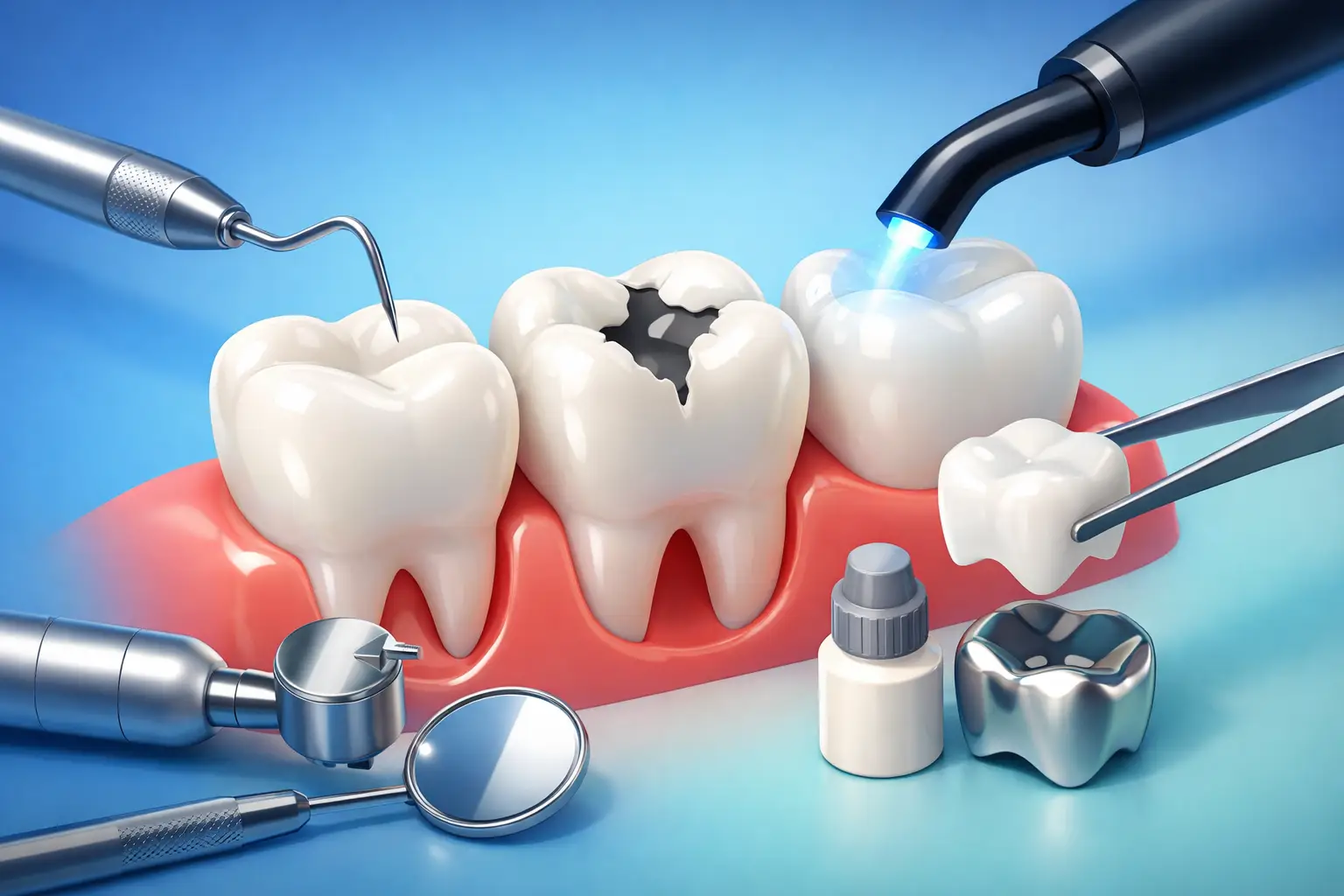
For many people, replacing the filling is the most straightforward solution. The dentist removes the damaged filling and any decay, prepares the tooth, then places a new restoration. Composite fillings are commonly used because they blend naturally with the tooth and can be shaped directly in the mouth.
A new filling works well when enough strong tooth structure remains. It can restore comfortable chewing and help close off the tooth from bacteria. If the cavity is very large, however, another filling may leave the remaining tooth walls too thin to withstand everyday biting forces.
Using an inlay or onlay for a larger repair
When a tooth has lost more structure but does not need a full crown, an inlay or onlay may be recommended. These restorations are custom-made to fit the damaged area. An inlay sits within the biting surface, while an onlay covers one or more of the tooth’s raised points, known as cusps.
An onlay can offer more coverage and strength than a large direct filling while preserving more natural tooth than a crown. It is often considered for back teeth that carry significant chewing pressure, particularly where an old filling has fractured and the tooth walls need reinforcement.
Protecting the tooth with a crown
A crown covers the whole visible part of a tooth. It may be the most appropriate treatment when the tooth is extensively cracked, heavily filled, badly weakened or has lost a large section. Rather than simply filling the space, a crown helps hold the remaining tooth together.
A crown is a bigger investment than a replacement filling, so it should be recommended only when it provides a clear long-term benefit. For a severely weakened tooth, it can reduce the risk of another fracture that might otherwise make the tooth harder to save.
Root canal treatment if the nerve is affected
Sometimes a broken filling exposes decay that has reached the dental pulp, the living tissue inside the tooth. Signs can include lingering sensitivity to hot or cold, strong spontaneous toothache, pain on biting, swelling or a pimple-like spot on the gum. In this situation, root canal treatment may be needed to remove infection and preserve the tooth, followed by a strong final restoration, often a crown.
Not every sensitive tooth requires root canal treatment. Sensitivity can also occur when dentine is newly exposed. An examination and X-ray provide a clearer answer than trying to judge the problem at home.
When a broken filling needs urgent care
Book an urgent appointment if pain is severe, you have facial swelling, fever, trouble swallowing, a cracked tooth, or an injury to the face or jaw. These signs can indicate infection or trauma that needs prompt attention.
Even without severe pain, a lost filling should be assessed soon. Teeth do not repair a cavity underneath a filling, and food can pack into the opening. Early treatment is generally simpler, more comfortable and more affordable than waiting until a toothache develops.
Choosing an option that suits your tooth and budget
The best repair is the one that gives the tooth a realistic chance of lasting well, while respecting your priorities and budget. A small replacement filling may be entirely appropriate for one tooth, while another may need an onlay or crown because the remaining structure is too fragile.
At Riverina Dental Albury, treatment recommendations are explained clearly, including what needs attention now, what can be monitored, and the likely benefits of each option. If more extensive treatment is needed, a personalised plan can help you understand the stages involved and discuss suitable payment options.
How to help your new restoration last
Once repaired, brush twice daily with fluoride toothpaste and clean between your teeth every day. This is particularly important around the edges of fillings, where plaque can lead to recurrent decay. Regular dental examinations allow small changes around restorations to be spotted before they become painful.
If you clench or grind your teeth, ask whether a custom night splint could help protect your fillings and teeth from repeated pressure. Avoid using teeth to open packets, cut thread or crack hard objects. A filling is built to help you chew food, not to take the place of tools.
A broken filling can be unsettling, especially if it happens suddenly. The reassuring news is that most can be treated effectively when they are assessed early. A prompt appointment gives you a clear answer, a comfortable plan and the best opportunity to keep your natural tooth doing its job.