
A missing tooth can change more than your smile. It can make chewing awkward, affect the way you speak, and put extra strain on the teeth around it. When patients ask about the best options for missing teeth, the right answer usually depends on three things – your oral health, your goals, and your budget.
There is no one-size-fits-all solution. Some people want the closest possible replacement to a natural tooth. Others need a practical option that restores function quickly and keeps costs manageable. A good dental plan looks at the whole picture, not just the gap itself.
What are the best options for missing teeth?
The most common options are dental implants, dental bridges and dentures. Each can work very well in the right situation, but they solve the problem in different ways.
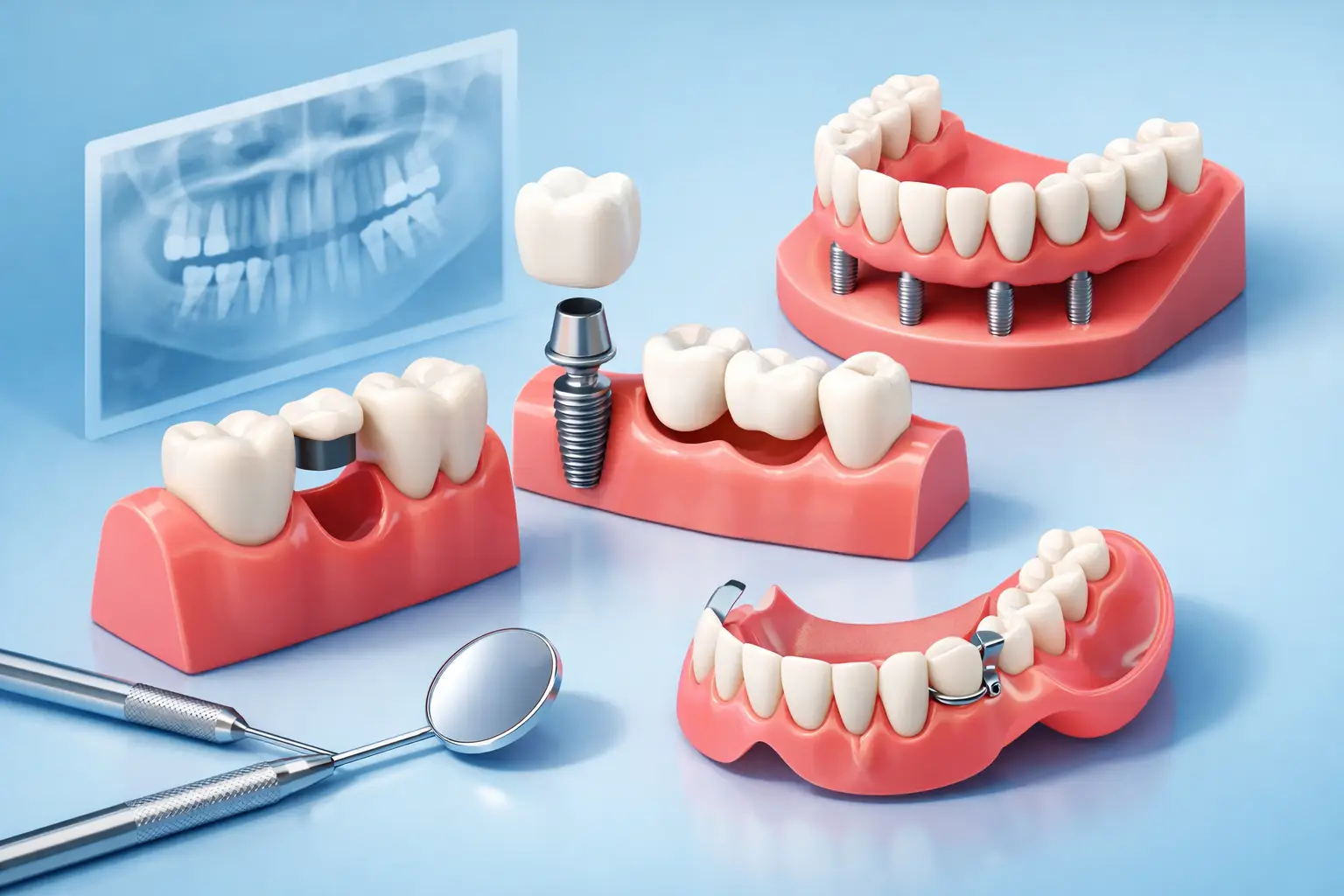
Dental implants replace the tooth root as well as the visible tooth. A bridge fills the space by attaching to neighbouring teeth. Dentures replace one or more missing teeth with a removable appliance. Which one is best depends on how many teeth are missing, where the gap is, the condition of your gums and jawbone, and how important fixed versus removable treatment is to you.
Why replacing a missing tooth matters
It is easy to put off treatment, especially if the missing tooth is near the back and not obvious when you smile. The trouble is that teeth work as a team. Once one is lost, nearby teeth can begin to drift. The opposing tooth may over-erupt into the space. Biting forces become less balanced, which can lead to wear, jaw discomfort or more difficult cleaning.
If a tooth has been missing for some time, the jawbone in that area can also shrink. That matters because bone supports both your facial structure and future treatment options. Replacing a tooth earlier can sometimes make treatment simpler.
Dental implants – the closest match to a natural tooth
For many adults, implants are considered one of the best options for missing teeth because they are stable, long-lasting and feel very close to a natural tooth. An implant is a small titanium post placed into the jawbone, with a custom crown attached after healing.
The biggest advantage is that the implant stands on its own. It does not rely on the teeth next to it for support, which helps preserve healthy tooth structure. It also stimulates the jawbone, which can reduce the bone loss that often happens after a tooth is removed.
Implants tend to suit patients who want a fixed option and are willing to invest in a longer treatment process. They can be an excellent choice for a single missing tooth, several missing teeth, or even to support a full arch replacement in some cases.
That said, implants are not always the immediate answer. You need enough healthy bone and healthy gums, and some patients may need additional treatment before implant placement. The upfront cost is higher than other options, although many people see value in the long-term durability and comfort.
Dental bridges – a fixed option with faster results
A dental bridge can be a very practical solution when one or more teeth are missing in the same area. A traditional bridge uses the teeth on either side of the gap for support, with an artificial tooth suspended between them.
Bridges are popular because they are fixed in place and can usually be completed faster than implants. They restore appearance and chewing function well, and they can be a sensible option if the neighbouring teeth already need crowns or large restorations.
The trade-off is that supporting teeth often need to be reshaped. A bridge also does not replace the tooth root, so it does not provide the same bone support as an implant. With good care, bridges can last many years, but they do require excellent oral hygiene around the margins to protect the supporting teeth and gums.
Dentures – flexible and budget-conscious
Dentures remain one of the most accessible options for replacing missing teeth. They can replace a few teeth with a partial denture or a full set of teeth with a complete denture.
For patients looking for a more budget-conscious approach, dentures can restore appearance and basic function without surgery. They are also useful when multiple teeth are missing across different parts of the mouth, where a bridge may not be practical.
Modern dentures can look natural and feel more comfortable than many people expect, but they do take time to get used to. Because they are removable, they can shift a little during eating or speaking, especially lower dentures. Over time, changes in the gums and bone can mean adjustments or replacements are needed.
Some patients choose implant-supported dentures as a middle ground. This combines the broader tooth replacement of a denture with the extra stability of implants.
Choosing the best option for your situation
If you are missing one tooth
A single dental implant is often the preferred long-term option because it replaces the missing tooth without affecting the teeth next to it. A bridge can still be a very good choice if the neighbouring teeth need treatment or if implant treatment is not suitable for health or budget reasons.
If you are missing several teeth
Several implants, an implant-supported bridge, a removable partial denture, or a conventional bridge may all be considered. The right choice depends on where the missing teeth are and whether there are strong teeth available to support a bridge.
If you are missing all or most teeth
Full dentures may restore function and appearance affordably. If stability is a concern, implant-supported dentures can improve comfort and confidence significantly. For some patients, fixed full-arch implant solutions are also possible, but these involve more planning and higher costs.
Cost, comfort and long-term value
Cost matters, and it should be part of an honest conversation from the start. The cheapest treatment upfront is not always the most affordable over time, especially if it needs more maintenance or replacement later.
Implants usually cost more initially, but they can offer strong long-term value through stability, bone support and independence from nearby teeth. Bridges sit in the middle for many patients. Dentures are often the lower-cost entry point, though they may require relines, repairs or replacement as your mouth changes.
Comfort matters too. Some patients strongly prefer a fixed option because they do not want to remove a prosthesis at night. Others are perfectly happy with dentures and value being able to restore several teeth without surgery. The best plan is the one that fits your health needs and your day-to-day life.
Your oral health plays a big role
Before recommending treatment, your dentist will look at more than the missing tooth itself. Gum disease, tooth decay, clenching, smoking, dry mouth and general health can all influence what is likely to work well long term.
For example, implants need healthy supporting tissues. Bridges depend on the strength of adjacent teeth. Dentures rely on the shape and condition of the gums and jaw. If there are underlying issues, treating them first often leads to a better and more predictable result.
This is also why personalised planning matters. At Riverina Dental Albury, we often find that patients feel more confident once they understand not just what can be done, but why one option may suit them better than another.
Questions worth asking at your consultation
If you are weighing up the best options for missing teeth, ask how long each treatment is expected to last, what maintenance is involved, and how it will affect nearby teeth and gums. It is also worth asking about appearance, eating comfort, timeframes and total cost over the life of the treatment.
A good consultation should leave you feeling informed rather than pressured. You should know the pros, the limitations and any likely future maintenance before you decide.
A practical way to move forward
If you have been living with a missing tooth for a while, you do not need to decide everything in one go. The first step is simply finding out what is possible in your mouth now. Sometimes the best path is a long-term ideal treatment. Sometimes it is a staged plan that starts with what is most manageable today and builds from there.
The right replacement should help you eat comfortably, smile with confidence and protect your oral health over time. A thoughtful, local dental team can help you weigh the options clearly and choose something that feels right for your health, your budget and your future.