
If you are weighing up dentures vs implants cost, the first thing to know is that the cheapest option upfront is not always the least expensive over time. The right choice depends on your oral health, how many teeth need replacing, how stable you want the result to feel, and what is manageable for your budget now as well as later.
For many people in Albury-Wodonga, this decision is not just about numbers on a treatment plan. It is about eating comfortably, speaking clearly, feeling confident in social situations, and choosing a solution that suits daily life. Cost matters, but value matters too.
Dentures vs implants cost in Australia
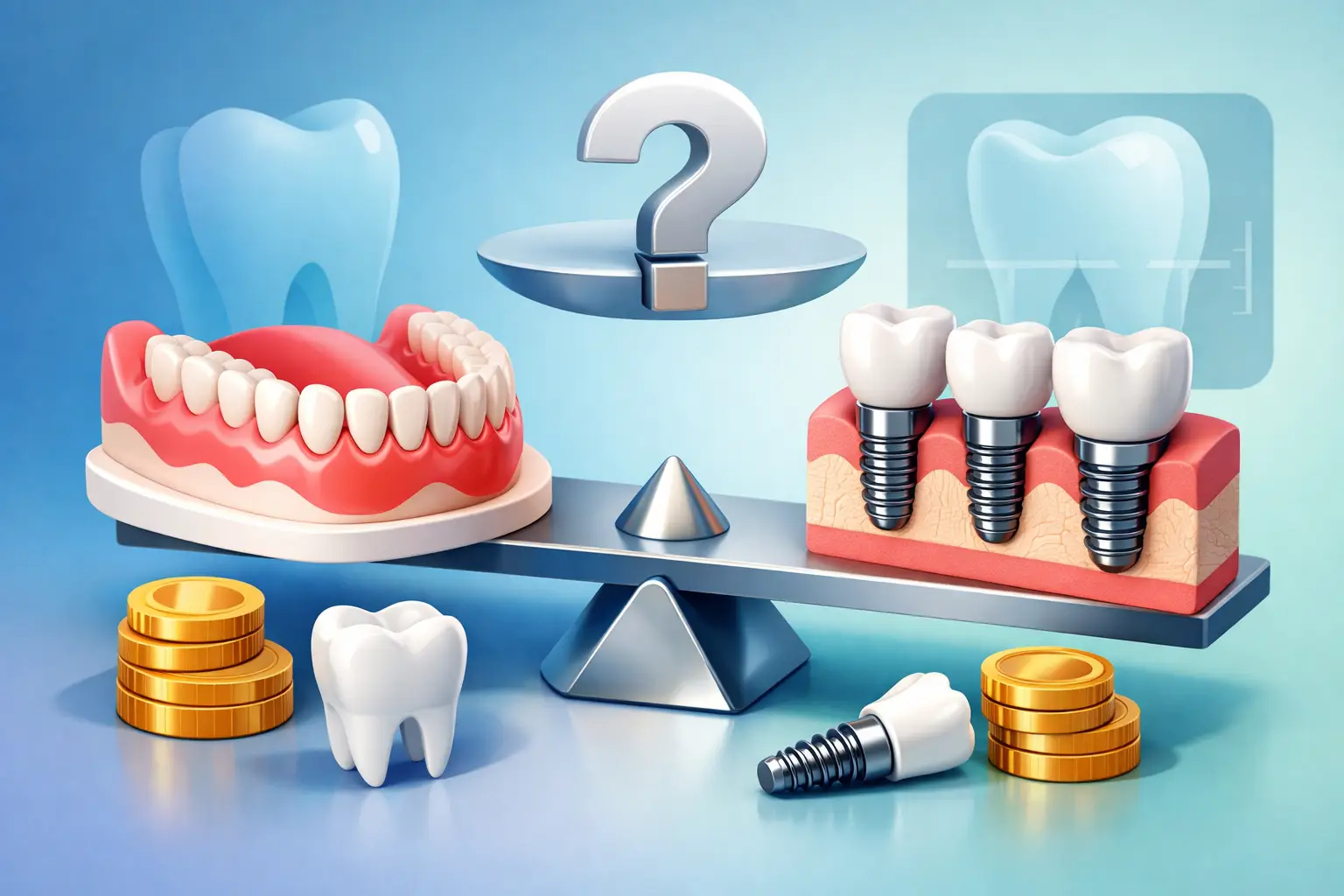
In Australia, dentures usually have a lower upfront cost than dental implants. A conventional full or partial denture is generally more affordable at the beginning because it does not involve surgery and can often be made more quickly. Implants, on the other hand, involve a more complex process with planning, surgery, healing time and the final restoration.
That said, the price gap is only part of the story. Dentures may need adjustments, relines, repairs or replacement over the years as your mouth changes shape. Implants tend to cost more at the start, but they can offer greater stability and may last much longer with proper care.
A simple way to think about it is this: dentures are often the lower-entry option, while implants are often the longer-term investment.
What affects the cost most?
No two smiles are exactly the same, so there is no single set fee that applies to everyone. The final cost depends on a few key factors.
How many teeth are being replaced
Replacing one missing tooth with an implant is very different from replacing a full arch of teeth. Likewise, a small partial denture will usually cost less than a full denture. The more teeth involved, the more planning, appointments and materials are needed.
Your bone and gum health
Implants need enough healthy bone for support. If bone loss has already occurred, you may need additional treatment before an implant can be placed. That can increase the total cost. Dentures do not require the same bone support in the same way, which is one reason they can be more accessible at the start.
Type of denture or implant solution
There is a big difference between a basic removable denture and an implant-supported denture. There is also a difference between a single implant, several implants, or a full-arch implant treatment. Material quality, laboratory work and the complexity of the case all influence price.
Ongoing maintenance
Some costs happen after treatment, not just during it. Dentures may need relining as the gums and bone change over time. Implants require regular reviews and careful hygiene to protect the surrounding gums and bone. Both options need maintenance, but the type of maintenance is different.
Why dentures cost less upfront
Dentures are removable appliances designed to replace missing teeth and surrounding tissue. Because they do not involve surgical placement into the jaw, treatment is generally simpler and faster than implants.
For patients who want a practical solution at a lower initial cost, dentures can be a very reasonable option. They can restore appearance, support speech and help with basic chewing function. They are also useful in cases where implants are not suitable due to health factors, bone loss or budget constraints.
The trade-off is that dentures can move, rub or feel bulky, especially at first. They also rely on the shape of your gums and jaw for support, and that shape naturally changes over time after tooth loss. This can affect fit and comfort.
Why implants cost more upfront
Dental implants are placed into the jawbone and act like artificial tooth roots. Once healed, they support a crown, bridge or denture. Because implants are integrated into the bone, they usually feel more secure than removable dentures.
The higher cost reflects the complexity of the treatment. Implants require detailed assessment, imaging, surgical placement, healing time and a final restoration. In some cases, extra procedures are needed before treatment can begin.
For many patients, the main benefits are stability, comfort and long-term function. Implants can help preserve the jawbone better than dentures alone, and they do not need to be removed at night in the same way traditional dentures do. For someone who wants a replacement tooth that feels closer to natural teeth, implants can offer strong value despite the higher starting price.
Dentures vs implants cost over the long term
This is where the comparison becomes more useful than simply asking which option is cheaper.
Dentures may cost less initially, but they often need periodic adjustments and eventual replacement. As the jawbone changes, a denture that once fitted well may become loose. Adhesives, repairs and relines can add up over time. If the fit becomes poor, eating and speaking can become more frustrating too.
Implants usually involve a larger upfront investment, but they can be more stable over many years. The implant itself may last a long time if it is well maintained, although the crown or denture attached to it may still need attention later. Regular dental care is important, because problems around implants can become serious if ignored.
So when patients ask about dentures vs implants cost, the more accurate question is often: which option is likely to give me the best result for my budget over the next five, ten or fifteen years?
Which option suits different budgets?
If you need to replace missing teeth soon and want the most affordable path into treatment, dentures can make sense. They can restore your smile and function without the larger upfront expense of implant surgery. This is often a practical choice when immediate budget pressure is the biggest concern.
If you are thinking more long term, implants may be worth considering even if the cost feels higher at first. For some patients, flexible finance or staged treatment can make implants more achievable. In other cases, a combination approach works well, such as an implant-supported denture, which can improve stability without the cost of replacing every tooth with a separate implant.
This is why personalised planning matters. A good treatment plan should not push you into the most expensive option. It should explain what each path offers, what it will likely cost over time, and where compromises may sit.
Questions worth asking at your consultation
Before deciding, ask for a clear breakdown of what is included. That should cover not only the treatment itself but also follow-up care, likely maintenance and any extra procedures that may be needed.
It also helps to ask how each option will affect comfort, eating, speech and cleaning at home. Cost is easier to judge when you understand what daily life is likely to look like afterwards. A lower fee may not feel like good value if the result is frustrating to wear, while a higher fee may be easier to justify if it brings much better function and confidence.
At Riverina Dental Albury, these conversations are best had face to face, because your mouth, medical history and goals all affect what is realistic.
The decision is not only financial
People often start with price, but they usually finish with lifestyle. Someone who wants a removable, lower-cost option may feel very happy with dentures. Someone who wants more stability and a result that feels closer to natural teeth may prefer implants if the budget allows.
Neither choice is automatically better for everyone. Dentures can be an excellent treatment. Implants can be an excellent treatment. The best option is the one that fits your oral health, expectations and finances without leaving you feeling pressured.
If you are unsure, that is normal. This is a decision worth taking slowly, asking questions about, and planning properly. A clear, honest consultation can help you understand not just the fee, but the likely outcome and the long-term picture.
The most helpful next step is not guessing from general price ranges online. It is finding out what will work well in your own mouth, for your own budget, and for the way you want to live every day.