
A tooth that has shifted at the front can change how freely you smile. A crowded lower jaw can make flossing frustrating. For some people, crooked teeth treatment options are mainly about appearance; for others, they are about bite comfort, tooth wear, cleaning or replacing a missing tooth. The right answer depends on what is happening in your mouth, not just what you can see in the mirror.
At Riverina Dental Albury, we take the time to understand your goals, examine your teeth and gums, and explain the practical choices in plain language. That means looking after the health of your smile while considering your budget, timeline and comfort.
Crooked teeth treatment options begin with the cause
Teeth can sit unevenly for many reasons. Your jaw may not have enough room for all your teeth, a tooth may have drifted after an extraction, or a bite imbalance may be placing pressure on particular teeth. Teeth can also move gradually in adulthood, even after previous orthodontic treatment.
A dental assessment looks beyond whether teeth appear straight. We check the condition of your gums, any decay or worn teeth, the position of your bite and how your jaw functions. Gum disease, untreated decay or a missing tooth may need attention before cosmetic or orthodontic treatment starts. Moving teeth through unhealthy gums can create more problems rather than solve them.
Your dentist may recommend photographs, digital scans and X-rays to plan treatment safely. These records help show whether the concern can be addressed with orthodontics, cosmetic dentistry, restorative care or a combination of approaches.
Clear aligners for a discreet approach
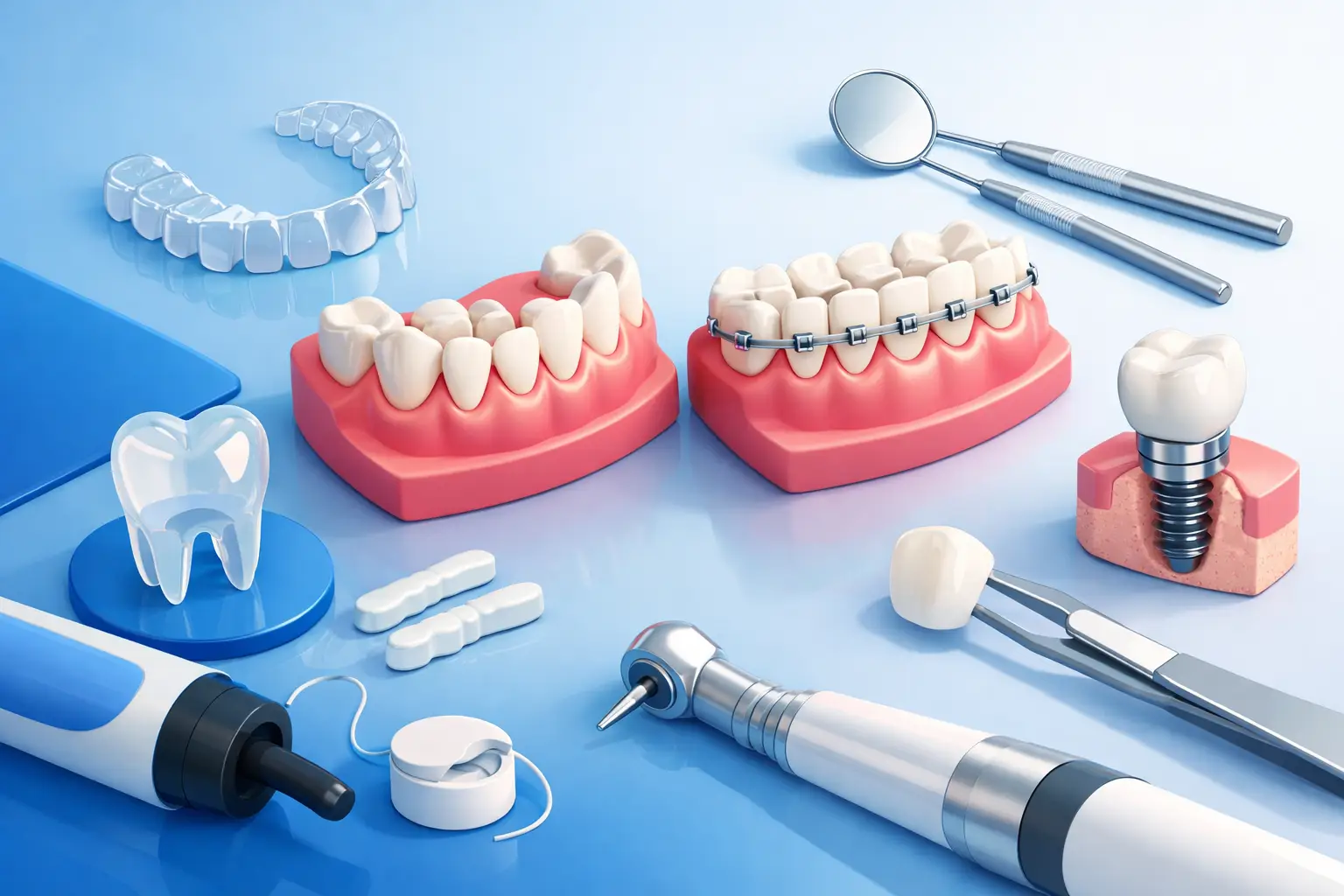
Clear aligners, including Invisalign treatment, use a series of custom-made transparent trays to gradually move teeth. They are popular with adults who would prefer a less noticeable alternative to fixed braces and who want the option to remove their appliance for meals and brushing.
Aligners can be a good option for mild to moderate crowding, gaps and certain bite concerns. They need consistent wear, usually around 20 to 22 hours each day. Taking them out too often or forgetting to change trays as directed can extend treatment time and affect the result.
The removable design can make daily cleaning easier, but it also asks more of the patient. If a busy workday, travel or a tendency to misplace things makes regular wear difficult, fixed braces may be the more reliable choice. Attachments, small tooth-coloured shapes placed on selected teeth, are sometimes needed to guide more complex movements. They are temporary, but worth knowing about before you begin.
Braces for precise tooth movement
Fixed braces use brackets and wires to apply steady, controlled pressure. Modern braces are smaller and more comfortable than many people remember, although it is normal to have some tenderness after adjustments. They remain a very effective treatment for more complex crowding, significant rotations and bite issues.
Because braces stay in place, treatment is working around the clock without relying on daily tray wear. The trade-off is that brushing and flossing take more care. Food can collect around brackets, so regular hygiene appointments and a thorough routine at home are especially valuable during treatment.
Treatment time varies widely. A relatively simple alignment concern may take months, while comprehensive orthodontic treatment can take longer. Your dentist can give a more useful estimate once your teeth and bite have been assessed, rather than promising a one-size-fits-all timeline.
Retainers protect the result
Whether you choose braces or aligners, retainers are not an optional extra. Teeth have a natural tendency to move after orthodontic treatment, particularly during the first months after active treatment finishes. A fixed retainer, a removable retainer, or both may be recommended.
Wearing your retainer as instructed is the best way to protect the time and money you have invested in your smile. It is also far simpler than needing another course of orthodontic treatment later.
Veneers and bonding for selected cosmetic concerns
For a tooth that is only slightly uneven, unusually shaped, chipped or discoloured, orthodontics is not always the only path. Composite bonding can add tooth-coloured material to improve the shape or balance of individual teeth. Composite veneers may offer a conservative cosmetic option when the concern is mainly the visible front surface of a tooth.
These treatments do not physically move teeth or correct a bite problem. They work best when the teeth are otherwise healthy and the change needed is modest. Bonding can stain or chip over time and may require maintenance, while veneers involve a careful discussion about durability, tooth preparation and long-term care.
In some cases, a short course of aligner treatment followed by minor bonding provides a more natural result than trying to disguise a crowded tooth with a larger restoration. The best option is the one that respects your natural tooth structure and supports a comfortable bite.
Restorative treatment when a missing or damaged tooth is involved
A gap can allow neighbouring teeth to lean or drift, changing the way your teeth meet. If crooked teeth are connected to a missing tooth, replacing the space may be part of the long-term plan. Depending on your situation, this could involve a dental implant, bridge or denture.
Severely worn, broken or heavily filled teeth may also need restorative care before or after alignment. Orthodontic treatment can create space and improve tooth position, while crowns, bridges or implants can restore function where needed. Planning these treatments together helps avoid unnecessary compromises.
What influences the cost and timing of treatment?
It is understandable to want a clear price before making a decision. However, the cost of straightening or improving crooked teeth depends on the complexity of movement, the type of treatment, any preparatory dental work and the retainers or restorations required afterwards.
A personalised plan should set out what is included, the expected stages and any likely maintenance needs. If you are balancing treatment with household expenses, ask about staged care and flexible finance options. Sometimes treating gum health, decay or a painful tooth first is the safest and most manageable way to begin.
It is also worth being cautious about mail-order orthodontic products or cosmetic solutions offered without a thorough examination. Teeth are connected to roots, bone, gums and a functioning bite. Professional monitoring helps identify issues early and keeps the plan focused on more than a quick visual change.
Questions to ask at your consultation
A helpful consultation should leave you clearer, not pressured. Ask which option will address your main concern, whether your bite needs correction, how long treatment may take and what maintenance will be needed afterwards. You can also ask what happens if treatment does not progress as expected, and whether there are lower-cost staged alternatives.
If you feel anxious about dental visits, say so early. Gentle care, clear explanations and a plan that moves at an appropriate pace can make a significant difference. There is no benefit in rushing into treatment before you feel informed and comfortable.
A straighter smile can be a worthwhile change, but the most satisfying result is one that feels comfortable to use, is easy to keep clean and suits you for years to come. Start with an assessment, bring your questions, and choose a treatment plan that looks after both your confidence and your oral health.