
New dentures can make a remarkable difference to your smile, speech and ability to enjoy meals, but the first few weeks can feel unfamiliar. Knowing how to care for new dentures helps protect your gums, reduce discomfort and gives you the best chance of settling into your new smile with confidence.
A little tenderness, extra saliva, minor changes to speech and a feeling of fullness are all common at first. Dentures are carefully made for your mouth, but your cheeks, tongue and gums still need time to adapt. Be patient with yourself, follow your dentist’s instructions, and let your dental team know if something does not feel right.
Give your mouth time to adjust
It is normal for new dentures to feel slightly bulky at first. Your mouth is learning where they sit, how to hold them in place and how to work around them when you eat and speak. Most people find that the adjustment becomes easier over several weeks, although everyone’s experience is different.
Try reading aloud for a few minutes each day, especially if certain sounds feel difficult. Speaking slowly and repeating challenging words can help your tongue adapt to the new shape of your mouth. If your dentures make a clicking sound when you talk, slow down and practise keeping your teeth gently together between words.
You may also notice more saliva than usual. This is a common short-term response to having something new in the mouth. It should settle as your mouth becomes accustomed to the dentures.
Eating with new dentures
The first few meals are usually the biggest adjustment. Start with soft foods that are easy to chew, such as eggs, yoghurt, cooked vegetables, soup, fish, mince dishes and soft fruit. Cut food into small pieces and chew slowly, using both sides of your mouth at the same time. This helps keep the dentures balanced and reduces the chance of them tipping.
As you feel more comfortable, gradually introduce firmer foods. Some foods may always need extra care, including crusty bread, tough meat, whole apples, nuts, chewy lollies and sticky foods. You do not necessarily have to avoid these forever, but technique matters. For example, cut an apple into slices rather than biting straight into it, and take smaller mouthfuls than you may have before.
Hot food and drinks can also be tricky at first. Dentures can reduce your ability to sense temperature, so test food carefully before taking a full bite. If you have lower dentures, be aware that they can feel less stable than upper dentures because there is less surface area for them to rest on. This does not mean they are poorly made, but it may mean you need more time and practice.
Clean your dentures every day
Dentures need daily cleaning, just like natural teeth. Food particles and plaque can build up on them, leading to odour, staining and irritation of the gums. A clean denture also feels more comfortable in the mouth.
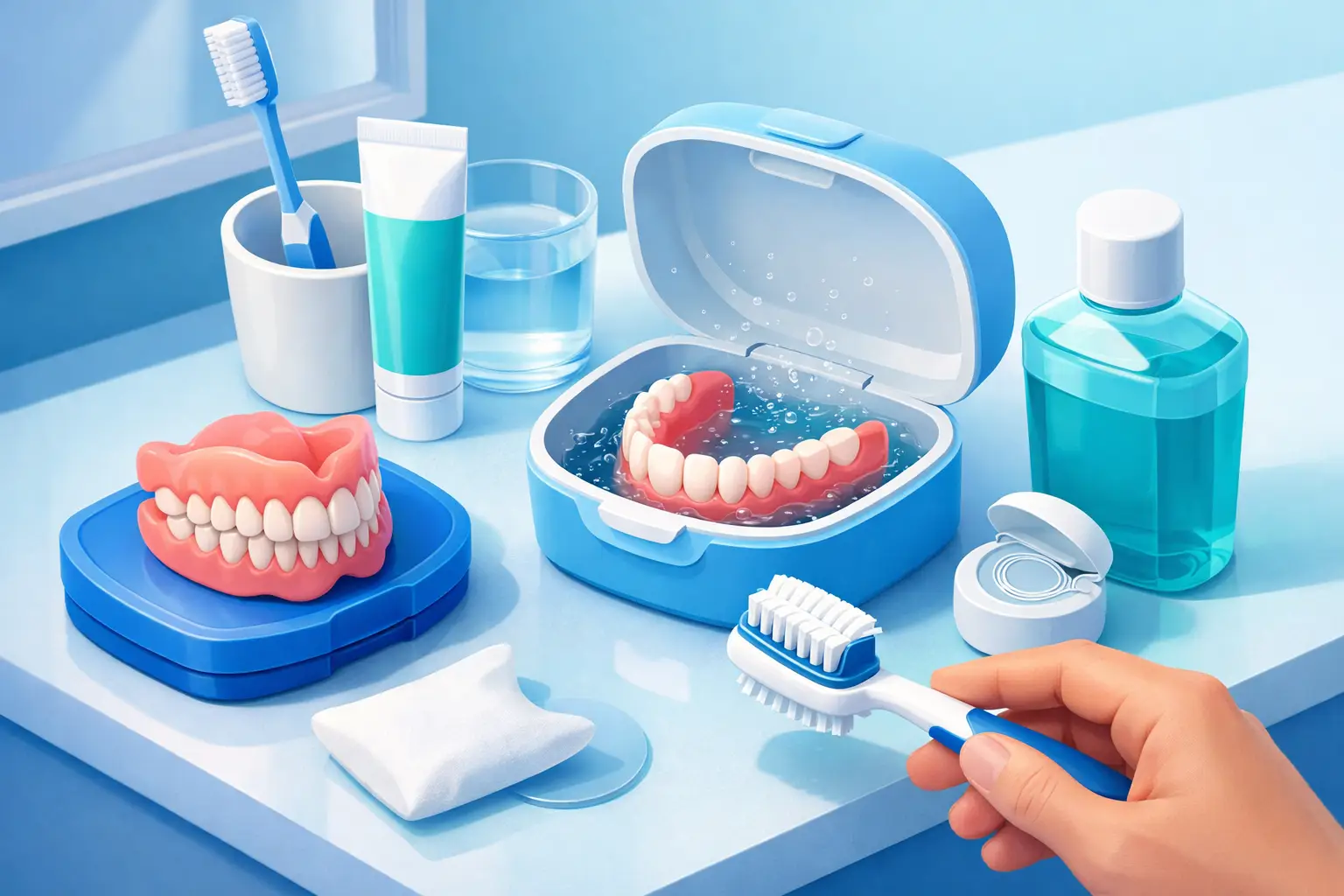
Remove your dentures after meals where practical and rinse them under cool or lukewarm water. Avoid hot water, as it can warp the denture material and affect the fit. At least once a day, brush all surfaces using a soft denture brush or a soft toothbrush reserved for this purpose. Use a denture cleaning product or mild liquid soap recommended by your dentist.
Regular toothpaste is often too abrasive for dentures and can create tiny scratches. Those scratches can hold stains and bacteria over time. It is also best to avoid household cleaners, bleach, whitening products or harsh powders. These can damage the denture, alter its colour or irritate your mouth.
Clean your sink with a little water in it or place a folded towel in the basin before brushing your dentures. Dentures can crack if dropped onto a hard surface, and this simple habit can prevent an avoidable repair.
Clean your mouth as well
Taking dentures out does not mean oral care stops. Gently brush your gums, tongue and the roof of your mouth with a soft toothbrush each morning and night. This removes plaque, stimulates circulation and helps your mouth feel fresh.
If you still have natural teeth, clean them thoroughly with a fluoride toothpaste and floss or use the interdental cleaning method recommended by your dentist. Keeping your remaining teeth and gums healthy is vital for the long-term fit and function of partial dentures.
Should you sleep in your dentures?
In most cases, dentures should be removed overnight. Your gums need time to rest, and removing dentures at night can lower the risk of irritation, fungal infections and inflamed tissue beneath the denture.
After cleaning them, store your dentures safely in water or a denture-soaking solution recommended by your dentist. Do not let them dry out, as some materials can lose their shape. Keep them out of reach of children and pets too. Dogs, in particular, are often drawn to the smell and may chew a denture beyond repair.
There can be exceptions. Your dentist may ask you to wear your dentures overnight for a short period after extractions or during an immediate denture treatment plan. This can help manage swelling and protect the healing area. Always follow the individual instructions you have been given rather than relying on general advice.
Manage sore spots early
A mild pressure area can occur while your gums are adapting, particularly if your dentures were fitted after teeth were removed. However, ongoing pain, ulcers or rubbing should not be ignored. Dentures should not cause you to put up with significant discomfort.
If a sore spot develops, continue gentle cleaning and contact your dental clinic for an adjustment appointment. Do not try to file, bend or reshape the denture at home. Even a small change can affect the fit, bite and comfort of the entire appliance.
It is helpful to wear your dentures for a few hours before an adjustment appointment, unless the pain is severe. This allows the dentist to identify the areas creating pressure. If you cannot tolerate wearing them, call the clinic for advice first.
Denture adhesive may help some people feel more secure, particularly while adjusting to a new denture. It is not a substitute for a proper fit, though. If you suddenly need much more adhesive than before, or the denture is moving despite adhesive, it is time for a review.
Keep follow-up appointments
Your first denture review is not simply a formality. As swelling settles and your mouth adjusts, small refinements may be needed to improve comfort and bite. These appointments are an expected part of denture care, especially after recent extractions.
Over time, your jawbone and gums naturally change shape. A denture that once fitted well may become loose, rub or make chewing harder. Depending on your oral health and the type of denture, your dentist may recommend an adjustment, reline or replacement. Trying to manage a loose denture for too long can lead to sore gums and may make eating less enjoyable.
Bring your questions to each appointment. Whether you are concerned about speech, cleaning products, food choices or denture stability, clear advice can make the adjustment feel far more manageable.
When to contact your dentist promptly
Some discomfort can be expected, but persistent or worsening symptoms need professional attention. Contact your dentist if you have severe pain, bleeding that does not settle, swelling, a broken denture, a denture that no longer fits, or sores that do not improve after a few days. Also seek advice if you notice white patches, redness under the denture, a burning sensation or persistent bad breath.
If your dentures break, keep all pieces and avoid using glue from the hardware shop. These products are not safe for use in the mouth and can make a professional repair more difficult. A dental team can assess whether the denture can be repaired or whether another solution is needed.
At Riverina Dental Albury, we understand that adjusting to dentures is personal. Gentle follow-up care and timely adjustments can make a meaningful difference, particularly when you are navigating eating, speaking and comfort for the first time.
New dentures are not something you simply receive and forget about. With careful daily cleaning, gradual practice and the confidence to ask for help when you need it, they can become a comfortable and reliable part of everyday life.