
You might feel ready to straighten your teeth, but not ready to look like a teenager again at work, in photos, or at social events. That is usually where the invisalign vs braces adults conversation starts – not with the teeth themselves, but with daily life. For many adults, the right option is the one that balances appearance, comfort, budget, and a result that will last.
Orthodontic treatment is not one-size-fits-all. Clear aligners and braces can both improve crowding, spacing, bite issues, and smile appearance, but they do it in different ways. The best choice depends on how complex your case is, how disciplined you can be with treatment, and what matters most to you over the next 12 to 24 months.
Invisalign vs braces for adults: what really changes?
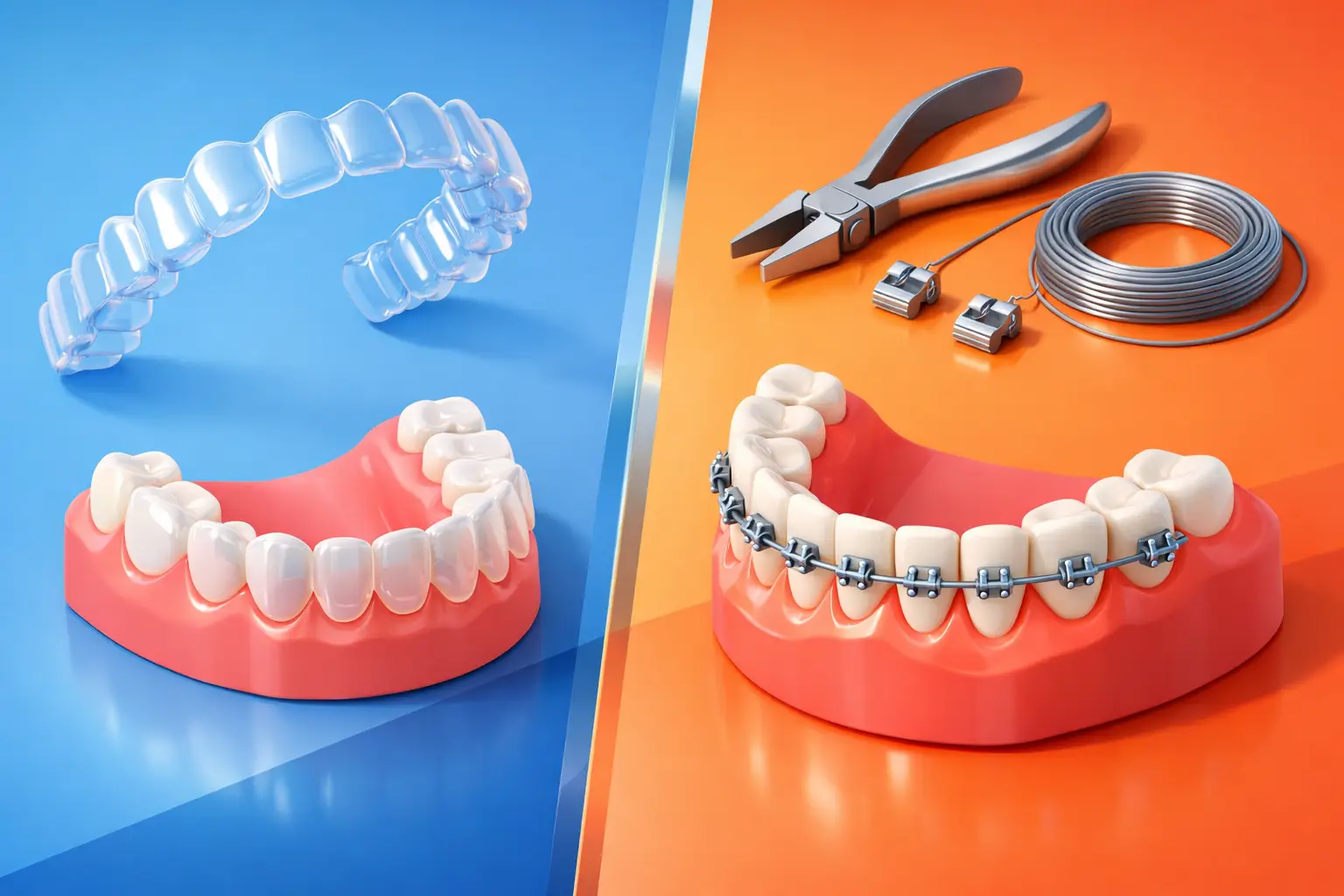
The biggest difference is how the teeth are moved and how visible the treatment is. Invisalign uses a series of clear plastic aligners that are custom-made and changed regularly as your teeth shift. Braces use fixed brackets and wires attached to the teeth and adjusted over time.
For adults, that difference affects much more than appearance. It changes how you eat, how you clean your teeth, how often you need to think about your treatment each day, and how much control you have over the process.
Invisalign tends to appeal to adults who want a more discreet option. The aligners are clear, removable, and generally less noticeable in meetings, conversations, and family photos. Braces are more visible, but they are also working all the time because they stay on your teeth.
That last point matters. If you like the idea of taking aligners out for meals or important occasions, Invisalign can feel more flexible. If you are worried you may forget to wear them for the required time each day, braces may actually be the simpler path because there is less room for treatment to go off track.
Appearance and confidence during treatment
Many adult patients ask about aesthetics first, and that is understandable. Some people have put off orthodontic treatment for years because they did not want metal braces in a professional setting.
Invisalign is usually the clear winner if discretion is your priority. Most people will not notice the aligners unless they are very close. That can make adults feel more comfortable at work, on video calls, and in social situations.
Braces are more obvious. Ceramic braces can reduce the visual impact compared with traditional metal brackets, but they are still visible. For some adults, that is not a major issue. For others, it is the deciding factor.
It is worth being honest with yourself here. If visible treatment will stop you from going ahead, then clear aligners may be the option that gets you started. And starting matters more than waiting for the perfect time.
Comfort, irritation, and getting used to them
Neither option is completely pain-free. Teeth need pressure to move, and that can create soreness, especially after adjustments or when changing to a new set of aligners.
That said, the type of discomfort is different. Invisalign aligners are smooth and tend to cause less rubbing on the lips and cheeks. Adults often find them easier to adjust to in the first couple of weeks. There can still be pressure and some irritation at the edges, but it is usually manageable.
Braces can be more irritating early on because brackets and wires sit against the inside of the mouth. You may notice sore spots, especially after tightening appointments. Most patients adapt, but the settling-in period can be more noticeable.
Speech can also change temporarily with aligners because there is plastic covering the teeth. A slight lisp is common at first, though it usually improves quickly. Braces can affect speech too, but often less than patients expect.
Invisalign vs braces adults compare on daily routine
This is where adult life really comes into focus. Invisalign gives you freedom, but it also gives you responsibility. You need to wear the aligners for the recommended hours each day, remove them before eating or drinking anything other than water, and clean them properly. If you snack often, drink multiple coffees through the day, or know you are forgetful, this can become frustrating.
Braces are less flexible, but also less demanding in that sense. You cannot remove them, so treatment continues whether your day is busy or not. The trade-off is that eating requires more care. Hard, sticky, or chewy foods can damage brackets and wires, and cleaning around braces takes more effort.
For adults with packed schedules, there is no universal winner. Some prefer the structure of braces because it removes temptation and guesswork. Others value being able to take aligners out for meals, special events, or important presentations.
Which works better for complex cases?
This is one of the most important parts of the decision. Both Invisalign and braces can treat many orthodontic concerns, but some cases respond better to one approach than the other.
Braces have long been the standard for more complex tooth movement and bite correction. Because they are fixed to the teeth, they can offer very precise control. Adults with significant crowding, rotated teeth, or more involved bite problems may be better suited to braces, depending on the clinical assessment.
Invisalign has advanced considerably and can now treat a wider range of cases than many people realise. Mild to moderate crowding, spacing, and some bite issues can often be managed very effectively with aligners. But not every case is ideal for them.
This is why a proper consultation matters. The question is not which treatment is trendier. It is which treatment is likely to give you a healthy, stable result with the least compromise.
Cost and value over the full treatment journey
Adults are often weighing orthodontic treatment against other household expenses, so budget matters. The total cost can vary depending on the complexity of the case, the length of treatment, and the type of appliance used.
Invisalign is sometimes more expensive than traditional braces, but not always by a large margin. In some cases the costs can be similar. What matters more is the value you place on discretion, convenience, and suitability for your case.
Braces may be the more budget-friendly option for some adults, particularly when treatment is more complex. Invisalign may feel worth the extra investment if appearance during treatment is a major concern.
It also helps to think beyond the upfront fee. Delays caused by not wearing aligners properly can stretch treatment and add frustration. Likewise, broken brackets or poor cleaning around braces can create extra appointments or dental issues. The most cost-effective option is often the one you are most likely to manage well.
Treatment time and results
Adults usually want to know one thing quickly: which one is faster? The honest answer is that it depends.
For straightforward cases, Invisalign can be very efficient, especially when aligners are worn as directed. For more complicated cases, braces may offer better control and a more predictable path. Treatment time for either option commonly ranges from around 12 months to 24 months, sometimes longer.
The quality of the result depends on more than the appliance. It depends on diagnosis, planning, consistency, and retention after treatment. Retainers are part of the process whichever option you choose. Teeth can shift back if retainers are not worn as advised.
That can be disappointing for adults who have invested time and money into treatment. A straight smile is not just achieved – it is maintained.
What matters most for adult patients
If you are trying to choose between the two, it often helps to narrow the decision to a few practical questions. Do you want the most discreet option possible? Are you likely to wear aligners exactly as instructed? Is your case relatively mild, or does your bite need more detailed correction? Would a fixed option suit your routine better? What feels manageable for your budget?
For some adults, Invisalign is the clear fit because it blends into work and social life with less fuss. For others, braces are the better choice because they remove the need for daily discipline and can be more suitable for complex movement.
At Riverina Dental Albury, these conversations are always personalised. A treatment recommendation should not be based on what is popular. It should be based on your teeth, your goals, and what you can realistically stick with.
The right orthodontic choice is the one that fits your life well enough that you can see it through. When that happens, the result is not just a straighter smile. It is the relief of finally dealing with something you may have put off for years.