
A denture that suddenly shifts while you are talking, eating or smiling can feel worrying and uncomfortable. If you are asking, why do dentures feel loose, the answer is often that something has changed in your mouth, your denture, or both. Loose dentures are common, but they should not simply be accepted as part of wearing them.
A well-made denture should feel comfortable and stable for everyday life. Some movement can be normal, particularly with a lower full denture, but rubbing, clicking, lifting, food collecting underneath or a lack of confidence when speaking are signs worth checking. The right solution depends on the cause, which is why a dental assessment is more useful than repeatedly adding adhesive.
Why do dentures feel loose over time?
Your jawbone and gums naturally change after teeth are removed. Tooth roots normally stimulate the jawbone through chewing. Without that stimulation, the bone beneath a denture gradually shrinks and the gum ridge changes shape. This process is often most noticeable in the first months after extractions, but it continues slowly throughout life.
Because dentures are made to fit the shape of your gums at a particular point in time, even small changes can create gaps. A denture that once sat firmly can begin to rock, loosen at the back or move when you bite. Weight loss, changes in general health, some medications and dry mouth can also affect how a denture fits and feels.
Upper dentures often gain stability from a close seal against the palate. If that seal is lost, the denture may drop or lift when you speak. Lower dentures are usually more challenging because they have less surface area to sit on and must work around the constant movement of your tongue, cheeks and lips. This does not mean you need to put up with a loose lower denture, but it may mean that a different approach is needed for the best stability.
Common reasons dentures stop fitting well
Changes in the gums and jawbone
This is the most common reason for a loose denture. Over time, the gum ridge becomes flatter or narrower, reducing the support available to hold the denture in place. A denture can look intact and still no longer match the contours of your mouth.
Wear, damage or distortion in the denture
Dentures are durable, but they are not indestructible. Daily chewing gradually wears denture teeth, which can alter your bite and cause the denture to shift. Small cracks, a warped base or a tooth that has worn unevenly can also affect stability.
Heat can distort some dentures, so they should never be cleaned in very hot water or left near a heat source. A denture that has been dropped may need professional inspection even if there is no obvious break.
A change in bite or remaining natural teeth
If you have a partial denture, changes to the natural teeth that support it can affect its fit. A filling, crown, broken tooth, tooth movement or gum disease may change how the denture sits. Clasps can also loosen over time, though they should only be adjusted by a dentist. Trying to bend them at home can damage the denture or place harmful pressure on the supporting teeth.
Dry mouth
Saliva helps create a thin layer of moisture between the denture and gums. When your mouth is dry, dentures can feel less secure and may rub more easily. Dry mouth can be linked with medications, dehydration, medical conditions, mouth breathing or some treatments.
Sipping water regularly may help, but ongoing dry mouth deserves attention. It can raise the risk of tooth decay in remaining teeth, oral infections and soreness under a denture.
Poor fit from the beginning
A new denture often needs a settling-in period and minor adjustments. Your mouth may develop tender spots as it adapts, especially after recent extractions. However, persistent looseness, pain or an inability to chew comfortably should be reviewed rather than endured. A denture must be individually adjusted to your mouth and bite.
What can be done about loose dentures?
The most appropriate treatment will depend on the condition of your denture and the health of the tissues underneath it. In many cases, the solution is straightforward.
A denture adjustment can remove a pressure point or refine the way the denture contacts your gums and bite. This may be enough where the fit is generally good but there is a specific area causing rubbing or instability.
A denture reline is often recommended when the denture itself is still in good condition but the shape of your gums has changed. New material is added to the fitting surface so it better matches your current mouth shape. A reline can improve comfort, reduce movement and make chewing easier without requiring an entirely new denture.
If the denture is worn, cracked, has poorly worn teeth or no longer provides the right facial support and bite, a new denture may be the more reliable long-term option. While it can be tempting to keep repairing an old denture, repeated repairs do not always restore a healthy fit or effective function.
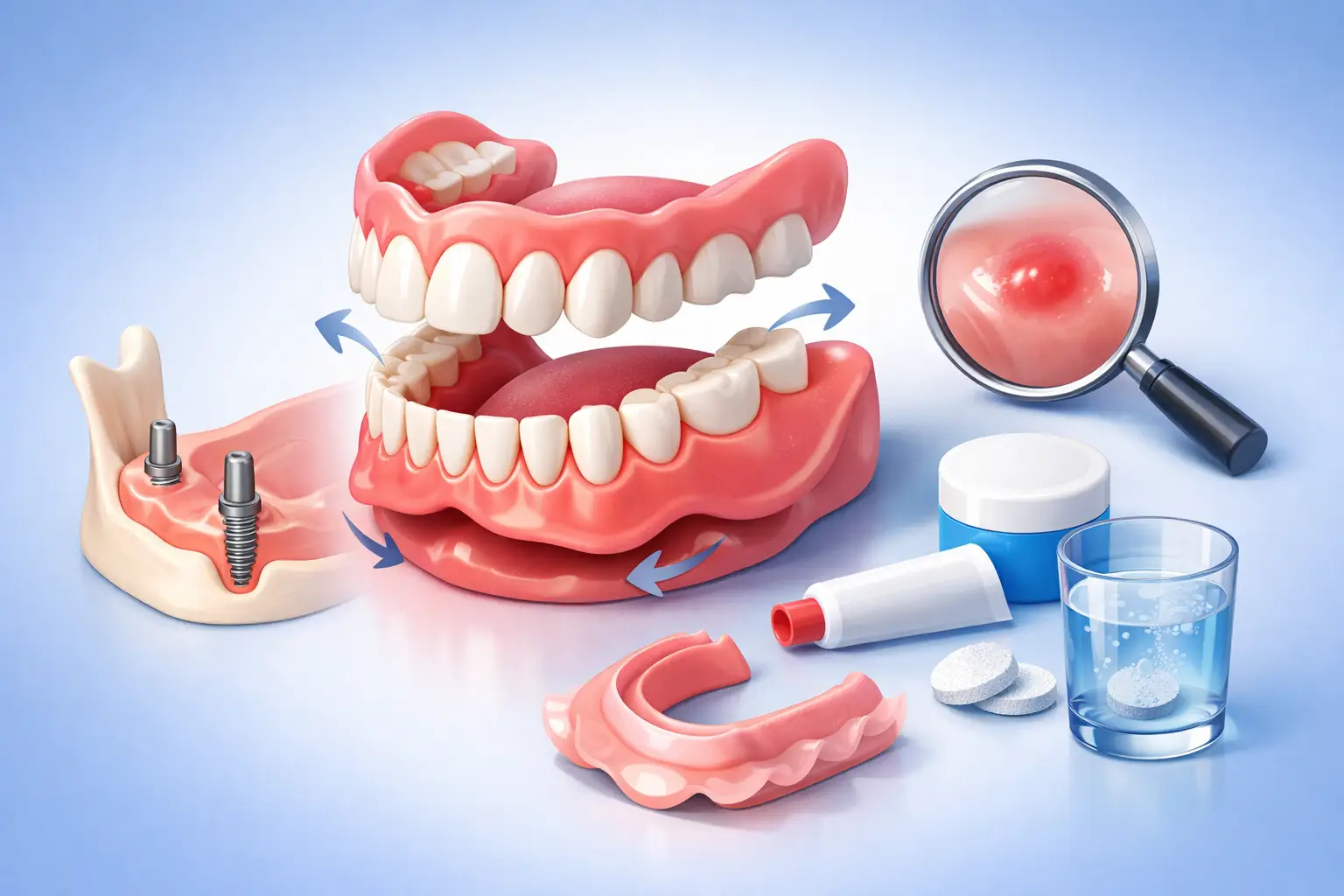
For some people, particularly those struggling with a very loose lower denture, implant-supported dentures can provide a major improvement in stability. Implants act as secure anchors for a denture to attach to. Treatment involves a higher upfront investment and is not suitable for everyone, but it can make eating and speaking feel much more natural for the right patient. A dentist can discuss your bone health, medical history, goals and budget before recommending a pathway.
Should you use denture adhesive?
Denture adhesive can be helpful as a short-term aid for some people with a well-fitting denture, such as when attending a special event or while waiting for an appointment. It can add a little extra confidence and help limit food getting beneath the denture.
It should not be used to compensate for a denture that is significantly loose, painful or damaged. Using more adhesive than recommended can make cleaning difficult and may delay treatment for sore gums, infection or changes in the mouth. If you suddenly need adhesive to wear a denture that previously felt secure, book a check-up.
Always remove adhesive thoroughly from the denture and your gums each day. Follow the product instructions, and never use household glues or attempt a home repair. These products are not safe for use in the mouth and can make professional repair more difficult.
When a loose denture needs prompt attention
Arrange a dental appointment if your denture is causing ongoing ulcers, bleeding, swelling, pain, or trouble eating enough food. These symptoms can affect nutrition and may also point to an issue beyond the denture itself.
You should also seek advice promptly if you notice a lump, a sore area that does not heal within two weeks, persistent numbness, unusual bleeding or a major change in how your mouth feels. Dentures can sometimes cover changes in the gums, which is one reason regular dental checks remain valuable even when you no longer have natural teeth.
If your denture has fractured, do not keep wearing sharp or broken pieces. Store it safely and have it assessed. A repair may be possible, but the denture should also be checked for the reason it broke, particularly if it has started rocking or no longer fits correctly.
Looking after your denture between appointments
Good daily care helps your denture last and makes changes easier to notice. Remove it at night unless your dentist has given you different instructions, then clean it with a soft denture brush and an appropriate cleanser. Clean your gums, tongue and any remaining natural teeth as well.
Keep dentures in water or a denture-soaking solution when they are out of your mouth so they do not dry out or change shape. Handle them over a folded towel or a basin partly filled with water, as dentures can break if dropped onto hard tiles.
Regular reviews allow your dentist to assess the fit, your bite, the condition of the denture and the health of your mouth before a small problem becomes a bigger one. At Riverina Dental Albury, we take the time to explain whether an adjustment, reline, repair, replacement or another option is likely to give you the most comfortable result.
A secure denture is not just about avoiding embarrassment when it moves. It can help you enjoy meals, speak with ease and feel more like yourself. If your denture no longer feels right, a gentle assessment can give you clear options and a practical next step.