
A cracked tooth rarely picks a convenient time. You might be chewing lunch, notice a sharp edge with your tongue, and suddenly wonder whether the tooth can be saved. That is usually when a dental crown procedure explained in plain English becomes far more useful than a technical definition.
A dental crown is a custom-made cap that covers and protects a damaged or weakened tooth. It is designed to restore shape, strength and function, while also improving appearance when needed. Crowns are commonly recommended when a tooth has a large filling, a fracture, significant wear, root canal treatment, or damage that is too extensive for a simple filling.
Dental crown procedure explained step by step
For most patients, the process is straightforward. The exact timeline can vary depending on the tooth, the material chosen and whether any extra treatment is needed first, but the general steps stay much the same.
The first appointment starts with an examination. Your dentist checks the tooth, takes any required X-rays and confirms whether a crown is the best option. Sometimes the answer is yes straight away. In other cases, it depends on how much healthy tooth structure remains, whether there is infection present, or whether another treatment such as a filling, onlay, root canal treatment or extraction would offer a better long-term result.
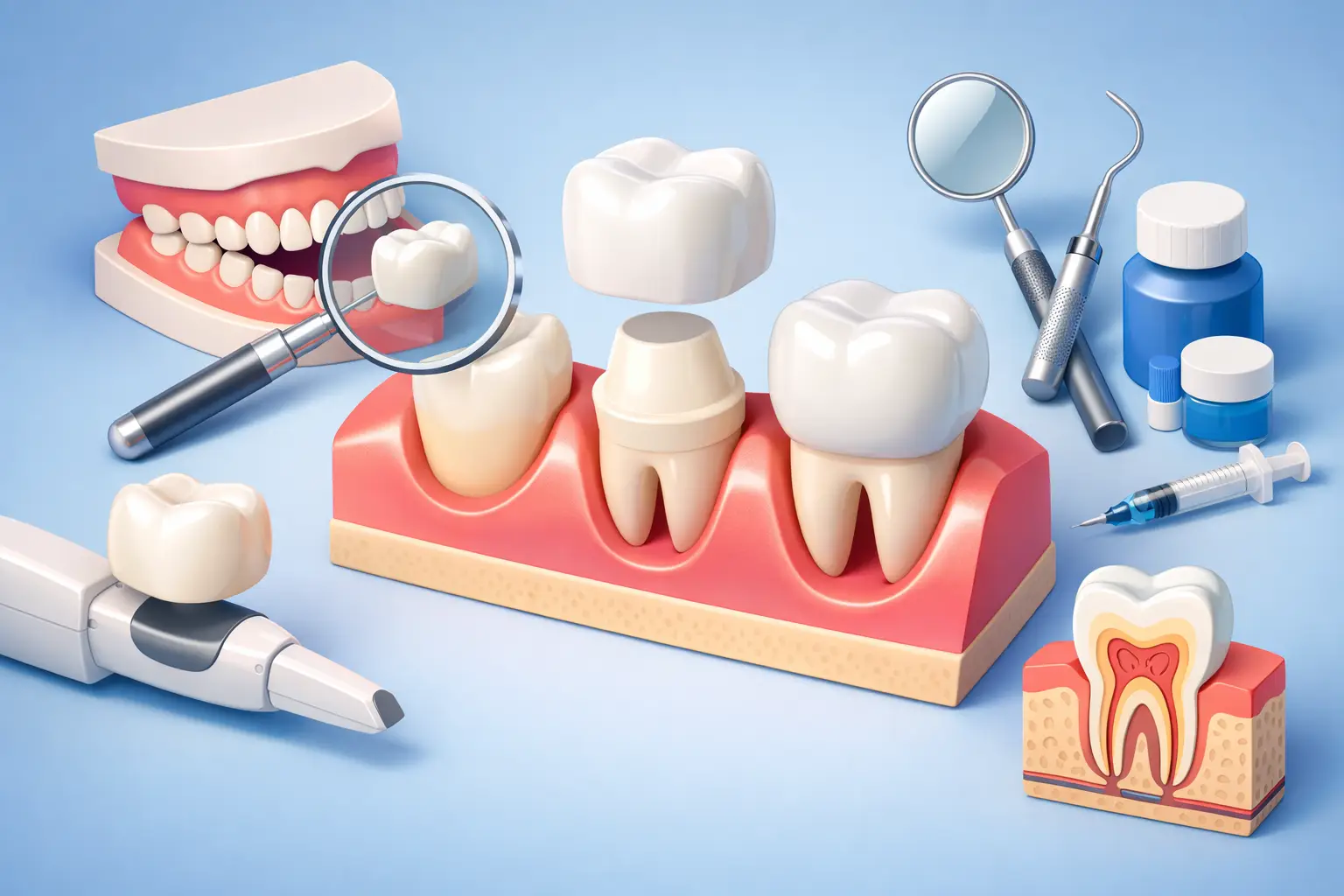
If a crown is the right fit, the tooth is prepared by gently reshaping the outer surface. This creates room for the crown to sit properly without feeling bulky. Local anaesthetic is usually used, so the area is numb during treatment. For anxious patients, knowing this ahead of time often makes the appointment feel much more manageable.
Once the tooth has been shaped, an impression or digital scan is taken. This is used to create a crown that matches your bite and blends with your surrounding teeth. Shade matching matters most for front teeth, but even back teeth need careful planning so the crown feels comfortable when you chew.
In many cases, a temporary crown is placed while the final one is being made. Temporary crowns protect the tooth and help you get by normally between visits, although they are not as strong as the final restoration. You may be asked to avoid very sticky or hard foods until the permanent crown is fitted.
At the second appointment, the final crown is checked for fit, shape and bite. If everything looks and feels right, it is bonded or cemented into place. Small adjustments are sometimes needed, and that is completely normal. The goal is not just for the crown to look good, but to feel natural when you close your mouth and chew.
When is a crown the right option?
Crowns are often used to save teeth that would otherwise continue to break down. A large filling can leave a tooth vulnerable because there is less natural structure left to support biting pressure. In those cases, a crown can act like a protective outer shell.
They are also commonly used after root canal treatment. Once the nerve has been treated, the tooth can become more brittle over time, especially in back teeth that handle more force. A crown adds protection and can reduce the risk of future fractures.
Sometimes a crown is chosen for cosmetic reasons, but function usually comes first. If a tooth is badly worn, misshapen or heavily discoloured, a crown may improve appearance as part of a broader restorative plan. Still, not every unattractive tooth needs a crown. If the tooth is structurally sound, less invasive options may be worth discussing.
What does the dental crown procedure feel like?
Most people are relieved to find it is easier than expected. During the preparation appointment, the tooth and surrounding area are numbed, so you should feel pressure and movement rather than pain. After the anaesthetic wears off, some tenderness is possible for a day or two, especially around the gum.
If you have a temporary crown, the tooth may feel slightly different until the permanent crown is fitted. That does not always mean something is wrong. Teeth are sensitive to even small changes in shape and bite, so it can take a little time to adjust.
Once the final crown is in place, mild sensitivity to hot or cold can happen briefly, but ongoing pain is not something to ignore. If your bite feels high, if chewing is uncomfortable, or if the crown feels loose, it is worth getting it reviewed promptly.
How long does the process take?
For many patients, treatment takes two visits over a couple of weeks. The first visit is for assessment, preparation and impressions or scanning. The second is for fitting the final crown.
That said, there are a few reasons it may take longer. If the tooth needs root canal treatment first, if gum health needs attention, or if the tooth is badly broken and requires additional build-up, your dentist may space treatment over more appointments. Some clinics also offer same-day crowns in selected cases, but that depends on the technology available and whether the case is suitable.
Which crown material is best?
This is one of the most common questions, and the honest answer is that it depends. There is no single best material for every tooth.
Porcelain and ceramic crowns are popular because they look natural, particularly for front teeth. Zirconia is known for strength and can be a good choice for back teeth or patients who grind their teeth. Porcelain fused to metal crowns have been used for many years and can still be appropriate in some situations. Gold and other metal crowns are less common for visible teeth but can perform very well in areas where durability matters more than appearance.
The right choice depends on bite pressure, tooth position, appearance goals, space available and budget. A crown on a front tooth usually needs a different balance of strength and aesthetics than a crown on a molar.
How much does a dental crown cost?
Crown costs vary based on the material used, the complexity of the case and whether additional treatment is needed beforehand. A straightforward crown is very different from a tooth that needs root canal treatment, a core build-up and several appointments before it is ready.
This is where clear treatment planning matters. Cost-conscious households often want to know not only the fee for the crown itself, but also whether there are staged options, flexible payment arrangements or alternative treatments that may suit their situation. A good discussion should cover both the immediate fix and the likely long-term outcome. Sometimes the cheaper option now ends up costing more later if the tooth fails.
Recovery and aftercare
Recovery is usually simple. Once the final crown is placed, most people return to normal activities the same day. If the area feels tender, softer foods for a short time can help. Good brushing and flossing remain essential because the crown protects the tooth above the gumline, but the margin where crown and tooth meet still needs to be kept clean.
It also helps to be sensible with very hard foods. Crowns are strong, but they are not indestructible. Chewing ice, opening packaging with your teeth or clenching heavily can shorten their lifespan.
If you grind your teeth at night, a custom night guard may be recommended. That extra layer of protection can make a real difference to both crowns and natural teeth.
How long does a crown last?
Many crowns last well over 10 years, and some last much longer. Lifespan depends on oral hygiene, diet, grinding habits, bite forces and how much natural tooth remains underneath. The crown itself may stay intact while the underlying tooth develops decay at the edge if plaque control slips.
Regular dental check-ups matter here. Small issues are easier to manage early, before they turn into a loose crown, a fracture or a painful infection.
Dental crown procedure explained for nervous patients
If dental visits make you tense, you are not alone. One of the best ways to reduce stress is to know what will happen before the appointment starts. Crowns are routine restorative treatment, and the process is planned carefully rather than rushed.
You can ask for each step to be explained as you go, for breaks during treatment, and for clear advice about what you are likely to feel afterwards. At Riverina Dental Albury, that calm, personalised approach is a big part of helping patients feel more comfortable in the chair.
A crown is not just about covering a tooth. It is about giving a damaged tooth a fair chance to keep doing its job comfortably for years to come – and that is usually worth protecting.